Nancy Kelly markets things you rarely see and constantly use. A semiconductor disappears into the finished object. It becomes the quiet intelligence in a car, the radio in a phone, the power control inside a data center, or the circuitry that lets an industrial machine sense and respond. The product matters precisely because it recedes. For the person charged with explaining the company that makes it, invisibility is both the problem and the point.
Kelly became Chief Marketing Officer of GlobalFoundries in 2024, then took responsibility for communications as well. The combined brief covers brand, corporate and internal communications, and marketing. It asks one leader to connect audiences that use radically different vocabularies: engineers, customers, employees, governments, investors and people who may only think about chips when a shortage interrupts their lives.
Her preparation for that job was unusually concentrated. Before GlobalFoundries, she spent nearly seventeen years at Texas Instruments, moving from a marketing rotation focused on analog products to embedded processing, digital marketing, portfolio marketing and, finally, brand leadership. She did not acquire semiconductor fluency in a crash course before an executive appointment. She accumulated it one role, one customer journey and one product family at a time.
A career built sideways, then up
The timeline begins with internships: marketing at Wayport, a Wi-Fi service provider later acquired by AT&T, and communications at IBM. In 2007, Kelly joined Texas Instruments through a rotational development program. The format mattered. Rotations expose a young marketer to the machinery of a company before asking her to own a large piece of it. In Kelly's case, the machinery was literal as well as organizational.
She became a project manager in digital marketing for embedded processing, then managed that work. She moved into director roles for analog and later analog plus embedded processing. By 2018 she was vice president of digital and portfolio marketing, a position she held for roughly six years before becoming vice president of brand marketing. The progression reads like a widening aperture: product, channel, portfolio, enterprise.
The useful lesson is not simply that loyalty gets rewarded. Kelly changed scopes repeatedly, and each move added an adjacent operating system. Digital marketing taught measurement and distribution. Portfolio work required choices across products. Brand leadership demanded consistency at company scale. By the time GlobalFoundries asked her to unite marketing and communications, she had already spent years translating between specialists.
“I cannot think of a better way to start my journey at GlobalFoundries.”Nancy Kelly, reflecting on GTS 2024
The first lap around the world
Soon after joining GF, Kelly went on a useful listening tour disguised as an event series. The 2024 GlobalFoundries Technology Summit ran through Santa Clara, Munich and Shanghai. More than 1,000 customers and partners attended across the three cities. Kelly later called it the beginning of her journey at the company and praised the teamwork behind the events.
A summit is a compressed version of the CMO's job. Product teams want detail. Customers want relevance. Executives want strategic coherence. Regional teams need language that travels without flattening local context. An event has to perform all those jobs in public and on schedule. For a new leader, it also reveals the company as customers experience it, not merely as the organization chart describes it.
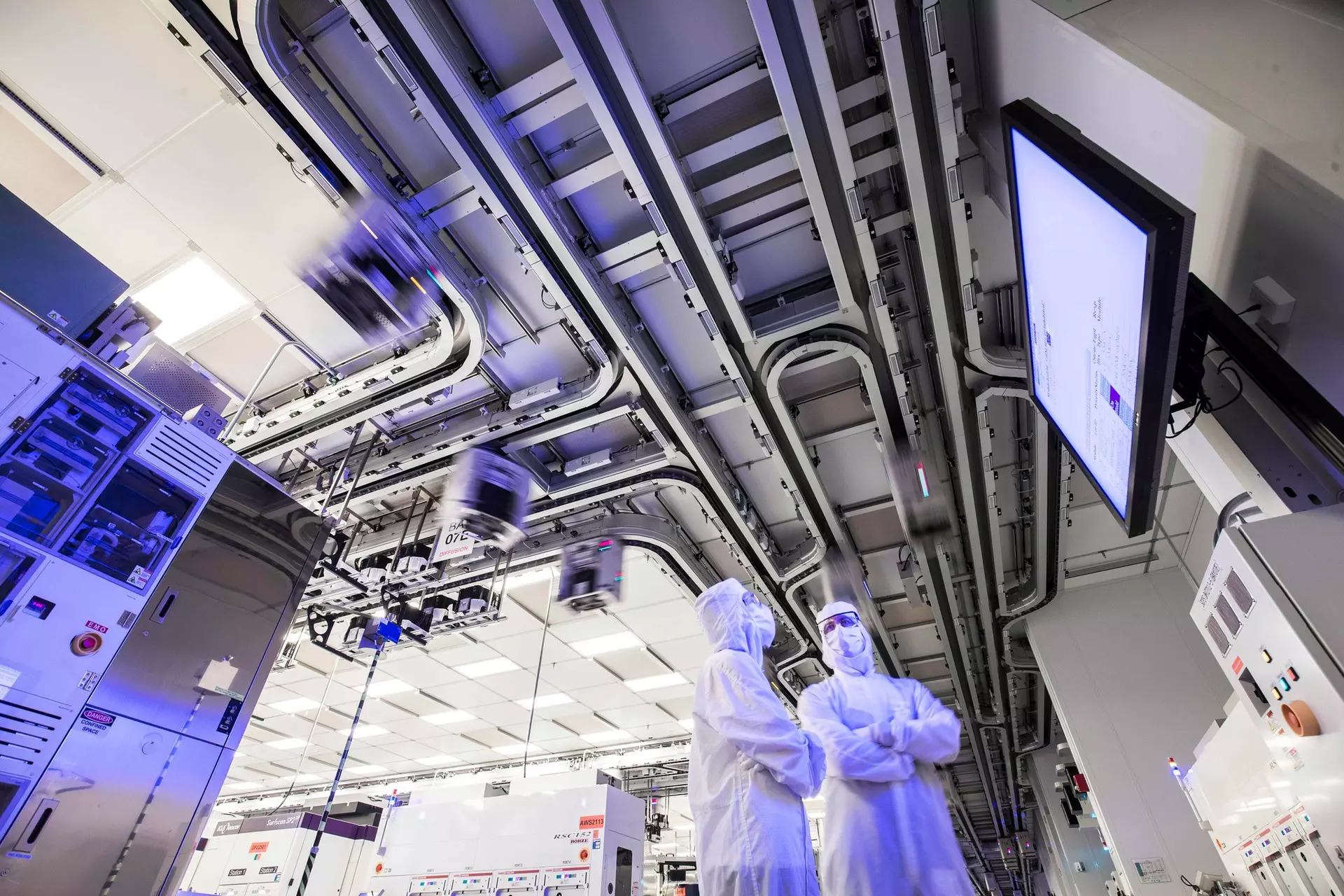
That customer-facing education sits inside a bigger industrial story. GlobalFoundries operates manufacturing across the United States, Europe and Asia. In June 2025, the company announced plans for $16 billion in US investment spanning manufacturing expansion, advanced packaging, silicon photonics and gallium nitride technologies. These are capital-intensive commitments with long timelines. The communication challenge is to make the scale understandable without sanding away the technical substance.
Kelly's remit therefore lives between two clocks. The fab clock runs slowly: facilities, process technologies and customer qualifications can take years. The media clock runs instantly. A credible narrative has to satisfy both. It must remain consistent long enough to build trust while staying flexible enough to explain leadership changes, portfolio moves and new market language.
The same tension exists inside the company. A global manufacturer is made of specialists whose daily work can feel far removed from the finished device or the corporate promise. Internal communication gives those fragments a line of sight to one another. When marketing and communications share a leader, the customer story and the employee story can begin from the same facts. The benefit is less theatrical than a campaign launch, but more durable: fewer gaps between what a company says, what its teams understand and what its customers encounter.
When the portfolio learns to speak
The MIPS acquisition in 2025 put that tension into practice. GlobalFoundries bought the processor intellectual-property company to add RISC-V capabilities and strengthen its position in edge computing and AI. Kelly described the closing as her first acquisition integration. Her public reflection did something corporate announcements often struggle to do: it made the transaction personal without turning it sentimental.
She singled out MIPS chief executive Sameer Wasson and colleagues Rick Logsdon and Jessica McClanahan, people she said she had known and respected for years. The detail matters because acquisitions are narrated with assets and capabilities but experienced through people. Familiar working relationships gave Kelly an immediate bridge between the strategic language of the deal and the human reality of bringing organizations together.
By 2026, GF had also completed its purchase of Synopsys' ARC Processor IP Solutions business, combining it with MIPS to extend a software-to-silicon offering for physical AI. The company's story was moving beyond a conventional account of wafer manufacturing toward an integrated account of intellectual property, custom silicon, software tools and production. The communications job moved with it.
Stay close to the product
Category knowledge compounds when each new role adds a view of the same customer problem.
Connect the functions
Brand, internal communication and marketing work better when they share a factual core.
Change the entry point
Good technical storytelling preserves precision while giving each audience a reason to care.
Make the team visible
Kelly's public updates repeatedly point to colleagues, recruits and the people behind milestones.
Who gets invited into the pipeline
Kelly's work outside the corporate brief offers another clue to the career. From 2018 to 2020, she served on the board of High-Tech High Heels North Texas, including responsibility for external affairs. The organization was founded by women at Texas Instruments to close the gender gap in science, technology, engineering and mathematics. It funds educational programs for girls across the K-12 pipeline.
When the chapter added seven directors in 2020, Kelly talked about funding effective programs, improving STEM education, inspiring and mentoring the next generation, and creating hands-on learning opportunities. It was practical language: grants, programs, mentors, access. The same translation instinct appears here, but the audience is earlier in the funnel. Before a company can recruit technical talent, a student has to imagine herself belonging in the field.
Kelly's own entry points included internships and a rotational program. Years later, her public recruiting posts at GlobalFoundries highlighted internships in event marketing and technology communications. The symmetry is quiet but useful. Technical industries need engineers, but they also need people who can explain engineering with enough accuracy to earn trust. That work becomes visible only when someone opens a door to it.
“I am SO proud of this team!”Nancy Kelly, after GF Investor Day 2026
One voice, many rooms
Kelly's public profile is more operator's notebook than personal chronicle. She marks leadership transitions, celebrates teams, advertises openings and describes the pleasure of working again with respected colleagues. There is little performance of executive mystique. The recurring nouns are team, customers, partners, brand and work.
That outward focus fits the task. A communications leader at a foundry is rarely the protagonist of the company story. Her job is to make the connections hold: technology to application, investment to capacity, colleague to colleague, and a global organization to a common vocabulary. The better the work, the easier it is for everyone else to move through the narrative.
Her formal education mirrors that bridge. Kelly earned a Bachelor of Science in Public Relations from the University of Texas at Austin and an MBA from Southern Methodist University's Cox School of Business. One credential centers language and relationships; the other centers the enterprise. Her career has lived in the overlap.
Now the overlap is expanding. GlobalFoundries is speaking about AI from cloud infrastructure to physical devices, about resilient manufacturing, and about a portfolio that reaches from processor IP to volume production. Each idea is large enough to become foggy. Kelly's work is to give it edges: what the company makes, who it helps, why the investment matters and how thousands of employees can tell the same story without sounding scripted.
The chips remain mostly invisible. The factories remain far from most customers' daily view. But the communication layer can make the system legible. Nancy Kelly spent a career learning its parts. Her current assignment is to make them read as one.