At First National Bank of Omaha, a marketing campaign could produce 20 variations, each needing its own agency mockup. Across a year, the bank made roughly 1,500 creative variations. The small type had become a sizable production problem. A change meant assembling documents, checking terms, and sending work around again. Personalization was multiplying the paperwork.
Enter Naehas. Its software connects financial products, pricing, offers, disclosures, and fulfillment. For a bank, that means the advertised incentive, eligibility conditions, approved language, and eventual reward can follow the same rules. Customers see the promotion. Naehas handles much of the coordination that makes the promise deliverable.
- Software for the work behind a financial offer.
- Connects pricing, disclosures, approvals, and rewards.
- Built for institutions managing many regulated variations.
One bank changed the question
Founder and CEO Rab Govil describes an accidental route into banking. Naehas initially worked on online marketing and landing-page optimization. During the 2008-2009 financial crisis, a large bank approached the company with a different assignment: budgets were tightening, but it needed deeper personalization and more offers, faster.
Accepting meant committing the business to financial services. Govil later described the decision as a “one-way door.” The attraction was a specific customer problem with consequences far beyond a better landing page. The bank needed a system capable of keeping increasingly varied offers under control.
That origin helps explain the company's emphasis. Naehas sells to the people responsible for getting financial products through an institution: product managers, marketers, compliance reviewers, and operations teams. Its expertise sits at their intersections. The interesting work starts when a pricing decision becomes something several departments must execute.

Teach the system the rules
FNBO replaced repeated document assembly with approved content, layouts, and more than 100 business rules. Marketing staff supplied project parameters; the system assembled the appropriate disclosure. In Naehas's published case study, development and approval fell from three weeks to one day. Implementation took about a month, with a gradual rollout to small groups.
“I realized that we’d never get to where we needed to be by slowly tweaking process details.”
Nicole Wojtalewicz · FNBO marketing operations
The case study identifies the hardest step as teaching staff to change their work processes and make precise requests. That detail deserves attention: automation still needs people to specify what they mean.
Follow a rate all the way through
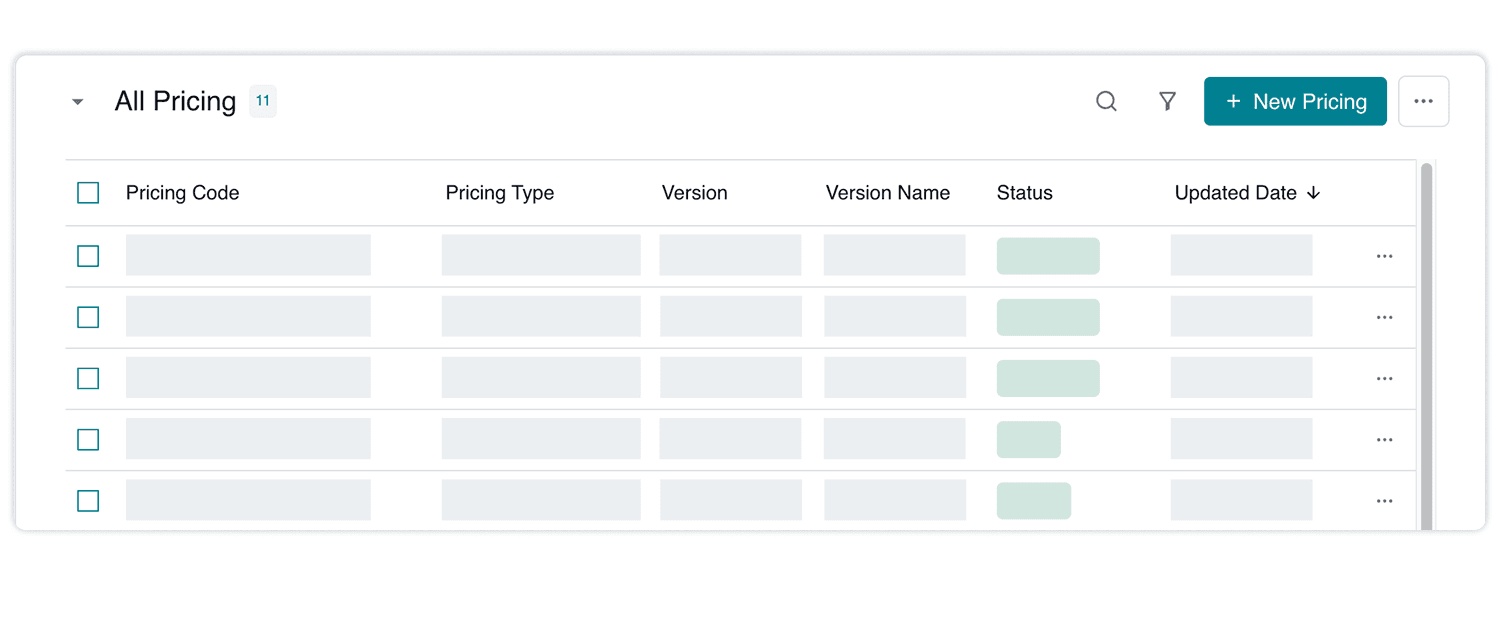
Start with Product and Pricing. It gives financial institutions a central catalog for rates, fees, tiers, benefits, and eligibility. Teams can configure pricing by customer segment or geography, preserve versions, and connect changes to downstream offers. Relationship pricing can draw on the customer's broader banking relationship rather than treating every account separately.
Offer Management handles the proposition itself: who qualifies, what incentive applies, which disclosures belong with it, and how it moves through approval. Shared logic supports web, mobile, email, branches, and contact centers. The distinction from a campaign tool is the object being managed. An offer has obligations that survive the advertisement.
Disclosure Management treats approved language as reusable components. Rules assemble the relevant pieces for the product, audience, location, and regulatory context. Version records preserve what changed and who approved it. A revised clause can be connected to affected products and offers, sparing teams a hunt through independently maintained documents.
Then comes fulfillment, the part customers tend to remember. Naehas tracks qualifying activity against offer conditions, supports payouts, and records progress. Its deposit checks can exclude internal transfers when measuring new money. A reward for bringing funds into a bank should not accidentally reward moving the same funds between its accounts.
- 01Define the price
- 02Attach the terms
- 03Approve + deliver
- 04Track the reward
The expensive gap between knowing and doing
Naehas occupies the space between deciding what a customer should receive and actually delivering it. A customer data platform might identify an audience. A marketing system might distribute a message. Naehas links the financial proposition to its terms, approvals, communications, and fulfillment. Its commercial proposition is fewer opportunities for those pieces to disagree.
This places it alongside several markets. Zafin and SunTec address bank pricing; marketing workflow and compliance vendors tackle other portions of the work. Celent's pricing research distinguishes Naehas's additional coverage of communications and offer campaigns. Buyers should compare the tasks they need to join together, rather than assume every vendor covers the same ground.
The business model is enterprise SaaS, sold through a sales-led process. In a November 2023 interview with Nathan Latka, Govil described customers paying roughly $1 million to $10 million in annual recurring fees, depending on their use cases, with some exceeding that range. These are historical customer examples, not a public price list.
The economics make more sense when repeated coordination is already expensive. Software fees are only part of the decision: institutions must also define content ownership, map rules, connect data, and train staff. As an implementation judgment, an organization with few offer variants and little review complexity may have less to gain from this scope.
More offers make control more valuable
AI adds another wrinkle. Producing more variations is useful only if a bank can review, publish, and honor them. Naehas's Creative Compliance Review checks for issues such as missing disclosures, questionable claims, and outdated terms before publication and in live content. Its workflow tools route approvals and show differences between versions.
The company also works through partners. Aprimo combines its content operations with Naehas's automated review capabilities. A May 2024 agreement with Sweden's Itea P2B paired billing functionality with Naehas's platform and opened a route for disclosure management in EMEA. These relationships reflect how much surrounding infrastructure a financial offer touches.
The market is broadening geographically, too. In April 2026, Naehas announced three first-quarter enterprise wins: a UK-headquartered bank, a Canadian retail bank, and a top-ten U.S. credit union. The institutions were unnamed. Naehas attributed their decisions to bringing product design, pricing, offers, disclosure governance, and compliance review onto one platform.
Copy the sequence, not the slogan
The useful lesson travels beyond banking: locate the decision that everyone keeps reconstructing. Give it an owner, approved components, clear rules, and a history. Test one workflow with a small group before expanding. FNBO's experience suggests that the request itself needs as much discipline as the software answering it.
The limit follows from the same logic. A connected platform depends on reliable inputs and agreed responsibilities. If teams cannot settle which terms are authoritative, automation can spread confusion faster. The practical appeal of Naehas is giving a bank a way to make one promise consistently, even when it makes thousands of versions.