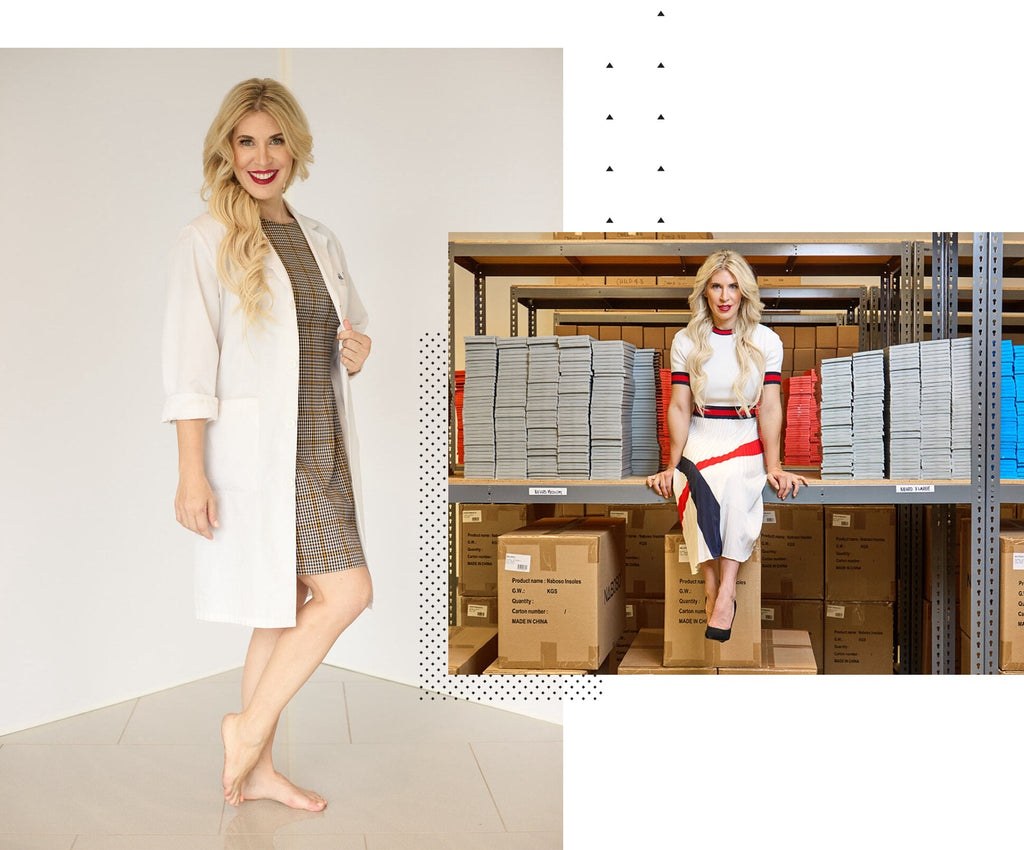
The bottom of a human foot holds thousands of small nerve receptors that fire when they meet texture, vibration, pressure and stretch. For most of modern life they meet none of it. We wrap them in foam, glue them onto flat floors, and wonder why our balance, posture and movement quietly drift. Dr. Emily Splichal built a company on the argument that this is backwards - that the foot is not a passive shock absorber but a sensory organ we have been putting to sleep.
That company is Naboso Technology. The name is the Czech word for "barefoot," and the product is often described as the first commercially available small-nerve proprioceptive material - a firm, precisely textured surface designed to stimulate the foot rather than cushion it. Founded in 2017, Naboso now sells insoles, mats, socks and hand tools into 9-plus countries, and calls itself the number-one textured neurosensory insole brand in the United States.
A gymnast, a podiatrist, and one stubborn idea
Splichal is a functional podiatrist and human movement specialist, and a former competitive gymnast. Before Naboso, she spent years teaching barefoot science through her education company and consulting for footwear names including Nike, Vibram and Aetrex. Her worldview compresses into a single line she repeats often: "Life is sensory."
Life is sensory. This means that all our movement patterns are fed by and led by sensory stimulation.Dr. Emily Splichal, Co-Founder & CEO
What the texture is actually doing
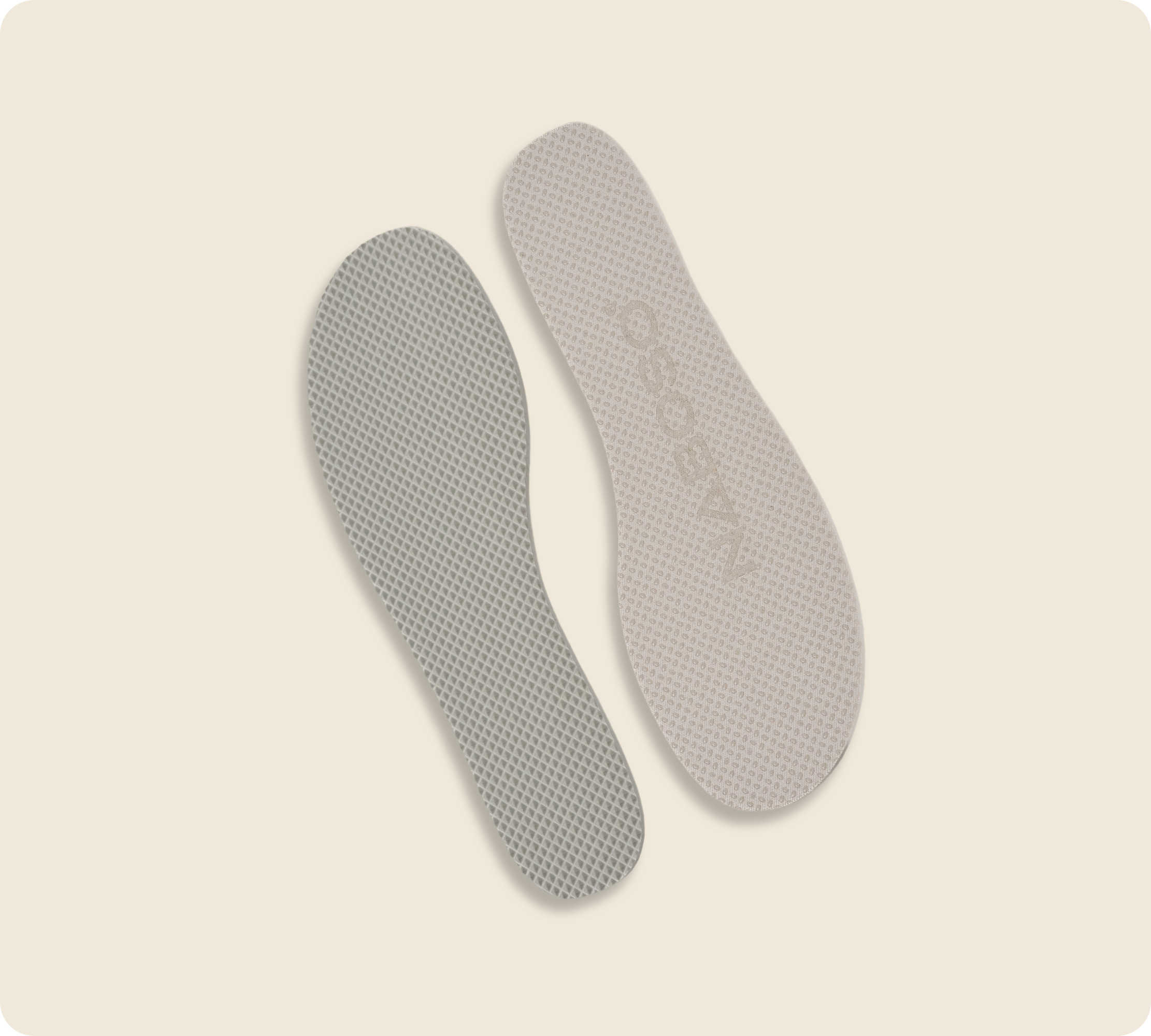
Naboso's surfaces are not random grip. The signature pattern is a field of small pyramids whose shape, height and spacing are drawn from research on the skin's Merkel cells - the receptors that let your fingertips read Braille. Applied under the foot, the effect is a kind of two-point discrimination: the skin can tell the bumps apart, and that stream of sensory input feeds the nervous system information it uses to fire postural muscles, control impact and hold you upright.
How a textured insole talks to your nervous system
Crucially, Naboso does not sell one intensity. Products are built across evidence-based levels of stimulation, so a first-timer with sensitive feet and a barefoot athlete chasing more input are not handed the same surface. That tiering is also the business: it turns "an insole" into a ladder of products a customer can climb.
Sensory stimulation, by level
Naboso builds its line across graded intensities - gentler surfaces for daily wear and mindful movement, firmer ones for performance. (Illustrative.)
Who actually buys this
The most interesting thing about Naboso's customer base is how far apart its ends are. At one end: professional and recreational athletes and the trainers, physical therapists and Pilates instructors who work with them, all chasing foot strength, balance and reduced fatigue. At the other: people managing neurological conditions such as Multiple Sclerosis and Parkinson's disease, for whom extra sensory input to the feet can mean steadier, safer walking.
That same insole showing up in a physical therapy clinic and in an NBA locker room is not a marketing accident - it is the whole thesis. If the mechanism is sensory input to the foot, the surface does not much care whether you are recovering an ankle sprain or squeezing more force out of a deadlift.
The moat is a feeling - and a patent
Selling texture is hard because a customer has to feel it to believe it. Naboso's answer has been to make the thing genuinely difficult to copy. The company holds two utility patents, including one granted in August 2024 covering methods for manufacturing its textured socks, plus multiple design patents. The combination - a specific pattern, backed by nerve research, protected by IP, and wrapped in the founder's decade of teaching - is a harder wall to climb than "a bumpy insole."
Naboso did not invent a better version of an existing product. It changed the category question from "how do we cushion the foot?" to "how do we stimulate it?" - and then owned the answer with science, patents and a founder who had already taught the idea to 25,000 professionals.
A system, not a single insole
The insole is the front door, but the house is bigger. Naboso's line has grown into a small ecosystem built around the same principle. There are proprioceptive mats - firmer ones for standing and activation, gentler ones for stretching, mobility and Pilates - so the stimulation continues when the shoes come off. There are recovery socks with the patented pyramidal texture, handheld release tools like the Neuro Ball and sensory sticks, and the Splay toe spacer for restoring natural toe alignment. In 2024 the company pushed the idea past the foot entirely with a Hand Activation Kit, its second hand-specific product, applying the same nerve logic to the palms.
Bundled together, these turn a one-time purchase into a routine. Naboso's own guidance is habitual by design: a few minutes of daily foot release, regular barefoot or sock time on textured surfaces, and a couple of focused strengthening sessions each week. The mat sells the insole; the insole sells the socks; the socks sell the tools. It is a tidy piece of product architecture for a company whose real product is a daily practice.
The decade before the company
Naboso did not start from a cold pitch deck. Splichal spent years on the road teaching human movement and barefoot science - by the company's account, reaching more than 25,000 professionals across 35-plus countries - and writing a book, "Barefoot Strong," that argued modern footwear was numbing our feet. That built an audience of trainers, therapists and clinicians who already believed the thesis before the first insole shipped. It is the kind of distribution money cannot easily buy: a founder who is also the category's most persistent teacher.
Money, partners and a bet on Japan
Naboso has grown without looking like a typical venture rocket. Early on it ran an equity crowdfunding campaign on StartEngine, letting customers own a piece of the brand. The bigger signal came at the end of 2024, when Naboso closed a $3 million round and strategic partnership with Protea Japan, a Tokyo-based active-lifestyle and skincare distributor with more than 30 years of experience. The capital is aimed at scaling the team and accelerating the product roadmap.
Start-ups are hard. Start-ups that are scaling rapidly are even harder.Dr. Emily Splichal
The Japan bet has logic behind it: Naboso entered the Asian market in 2021 and saw its strongest growth in the Asia-Pacific region. Elsewhere in 2024, the brand aligned with barefoot-shoe maker Vivobarefoot, placed a recovery collection in 75-plus StretchLab locations, saw its Splay toe spacer written up in the Wall Street Journal, and watched NBA star Jimmy Butler wear its products in the Netflix documentary "Starting 5."
Where it sits in the market
Naboso lives at an intersection most companies only touch one side of. It is adjacent to traditional insole and orthotic brands, to the barefoot and minimalist footwear movement, and to the balance-and-proprioception training world - but it competes head-on with almost none of them. Cushioned-insole makers sell comfort; barefoot shoe brands sell what you wear; Naboso sells the sensory surface underneath. When someone does try to enter the "textured neurosensory" lane, they run into the patents and the research first.
The honest caveat is the same one that applies to any sensory-training claim: results depend on the person, the condition and consistent use, and the broader science on textured surfaces and gait is still maturing. Naboso's own guidance leans on daily habit - minutes of foot release, regular barefoot time, focused strengthening - rather than a one-time fix. That is a feature, not a bug, for a company whose product is really a practice.
What Naboso has built, then, is less a gadget than a point of view with products attached: that the foot is an input device we have been ignoring, and that waking it up is worth doing on purpose. It is a narrow idea, defended carefully, and sold to an unusually wide range of people who all want the same thing - to move a little better, starting at the very bottom.