There is a peculiar moment in every sports sponsorship. The contracts are signed. The logos have been arranged. Someone has approved a phrase containing the word official. A picture goes out, executives shake hands, and for perhaps forty-eight hours the partnership seems to exist everywhere. Then Tuesday arrives. The stadium is quiet. The social feed moves on. A large investment begins waiting for the next large event.
MVT has built a business around that Tuesday. The Evanston communications consultancy argues that the rights package is merely admission. What matters next is whether a brand can turn access into a story, the story into a calendar, the calendar into moments, and those moments into evidence that the investment did something useful.
It is a narrow place to work, between the people who negotiate sponsorships and the agencies that buy attention. Yet it is crowded with expensive problems. A technology company can wire an entire stadium and still struggle to explain its role without sounding like a manual. A tennis institution can possess a century of history and still need a reason for a ten-year-old to care. A collectibles convention can own the loudest five days in its field and disappear for the other 360.
The useful thing about a golf line
Consider Cisco's partnership with the USGA. The ingredients were impressive: major championships, recognizable golfers and the infrastructure behind a demanding live event. The communications problem was less glamorous. Secure networking, observability and collaboration are difficult to make vivid, particularly on Instagram.
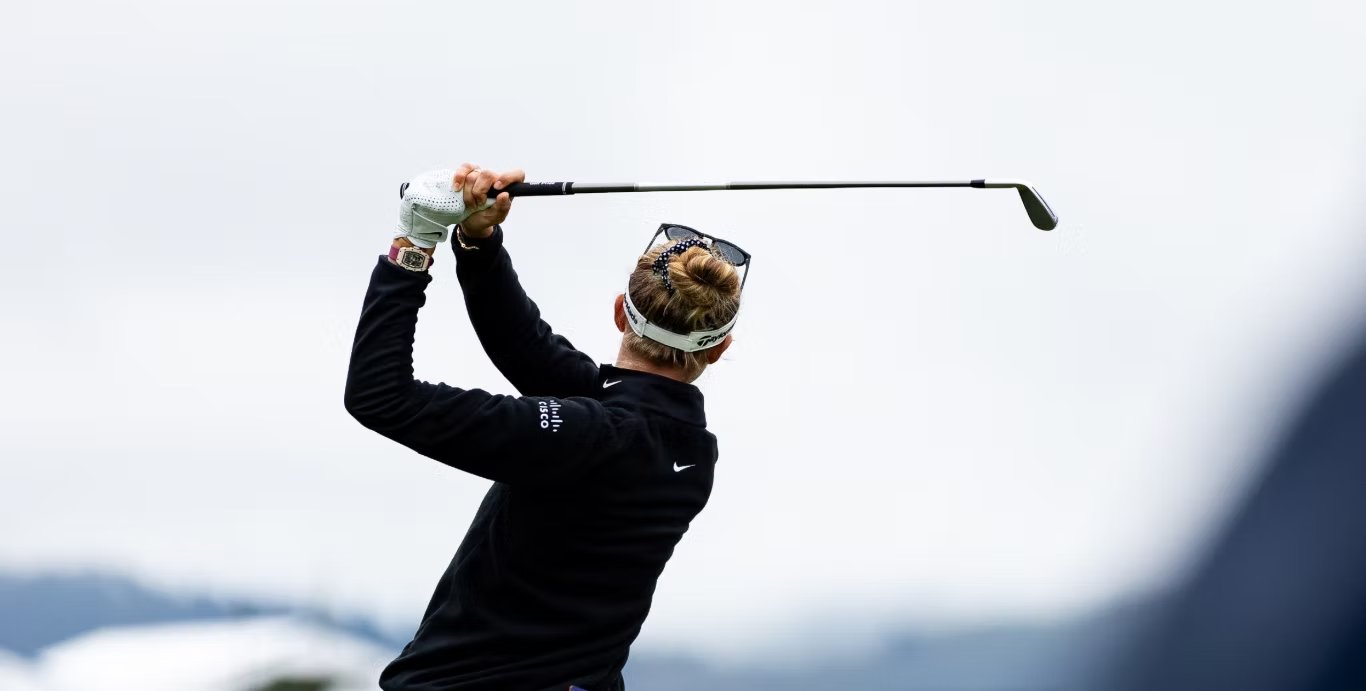
MVT's answer was called Read the Line. Golfers already study the slope, speed and invisible forces between a ball and a cup. The series borrowed that familiar act to explain invisible technology. Six Cisco ambassadors - including Nelly Korda, Viktor Hovland and Cameron Young - filmed at the U.S. Women's Open and U.S. Open. Each used the course to make an enterprise product legible.
Reported by MVT for the Cisco × USGA Read the Line campaign.
The reported result was 16.7 million Instagram views. More important to understanding the agency, however, is the shape of the idea. It was repeatable. It gave athletes something natural to do. It placed the product inside the sport's language rather than taping a sales pitch to a famous face. One format could accommodate several people, products and events.
A sponsorship needs a sentence that makes the pairing feel inevitable.MVT's case work, reduced to its sharpest rule
The tournament was the training ground
MVT's origins explain the fixation on timing and fit. Founder Matt Van Tuinen first worked the Indian Wells tennis tournament in 2004 while employed at Taylor. Two years later, as that firm moved away from the tournament business, its partners suggested that the clients hire him independently. Van Tuinen and his family moved to the Chicago area. MVT Public Relations began with one client and the practical education of a live event: deadlines do not negotiate, journalists need actual answers, and access is valuable only if someone knows what to do with it.

The initials have a backstoryMVT is both the agency's name and Matt Van Tuinen's initials. By 2025 he had spent 22 consecutive birthdays working at Indian Wells, where the tournament honored him with the Bud Collins Media Award. He is now listed as founder and CEO emeritus; Chris Taylor leads the firm as CEO.
The agency grew outward from tennis into enterprise technology, football, golf, racing, apparel and collectibles. Its clients have included Cisco, the BNP Paribas Open, the International Tennis Hall of Fame and the National Sports Collectors Convention. This is not the usual claim to be fluent in every category. The specialism is the machinery of sport itself: rights-holders, athletes, media windows, fan rituals and the organizational thicket behind a moment on television.
Five days are not a content strategy
The National Sports Collectors Convention presented a different version of the Tuesday problem. Its show floor produced hours of footage and millions of objects across five days. But the brand had no centered plan for the rest of the year. MVT reorganized the voice around connection, inspiration and discovery. The convention would not simply announce booths. It could behave like an authority on the hobby.
In a three-month window, MVT reports that impressions rose 130 percent, engagements 123 percent and video views 229 percent. Ticket-sale pace increased 30 percent year over year. At the Super Bowl, the firm paired The National with running back and collector AJ Dillon, moving a convention into the biggest conversation in American sport without pretending that the connection was accidental.
This is also the first thing to fail in an underused sponsorship: continuity. The announcement and the tentpole receive energy; the months between them receive leftovers. MVT's planning service is designed to correct that imbalance with editorial calendars, campaign sequencing and a consistent message. The creative act is not merely having an idea. It is constructing enough places for the idea to live.

A program, not a promotional day
For the International Tennis Hall of Fame, MVT took a local youth clinic and designed Be Legendary, a program for players aged 10 to 18. The firm worked on the name, manifesto, visual identity, lesson templates, sponsor materials and launch plan. Children received activities and merchandise before meeting a Hall of Famer, so the live clinic arrived as the payoff to a story already in progress.
The inaugural run covered six events and reported 138 media mentions, 232 million in reach and $2.13 million in advertising-value equivalency. Those figures belong to the familiar grammar of public relations. The more interesting achievement is institutional: the Hall of Fame gained a format that could travel, recruit different champions and connect its archive to the next generation. MVT had made something the client could keep using.
What another marketer can steal
The copyable part is not the celebrity or the championship venue. Start smaller. Write the one sentence that connects the brand to the property without leaning on the contract. Turn that sentence into a format that can survive more than one post. Give every channel a job. Plan for the quiet weeks before spending all the energy on launch day. Then inspect the response for comprehension and behavior, not only exposure.
The partnership has a credible shared idea, useful access to people or places, and enough time to repeat the story.
The fit exists only on paper, approvals erase personality, access is ceremonial, or the client wants one viral moment instead of a system.
Organizations hire MVT for specialist counsel and execution across projects or ongoing programs. The buyer is not paying for media inventory. The buyer is paying for connective tissue - between a sponsorship department and a communications department, a corporate vocabulary and a fan's vocabulary, a magnificent Sunday and the Tuesday that follows.
That position has become clearer under CEO Chris Taylor. MVT now describes four connected capabilities: narrative strategy, communications planning, media activation and results analysis. It is less a menu than a loop. Evidence from one campaign is supposed to improve the next. The firm calls this a flywheel. The less fashionable name might be memory - an agency refusing to begin every assignment as if nothing had happened before.
Sports create attention with unusual efficiency. They cannot guarantee meaning. MVT's bet is that the distance between the two is a craft, and that craft is worth buying separately. The logo gets into the stadium. The story earns its way out.