At about one in the morning, a worker installing fiber-optic cable noticed carbon monoxide in the enclosed workspace of his truck. He checked a colleague’s truck. There, his gas detector alarmed. The apparent culprit was a generator whose exhaust was not ventilating properly. Both men left the space. A supervisor learned about the incident through the connected detector.
MSA tells this story in its 2024 Impact Report. The customer is unnamed; the account is the company’s. Still, the detail that matters is wonderfully ordinary: the worker had kept his detector switched on. Protection depended on a sensor, a habit and a warning reaching somebody who could act.
- It makes danger detectable: gas sensors, thermal imagers and protective equipment for industrial workers and firefighters.
- It connects the handoffs: devices, testing, worker assignment and remote monitoring.
- It sells an ongoing job: equipment plus software and service, with maintenance still essential.
01 First, remove the flame
The idea behind MSA predates the dashboard by a century. On March 26, 1912, methane ignited at West Virginia’s Jed Mine, killing more than 80 miners. Mine engineer John T. Ryan Sr. wanted to prevent such disasters. He recruited George H. Deike. In 1914, they founded Mine Safety Appliances.
They worked with Thomas Edison on an electric miners’ cap lamp. The important innovation was the missing flame. Equipment meant to help someone see underground no longer needed to carry that particular ignition source into the mine. Edison was a collaborator, not a founder. The company’s starting point was a specific contradiction: an essential tool could introduce danger.
That origin explains the unusually broad catalog. A helmet, a breathing apparatus and a gas monitor look unrelated on a shelf. In use, each addresses a limitation of the human body: what it can withstand, breathe or notice in time.
02 The hard hat has company
MSA’s customers include fire departments, utilities, mines, construction firms, manufacturers and oil and gas operators. Its V-Gard helmet dates to 1962. The G1 self-contained breathing apparatus supplies firefighters with breathable air. Fall-protection equipment addresses work at height; fixed gas and flame detection watches facilities rather than individual people.
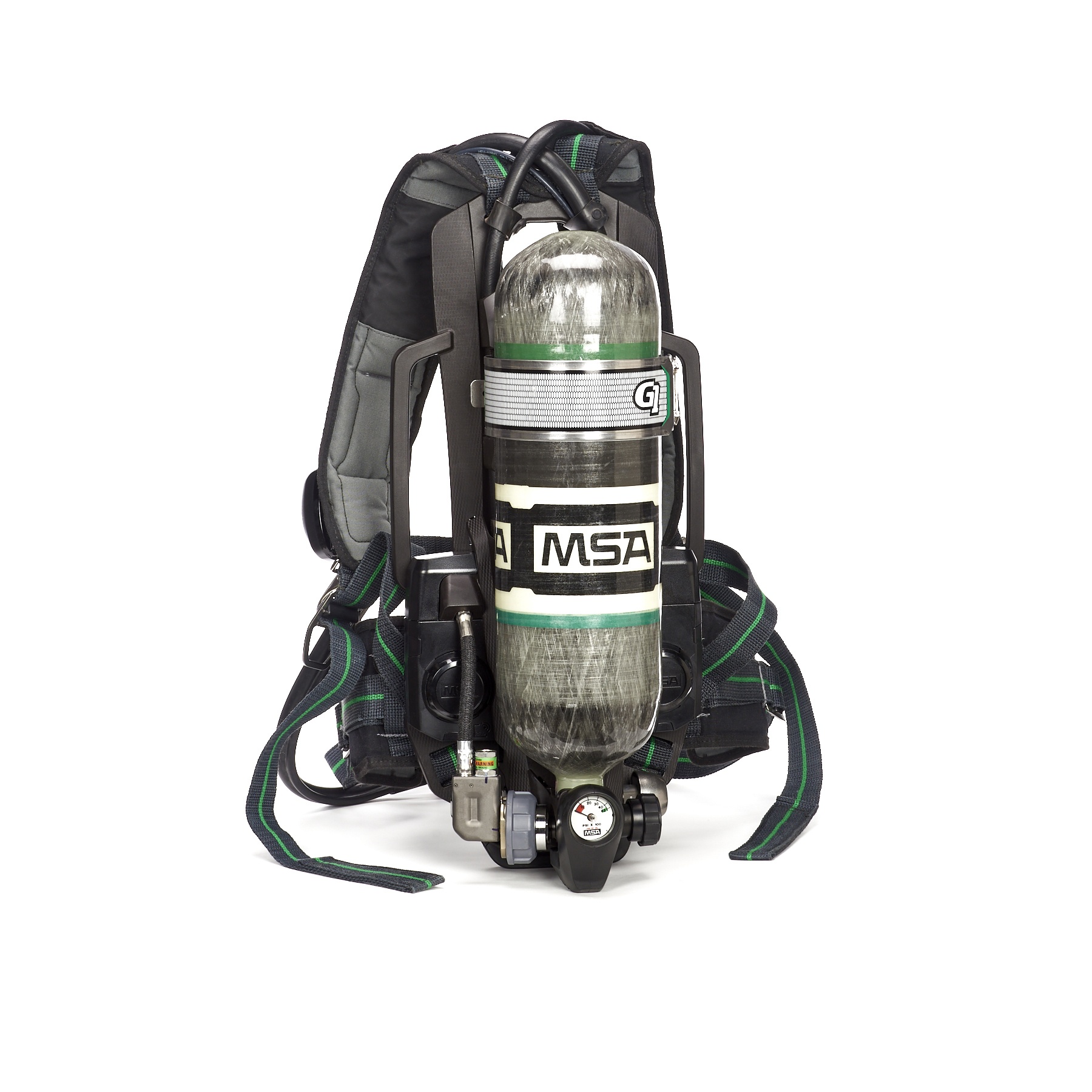
The expertise spans sensors, mechanical systems, materials and electronics. That combination matters because the equipment must work while being worn, carried, knocked about and maintained. A detector’s specification is only part of its usefulness. The daily business of assigning it, testing it and keeping records occupies real people, too.
03 A warning learns to travel
The ALTAIR io 4, available for order in 2022, joins a wearable gas detector to cellular connectivity and MSA Grid software. Its dock can automate bump testing and calibration. Digital identification replaces paper sign-out. Grid gives supervisors access to device information and, depending on the package, live events and location awareness.
- 01SenseGas exposure
- 02AlertThe wearer
- 03InformThe supervisor
- 04RespondHuman action
The commercial change is MSA+: hardware, software and services bundled into subscriptions. The proposition extends beyond purchasing an instrument to running a detection program. It also gives MSA an ongoing relationship with the customer. Equipment sales through distributors and direct channels remain part of the business; a subscription does not describe the entire company.
For a buyer, the useful comparison is the whole workflow. Dräger also supplies breathing apparatus and gas detection. Industrial Scientific offers connected gas detection. MSA’s argument rests on how its equipment and software work together, alongside service and established product families. A familiar logo alone cannot settle which system fits a particular site.
04 The bill behind the beep
Costs have several layers. MSA’s Canadian 2026 rental guide lists an ALTAIR io 4 Starter rental at C$672 monthly or C$225 weekly. That is a regional rental list price, not a universal purchase or subscription price. Chargers and test stands appear separately. A useful budget follows the equipment through testing and support, not merely delivery.
MSA itself reported $65.3 million in research-and-development expense for 2025, alongside $1.875 billion in sales. Expansion also involves acquisitions: approximately $555 million bought Autronica in July 2026, financed with cash and credit-facility borrowings. The Norwegian business adds fire and gas detection and alarm systems, extending MSA’s reach into integrated infrastructure, energy and marine applications.
Autronica acquisition value, July 2026.
Cash and existing credit-facility borrowings.
05 A connection has conditions
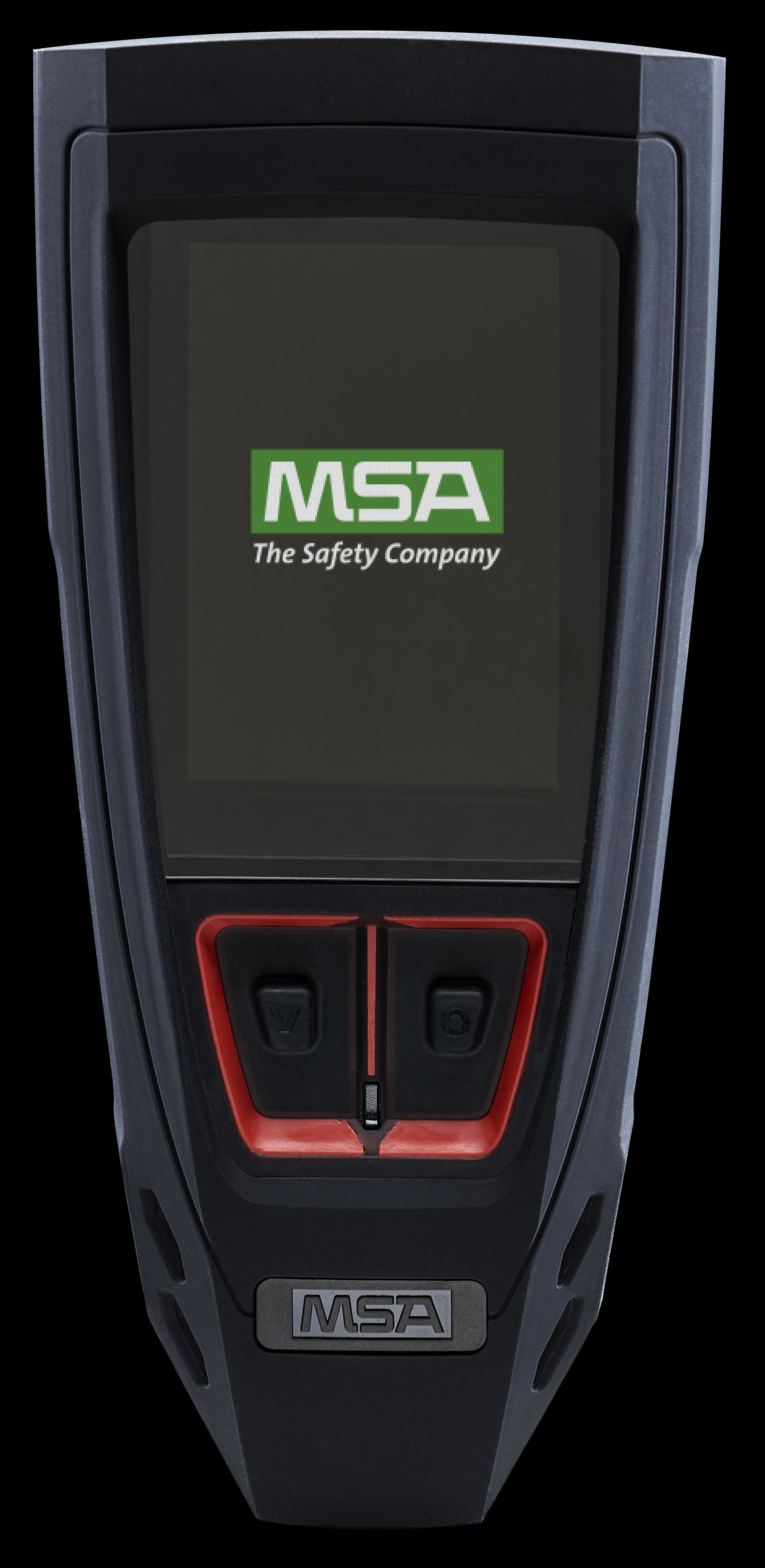
The LUNAR firefighter device makes those conditions concrete. It combines thermal imaging with a local search network and cloud connectivity. Without cellular service, thermal imaging and the device-to-device search network remain available. Remote real-time information resumes when the connection returns. Pairing for breathing-apparatus data is specific to MSA’s G1; other brands do not gain that integration.
That distinction should shape purchasing and training. A remote dashboard depends on a working communications path. A sensor must match the hazard being monitored. Workers still need training and equipment maintenance. My reading of MSA’s approach is that its value increases when an employer can turn additional information into an organized response.
“Protecting people is at the core of our mission.”
Steve Blanco, President & CEO · August 2026
There is an internal test of that claim. In August 2026, MSA said its latest Impact Report recorded its strongest employee safety performance to date. That is company-reported progress. For a manufacturer asking customers to trust its safety judgment, the conditions inside its own operations belong in the conversation alongside the features in its catalog.
06 The next handoff
On October 22, 2026, MSA announced a five-year agreement with an unnamed Northeast U.S. utility for ALTAIR io 6 detectors. Initial value: approximately $6.7 million, with a ceiling of $10.6 million. Shipments are expected in December; deployment is scheduled for January 2027. Those are commitments and plans, not completed installations.
The lesson a reader can copy is practical: map what happens after your product notices a problem. Who receives the warning? Who owns the next step? MSA began by removing a flame from a lamp. Its connected products address another vulnerability: the distance between discovering danger and getting help.