The first Topship shipment was less a launch than an attempt to make several persistent people go away. It was 2020. The world had shut its doors, yet merchants in Moses Enenwali's orbit kept asking how to move goods across them. One request involved a large volume of pampers. Enenwali, already known from years in logistics, called someone who understood airline capacity. A passenger plane had room. The cargo moved. Then the customer told someone, who told someone else. A favor acquired volume before it acquired a business model.
This is a pleasingly unceremonious beginning for a company concerned with ceremonies of movement: waybills, customs forms, declared values, pickups and doorstep arrivals. Topship would later become an Instagram service, a software platform, a member of Y Combinator's Winter 2022 batch and the recipient of a $2.5 million seed round led by Flexport. At the start, it was Enenwali answering a practical question that refused to stop being asked.
“It wasn't a business then. It was a scrappy, little hustle.”Moses Enenwali on Topship's beginning
Coffee before cargo
Long before Topship, distribution had already introduced itself. Enenwali was born and raised in Jos. His father was an architect and builder with several entrepreneurial side projects. His mother worked at the Bank of Agriculture and knew smallholder farmers. He remembers a quiet childhood, then a move to the United Kingdom to study economics at the University of Hertfordshire. Wall Street was the early fantasy: competition, money, the polished velocity of finance.
University supplied less polished experiments. A restaurant failed. An events business sometimes worked and sometimes produced the kind of evening that teaches more than it pays. Then his mother told him about coffee farmers near Jos. They had Arabica beans and too little distribution. Beans travelled from Nigeria to the UK, where Enenwali and his partners roasted, blended and sold them to local coffee shops. The venture, Timewall Coffee, operated under the university's incubation umbrella. He calls it messy. It also worked.
Graduation brought tax, compliance and separate lives, so the coffee company ended. Yet its central problem remained remarkably durable: a producer in Africa had something valuable; a buyer elsewhere wanted it; the route between them was needlessly difficult. Founder stories are often edited to make fate look punctual. This one is more interesting. The same question kept returning, wearing different clothes.
The respectable job and the useful pay cut
A change in British post-study work rules sent Enenwali back to Nigeria after university. An aunt mentioned an opening at EY. He sent his CV, got the job and began working in transfer pricing. EY gave him training, a strong name and parents delighted to tell people where their son worked. It did not give him fire. He watched colleagues who genuinely loved the work arrive on Saturdays and Sundays with an appetite he could not manufacture. His conclusion was unsentimental: if someone else was aflame and he was merely complaining, he should find a different room.
A younger brother, working around Lagos technology companies, helped place another founder on Enenwali's radar. Enenwali cold-messaged Tunde Kehinde, who had left Jumia to build ACE - Africa Courier Express, and asked to join. The only opening was door-to-door sales, a role nobody wanted. Enenwali accepted, left the Big Four brand and took a pay cut.
The job restored the competition he had imagined finding on Wall Street, only with more weather. Every morning brought a target. Rain, flooding and thunderstorms were irrelevant to the number. Oddly enough, he liked it. The daily chase gave him a close view of merchants and a conviction that work worth doing should grip the person doing it. Logistics was not yet his calling. It was simply the place where he felt awake.
Clients from ACE later invited him into Sendbox, the e-commerce fulfilment company they were starting after wrestling with their own supply-chain problems. He worked there across growth, operations and partnerships, left for a consulting opportunity that collapsed when its expected contract went elsewhere, then returned. The failed detour gave him a phrase he still uses: do not go against your instincts. The return gave him more years watching a logistics model get tested, discarded and rebuilt.
The service earned the software
When pandemic disruption produced that first cluster of shipping requests, Enenwali did not begin by commissioning an elaborate platform. Topship ran as a service. Instagram supplied the storefront. Referrals supplied the queue. The manual work exposed what merchants actually needed: sensible rates, clear options, dependable support and fewer mysteries between pickup and delivery.
By March 2021, the pattern was clear enough to turn into a technology company. Junaid Babatunde joined as co-founder and CTO. The team built software for an end-to-end shipment rather than a prettier front door to the same confusion. In early 2022, Topship entered Y Combinator. Enenwali said the accelerator pushed the company deeper into understanding its users. His preferred word is obsessive.
The seed round brought Flexport, Y Combinator, Soma Capital, Starling Ventures, Olive Tree Capital, Capital X and True Capital onto the cap table, alongside individual investors including Immad Akhund and Dropbox co-founder Arash Ferdowsi. Enenwali's public reaction was compact: proud of the team, grateful to the merchants, back to execution, still day one. Fundraising was an event. Operations remained the plot.
Topship's thesis also changed with reality. In 2022, Enenwali argued for air cargo as the practical way to connect a continent where functioning airports are more common than the roads and railways required by an ocean-heavy model. In 2024, Topship added door-to-door sea freight for larger, heavier shipments while keeping air and sea options inside one product. A thesis that cannot absorb new evidence is only decoration.
Hire the missionary, keep the kindness
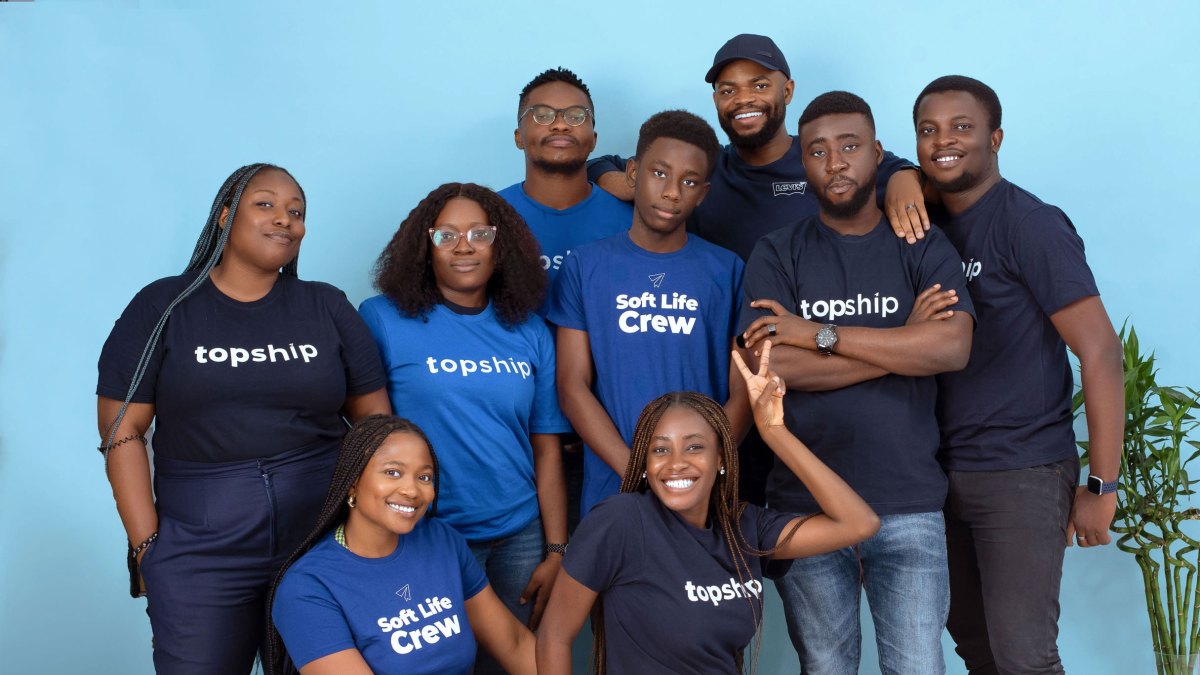
Ask Enenwali what makes him proud and he does not begin with the round. He begins with the team. In Topship's earliest period, doing everything himself was difficult and messy. The important transition was finding people who carried the vision on their own backs. He calls them “spirit animals”: driven believers who can execute without misplacing their kindness.
“You don't go for the smartest person. You go for someone who's a missionary.”Moses Enenwali on early teams
The religious metaphor is deliberate and amusingly accurate. Beginning a startup, he says, resembles founding a church. Someone must persuade people to leave paid jobs and join a mission that begins at zero. Salary helps; salary cannot manufacture conviction. His lesson came from choosing an exceptionally smart university partner whose brilliance did not translate into the right working relationship. Raw intelligence lost its place at the top of the list. Learning, iteration, patience and the willingness to remain took precedence.
- Begin with a problem you understand, not the social performance of founding a company.
- Stay close enough to users that their friction reaches the product.
- Choose people who bring resourcefulness, belief and kindness together.
- Keep asking questions. Confidence without humility is expensive cargo.
That last line of thought is central to how Enenwali describes himself. Nobody knows anything, he says, himself included. Plans made in 2019 did not anticipate the world of 2020. The remedy is not passivity but disciplined humility: keep the head down, remain focused, ask questions and treat people well. He offers another phrase, borrowed but beloved: “The god of the underdog never sleeps.” It is a warning against freezing people at the rank where one first met them.
Watch the full Founders Connect conversation39 minutes - career, YC, teams and useful failuresA larger map for the African exporter
In May 2026, Topship published its African Shipping Outlook 2025 and Enenwali took its argument to television. The report describes informal parcel networks - friends' suitcases, family connections and WhatsApp orders - becoming a more formal logistics ecosystem. It frames small African exporters not as curiosities at the edge of global trade but as participants whose infrastructure is finally catching up with their ambition.
For Enenwali, that argument has a human face. He has written about meeting a Lagos fashion designer whose work attracted buyers in Britain and the United States, yet whose practical export system was a friend's suitcase. Freight minimums were too high, documentation too obscure and tracking too unreliable. The talent crossed borders online before the product could follow with dignity. Topship's work is to close that embarrassing gap.
This is where the winding biography snaps into focus. Coffee growers had production without distribution. Fashion merchants had demand without a route. An economics graduate wanted Wall Street and found his competitive arena knocking on doors in Lagos. A cancelled consulting contract returned him to the work his instincts had resisted abandoning. When lockdown arrived, merchants called the person who had spent years listening to them.
The neat version says Enenwali founded a logistics startup. The useful version says he repeatedly stood near goods that could not get where they deserved to go. He learned the rates, the excuses, the personalities and the paperwork. Eventually, the package stopped being an errand and became a company. It is still moving.