Imagine ordering a kitchen countertop from another continent. The photograph is lovely. The price works. Then come the questions a photograph cannot answer: Will the slab match the sample? Was the edge cut to the drawing? Who checks it before it goes into a container? And who will explain the delay when the installation crew is already booked? These questions are where GlobalFair makes its living.
- GlobalFair helps professional buyers source building materials across borders, with estimates, inspections, logistics and order tracking.
- Its founders narrowed an early seven-category marketplace to construction materials when they saw that dependable supply was the harder problem.
- The company announced $22 million in total financing through 2022; a founder later described an average order of about $120,000.
The company was founded in 2020 by Shaily Garg and Ashish Chandra. Garg had grown up around a family manufacturing business, trained as an engineer and worked at Procter & Gamble. Chandra brought engineering and infrastructure consulting experience. Their first idea was a cross-border marketplace spanning seven categories. Four months in, Garg later recalled, they cut it down to one: construction. A general store has an appealing breadth. A container of incorrect cabinets has a very specific owner.
The first thing to go was breadth
Garg has described the decision with unusual candor. To win repeat orders, the company needed scalable, reliable supply. It could not develop deep control over quality in seven categories at once. The founders chose the field they knew and began with buyers who already imported goods. The early model was not a public catastrophe; it was a hypothesis that failed the founders' own test of what they could manage well.
That distinction matters. Plenty of websites can introduce a buyer to a factory. A contractor, however, buys an outcome: material cut correctly, packed safely and delivered when a project needs it. GlobalFair gradually moved toward what Garg calls a managed marketplace. It sits between the factory and the buyer, coordinating production and checking the result, then assumes a visible role in the warranty. Its software is a window into the transaction; the transaction itself is a physical operation.
“We are not just a marketplace, we are a managed marketplace.”Shaily Garg, in a published founder interview
The catalog now reads like an interior finishes schedule: quartz and natural stone, cabinets, vinyl flooring, porcelain and ceramic tile, plus accessories, sinks, faucets, doors and windows. Its stated buyers include contractors, distributors, stone fabricators, architects and construction companies. In the founder's account, larger multifamily and hospitality contractors became particularly important. This is a business for people ordering by project, not by impulse.
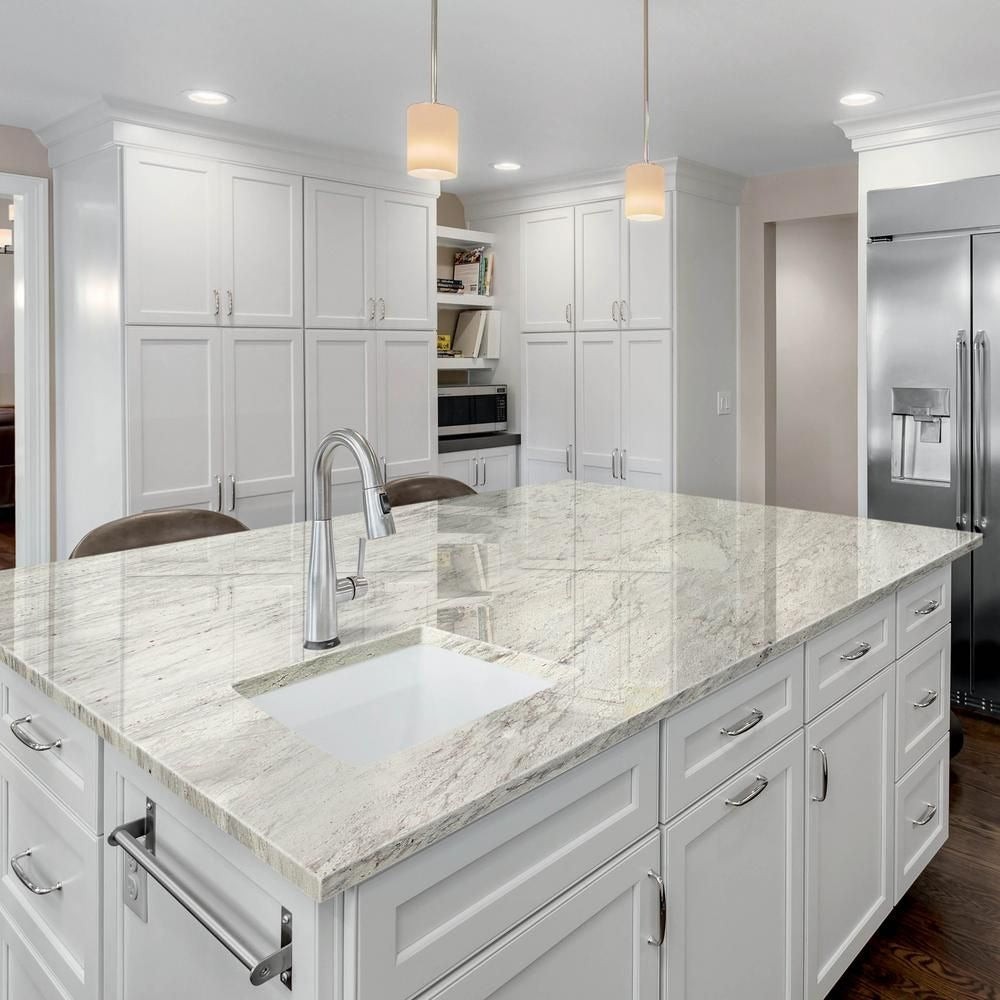
A $120,000 cart is a different animal
In a published interview, Garg put GlobalFair's average order at roughly $120,000 and said a single order could reach $1.2 million. Those are founder-reported figures, not a price list. They explain the design of the business. A buyer can browse products and request samples, then obtain an estimate. The company says it can produce estimates in 48 to 72 hours. Behind that promise lie plans, specifications, supplier capacity and freight calculations. Its estimating tool can work from architectural plans and shop drawings, according to 2022 reporting.
The number also explains why quality control is not decorative. Garg described checks before production, during production, after production and before shipment. GlobalFair's own process page details handoffs from sales and planning through production, inspection and logistics. It says the next stage moves forward only after quality approval. This is the kind of detail that sounds dull until a sink cutout lands on the wrong side of an island.
The steps are GlobalFair's published workflow, compressed here into four handoffs.
For the buyer, the offer is a single point of contact across that route. GlobalFair advertises order updates, quality reports and GPS-enabled container tracking through its web and mobile tools. A contractor who has sourced directly from factories will recognize the appeal: fewer calls to learn whether a shipment has passed inspection, cleared customs or left port. A buyer using a local distributor may still prefer domestic inventory and a familiar counter. GlobalFair's advantage is most plausible when a project is large enough to justify cross-border planning, customization and a longer lead time.
The money went toward the unphotogenic work
A $2 million seed round preceded a $20 million financing package announced in October 2022. The latter was led by Lightspeed and split into $12 million of equity and $8 million of debt, with Saama Capital, India Quotient, AUM Ventures and Stride Ventures also participating. That mix is revealing. Building a software interface costs money; moving physical material across oceans also ties up money. The round was intended to expand the team, products and markets.
There is no public, current price sheet for the service, and GlobalFair does not publish a take rate. Buyers request quotes for project-scale orders. The economics therefore depend on the material, customization, volume and delivery terms. The $120,000 average is useful as a sense of scale, but it is not what every buyer pays. Anyone copying the model would need to understand cash tied up between supplier payment and customer delivery. A beautiful dashboard cannot shorten a ship's voyage.
The company fits into an awkward gap in the market. Traditional importers and distributors can supply materials, but a buyer may see little of the production journey. Direct factory buying offers control over supplier selection, but hands coordination and quality risk to the buyer. Broad online trade marketplaces offer choice, but a buyer still has to decide whom to trust. GlobalFair tries to package procurement, inspection and freight into one accountable relationship. Its difference is the managed handoff, not the existence of an online catalog.
A smaller aisle, a longer checklist
The public record contains a useful clue about what the founders learned. After narrowing to construction, they did not stop with one product forever. Today's catalog spans finishes across a room. The principle was not permanent smallness. It was sequence: earn confidence in a supply chain, then add adjacent products that the same buyers need. For a contractor outfitting many apartments or hotel rooms, cabinets, floors and countertops belong in the same conversation. For a supplier, each additional category still demands specifications, inspection routines and dependable factories.
GlobalFair's website says it delivers across 38 U.S. states, a company claim that captures the ambition better than any slogan. Garg's 2022 Forbes 30 Under 30 Asia recognition and the funding round gave the business a public profile. The work remains humbler: helping a contractor know what is being made, whether it passed inspection and when it will reach the site. If the answer is clear, the customer can schedule the installer. In construction, that can be a competitive advantage large enough to fit inside a shipping container.