Monica Ho remembers the boardroom before she remembers what she said in it. She had reached the CMO seat at GroundTruth, then called xAd, after years in marketing. At last she would be close to the decisions. After her second meeting, a board member pulled her aside. His advice was brief: get out of your head. Ho was thoughtful by instinct, a listener in a room crowded with large personalities. She waited for an opening that never came. The adjustment was simple to describe and awkward to practice. She learned to interrupt.
That moment contains the argument of her career. A title gets you into the room once. It does not keep you useful there. The work is to arrive with an opinion, say it while the choice is still alive, and return next quarter with evidence that you have noticed the business changing.
“You earn your seat at the table, yes, but then you have to make sure you have a voice.”Monica Ho
Ho has now been chief marketing officer at SOCi since 2018, a long run in a profession that frets publicly about short tenures. During that stretch, the multi-location marketing company moved from roughly $10 million in revenue to more than $100 million. The easy story would praise stamina. Ho offers a less comfortable version: the same title can conceal a succession of different jobs, and yesterday's excellent result has a very short shelf life.
The title stayed put. The assignment did not.
Before SOCi, Ho spent about seven years at xAd, the New York location-technology company that became GroundTruth. The original business centered on mobile advertising: help a marketer reach someone near a place. The signals soon proved useful for more than serving an ad. Retail planning, visitation analysis and business intelligence all wanted a clearer picture of what people did in the physical world. In 2017, the company changed its name to express that larger territory.
Ho helped make the translation. “Ground truth” is a term for direct observation used to check a model. In an industry thick with modeled signals, fraud questions and glossy abstractions, the new name planted a flag in actual visitation. A rebrand can be mere upholstery. This one marked a change in what the company believed it sold.
The move was personal too. In 2016, Ho and her family left New York for Austin. Her children were 12 and 9. She continued in the GroundTruth role, then left to pursue work closer to home. SOCi was smaller and focused on the unruly digital lives of physical locations: the search listing with the wrong hours, the review awaiting a reply, the social page that headquarters barely knew existed.
At SOCi, the customer problem kept widening. Listings met reviews. Reviews met social. Social became search. Search began producing AI answers. A multi-location brand was no longer competing for a blue link alone; it had to be accurate and persuasive across a consumer's whole path. Ho's description is cleaner: ranking first is no longer enough. Presence has become a system.
The local is never small
Ho arrived at that view through a career that kept putting scale and specificity in the same sentence. She studied marketing and real estate at the University of Wisconsin-Milwaukee, graduating cum laude. The pairing now looks almost suspiciously neat: how do you market a place, and what makes one location different from the next? Before xAd, she served as senior vice president of marketing and strategy at TMP Directional Marketing and helped launch its digital division, 15miles. The directory business was already becoming a data and discovery business.
At xAd, she helped turn location into an industry discipline. Ho founded and chaired the Mobile Marketing Association's Location Committee, served on its North American board and later joined the regional executive committee. The work included the gloriously unglamorous foundations of a young market: terminology, measurement, accuracy and the standards that let advertisers know what a location signal could honestly claim.
At SOCi, that instinct took the form of benchmarks. In 2019, Ho led a project that examined more than 50,000 social pages attached to 16,000 locations across 163 franchise brands. The question sounded modest: what does good localized social marketing look like? The scale of the answer exposed the central difficulty. A national brand can write one handsome campaign. A local system has to make thousands of pages useful without making every page sound as though it was issued by the same office printer.
That tension explains why Ho resists treating local as a distribution chore. Consumer questions happen near an address: Is it open? Do people trust it? Does it carry the thing I want? A wrong hour or an abandoned review thread can undo expensive national advertising at the final turn. Central control protects the brand, but local knowledge supplies relevance. The marketing job is to design a system roomy enough for both.
Bring the unlovely slide
The boardroom lesson did not turn Ho into a performer who fills every silence. It made her more deliberate about the reason she is in the room. Before board meetings, her leadership team works through what it promised, what it delivered and what failed. The last category matters. She wants the screwed-up parts visible early, when they can invite joint problem-solving instead of defensive theater.
This is the practical meaning of her phrase “earned and re-earned.” A successful quarter cannot be banked as permanent authority. A CMO must return with useful insight about what the business needs next. As revenue scales, the questions change: brand creation becomes category positioning; demand creation meets revenue efficiency; a generalist team grows functions, then sometimes compresses them again.
Protect the win, polish the update, wait for a clean opening to speak.
Expose the miss, prepare the opinion, enter the conversation before the pause.
Her own preparation is half data and half nerve. The former prevents a vague opinion. The latter gets the specific one into circulation. It is a useful combination for a marketer whose territory, local digital discovery, tends to accumulate new channels faster than anyone can retire the old ones.
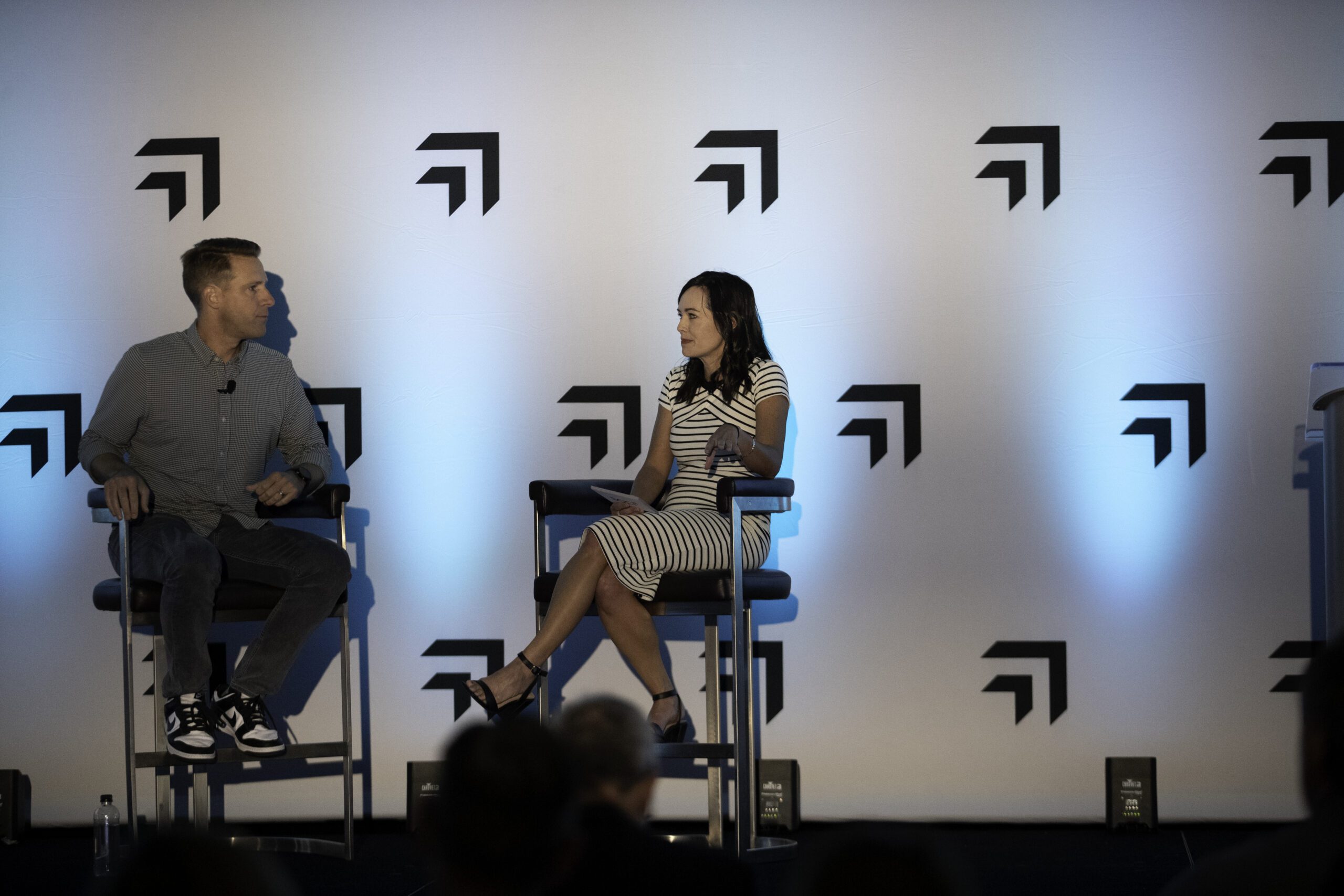
Two AI plans flopped. Then the work changed.
Ho is unusually plain about her early attempts to make generative AI useful inside marketing. First came encouragement: here are the tools, go experiment, make the work better. Daily obligations won. The copy and campaigns did not noticeably improve. Next came internal AI specialists, enthusiasts who would teach use cases and spread the habit. That idea flopped too.
The forcing function arrived when SOCi stopped backfilling some content and industry-specialist roles. Teams could no longer treat AI as elective homework. They had to train systems for a particular audience, build the right instructions, tune the output and change their own process. The transition brought fear and frustration. Within a month or two, Ho said, output returned to its previous level. The efficiency appeared only after the investment in setup.
“If I'm not in a changing environment, I produce that myself.”Monica Ho
Her conclusion is neither romantic nor apocalyptic. The organization can support more strategists and fewer people devoted to repetitive production. Yet remove junior talent entirely and something important leaves with it: native fluency, mischief, and the freedom to make a post without embalming it in a committee.
SOCi's interns proved the point on TikTok. Their work drew better engagement than the experienced team's content. They knew the platform's native tools and, in Ho's marvelous diagnosis, they were having more fun. She called it reverse mentoring. Soon she was discussing two additional junior roles, not in spite of AI efficiency but because the team needed fresh thinking.
From momentum to impact
In 2026, ten years after moving to Texas, Ho posted two family images: a last New York sleigh ride and a first jump into Barton Springs. The children who were 12 and 9 had become a young adult on her own and a college student. The house was quieter. SOCi, once the smaller bet close to home, had grown beyond what she imagined at the start.
Her reflection was about compounding. Intentional choices do not announce their returns when made. They feel risky, inconvenient or simply unfinished. Only later does the line become visible. A decade earlier, she wrote, she was building momentum. Now she is building impact.
The distinction suits her. Momentum is a graph that keeps climbing. Impact is the quality of the system left behind: a leadership team willing to show the bad news; experienced marketers who can redesign their work; interns invited to teach; brands that can answer a customer coherently whether the question arrives through a map, a review, a social feed or an AI assistant.
Ho's longevity is therefore not a tale of holding on. It is the record of someone willing to let the job shed its skin without mistaking that discomfort for failure. The chair remains. The person sitting in it keeps moving.