A truck sitting on a dealer’s lot has a peculiar quality. It is useful, expensive, and earning its future operator absolutely nothing. Before it can carry a load, someone must finance its stay on the lot. Then someone must finance the business that buys it. The vehicle barely moves, but the financial problem changes hands.
Mitsubishi HC Capital America works in that interval. It lends to businesses, leases equipment, finances dealer inventory, and supplies working capital against assets such as receivables. Trucks are part of the picture. So are construction machines, medical equipment, technology purchases, and energy projects. The common problem is timing: the bill arrives before the benefit.
- Finances equipment, inventory, and working capital for businesses and their suppliers.
- Combines US operations with a Canadian business for cross-border programs.
- Offers different structures for buying, leasing, stocking, and selling assets.
Three lenders, one longer view
The company’s present shape emerged on April 1, 2023, when Mitsubishi HC Capital America, Mitsubishi HC Capital (U.S.A.), and ENGS Commercial Finance merged. America was the surviving legal entity. Craig Weinewuth, formerly ENGS’s president and CEO, took charge of the combined business.
The merger announcement divided the operation into a $3.9 billion Vendor Solutions business, a $1.6 billion Commercial Finance business, and a $2 billion Canadian business. Those were assets, not sales. Together, they described a lender able to address several different moments in a customer’s cash cycle.
Management identified growth potential and service improvements as the merger’s drivers. Equipment financing, working capital, and cross-border capabilities would sit inside a broader operation. The practical proposition was straightforward: a vendor or business customer could bring more of its financing needs to the same group.
Combined owned and managed assets across the US and Canada, as currently reported by the company. Its homepage also reports 64,000+ customers.
That scope helps explain its place in the market. A bank competes for business borrowing. A manufacturer’s captive lender supports its equipment sales. Mitsubishi HC Capital America offers a non-bank alternative across vendors and asset types, backed by the broader Mitsubishi HC Capital group. The useful comparison is the particular deal: collateral, payment schedule, equipment knowledge, and the options left open afterward.
The dealer is the hinge
Consider the company’s July 2026 agreement with CMC North America, which supplies aerial platforms and related products. Mitsubishi HC Capital America became a preferred lender across the United States and Canada. The program spans inventory, retail, and rental financing.
That combination matters. A dealer needs equipment available for customers to inspect. A buyer needs a way to pay for it. A rental operator needs capital for a fleet that earns its keep over many jobs. The same category of machine produces three financing needs, depending on where it sits and who expects to earn money from it.
Its February 2026 LS Tractor agreement applies that thinking to dealer inventory across both countries. A May partnership with Vibrant Credit Union adds another route: eligible US inventory-finance dealers can offer consumer retail financing for compact agriculture and construction equipment through the credit union.
These are distribution relationships as much as lending products. Financing offered through the seller becomes part of the purchase conversation. The dealer can discuss equipment and payment options together; the finance company gains access to customers at the moment they are deciding to buy.
A robot with a monthly bill
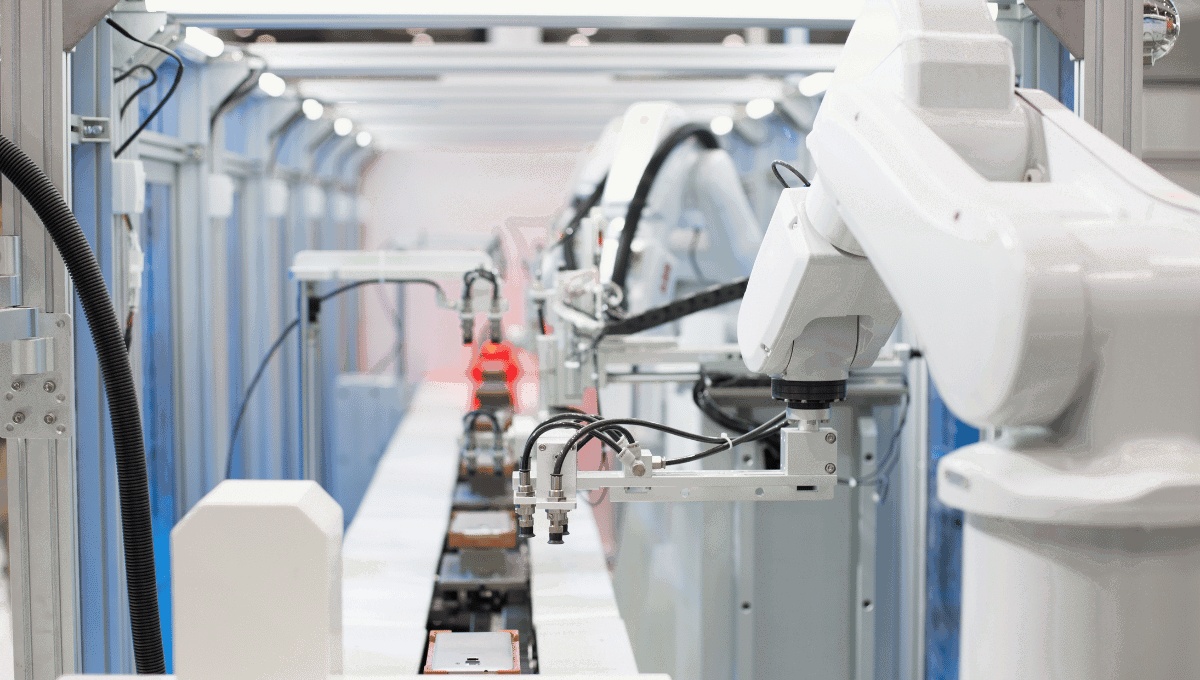
The more revealing example is Formic. In June 2024, Mitsubishi HC Capital America announced a joint commercial agreement with the robots-as-a-service provider. Formic designs and deploys manufacturing automation, then monitors and maintains it. The financing can bundle equipment, software, supplies, and servicing into a monthly payment.
“However, financing is often a barrier to adoption.”Jim Freund, then President of Vendor Solutions, June 2024
The company also announced a strategic investment in Formic through its parent group’s Innovation Investment Fund. The agreement brings financing into the service model itself: a manufacturer can pay for access to an operating system of equipment and support rather than arrange every component separately.
That arrangement connects to a broader offering. Mitsubishi HC Capital America advertises as-a-service financing of $1 million to $25 million, with terms of one to five-plus years. For suppliers selling subscriptions, the attraction is liquidity. Their customers pay over time while equipment and operating expenses still require funding.
Read the ending before signing
The business earns through lending and leasing activities. Its products address different cash problems. Asset-based lending uses eligible receivables, equipment, or inventory as collateral. Technology channel financing targets resellers and solution providers with at least $10 million in revenue. FMV leases let equipment users consider returning, extending, upgrading, or purchasing equipment at fair market value when the term ends.
The company does not offer a universal price tag for this collection of transactions. For a prospective customer, the useful exercise is to compare a written proposal’s total payments, fees, collateral requirements, and end-of-term obligations. A manageable monthly payment answers only one part of the question.
The structure also has limits. Asset-based borrowing depends on eligible collateral. A subscription financing program needs contracts and a transaction the lender will underwrite. Financing cannot make idle inventory sell or turn an unproductive machine into a profitable purchase. Those are business risks that remain after capital arrives.
Under Timothy B. Page, who became CEO in January 2026, the company continues to develop these relationships. In June it reported 32 structured finance and leasing transactions for the fiscal year ended March 31, including sponsor-backed deals and projects involving energy and digital infrastructure.
The lesson a business owner can copy is modest and useful: draw the cash cycle before choosing the loan. Mark when suppliers must be paid, when equipment starts producing, and when customers actually pay. Mitsubishi HC Capital America’s range of products makes more sense once those dates are on the page. So does the decision about which one to use.