Glenn Mitchell’s useful invention was a list. In 1946, while working at a Chrysler dealership in San Diego, he gathered commonly requested parts and their prices so people would not have to hunt through separate catalogs. Other shops wanted the lists too. That was the invitation: something made to spare one parts counter a nuisance could spare many parts counters the same nuisance. Mitchell Manuals began in his garage.
The wonderfully unromantic detail is the searching. The car needed a part; the information needed finding. Mitchell noticed the second problem inside the first. Eight decades later, Mitchell 1 sells software and services that follow that same interruption through an entire repair business.
- Find the fix: ProDemand combines factory repair information with practical repair knowledge.
- Run the work: Manager SE handles estimates, repair orders, parts and invoices.
- Bring customers back: SocialCRM connects the shop to reminders, reviews and marketing.
- Mind the fit: vehicle coverage, Windows requirements and subscription terms deserve a real-world trial.
01 / A company with two beginnings
The older strand starts with an educator. Around 1916, Samuel Payne Reed, head of the automotive department at Heald College in San Francisco, began collecting electrical specifications and wiring diagrams. His manual appeared in 1918. The unfamiliar technology of the day needed an explanation, and Reed made a reference that technicians could consult.
Mitchell’s 1946 venture had a different starting point: parts and pricing. In 1958, its Pocket Estimator added labor time estimates. Now a shop could bring the ingredients of a repair bill together. In 1969, Mitchell Manuals acquired National Automotive Service, joining the Reed publication’s lineage to Mitchell’s business. The company’s 1918 date belongs to that inherited history.
These beginnings explain its particular kind of expertise. One supplied the technical knowledge; the other organized a commercial transaction. Today’s product range still carries both instincts. A wiring diagram helps a technician understand a circuit. A labor estimate helps a service advisor explain what the work will cost. The same repair requires both.
02 / The reference book learns to search
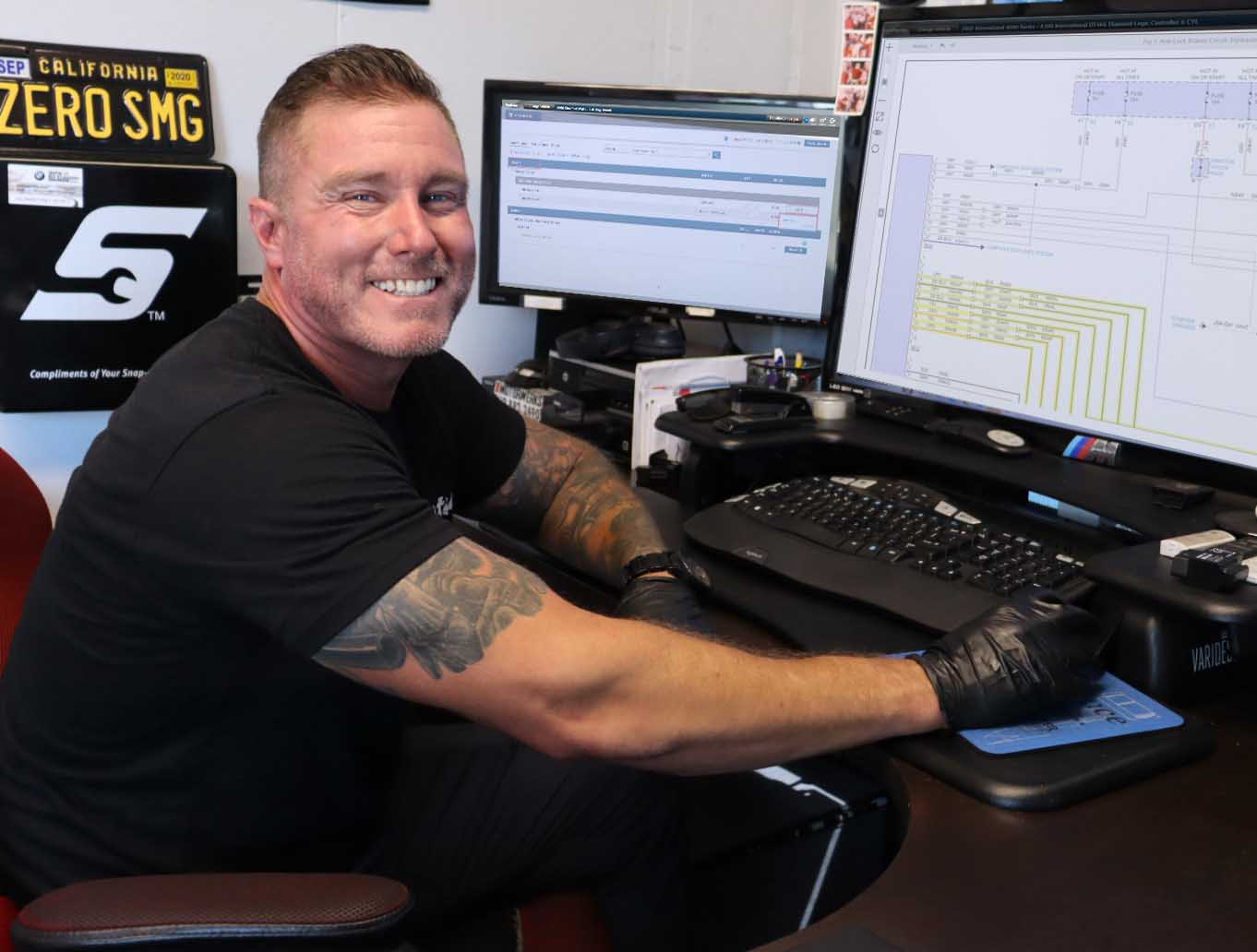
ProDemand, launched in 2012, is the repair-information side of the business. It brings OEM procedures, diagnostics, maintenance information and estimating into an online resource for cars and light-duty trucks. SureTrack adds expert-based fixes and a technician community. The appeal is the combination: what the manufacturer says about the vehicle, alongside knowledge drawn from work already done.
That distinction matters. A documented procedure answers one question. The experience of technicians facing a familiar symptom may help frame another. Neither relieves the person in the bay of testing the vehicle. A useful reference narrows the investigation; the mechanic still has to establish what is wrong with this particular car.
Electrical work gives the approach a visible shape. ProDemand’s interactive diagrams support tracing and component lookups. In August 2026, the company also moved OEM wiring diagrams into a top-level category beside its interactive versions. The change gave technicians a more direct choice of formats. In a business built on finding information, a few fewer layers of navigation qualify as product development.
ALLDATA Repair, which emphasizes unedited OEM information, and Identifix Direct-Hit offer alternatives in repair reference and diagnostics. Mitchell 1’s case rests on how its information is organized and connected to the rest of a shop’s work. Coverage and search behavior are more useful comparison questions than a competition over the largest adjective.
- 01IdentifyThe vehicle and the complaint
- 02InvestigateProDemand or TruckSeries
- 03OrganizeManager SE: estimate to invoice
- 04ReconnectSocialCRM customer follow-up
03 / A repair also has to get approved
A technician can finish the investigation while the business is still waiting. Someone must assemble parts and labor, explain the findings and obtain approval. Manager SE occupies that territory: scheduling, customer and vehicle records, repair orders, inventory, parts catalogs and invoices. Its Job View groups related parts and labor so a repair can appear as a coherent job.
The newest extension is OneFlow Estimator + Inspections, launched in April 2026. Powered by the Snap-on Digital Engine, the estimator uses VIN-specific information and natural-language searches to match parts, labor and related jobs. Inspection photos, videos and notes connect to Manager SE’s Job View. The intended saving comes from carrying information forward rather than entering it again.
“Estimating is where speed, accuracy and customer confidence intersect.”
Cami Hermann · Mitchell 1 marketing director · April 2026
The company says the underlying Digital Engine includes three billion verified repair records. That is a description of its data foundation, not a guarantee that every estimate will be right or every repair quick. The practical test is smaller: take a job the shop actually performs, build its estimate and see whether the recommended items belong there.
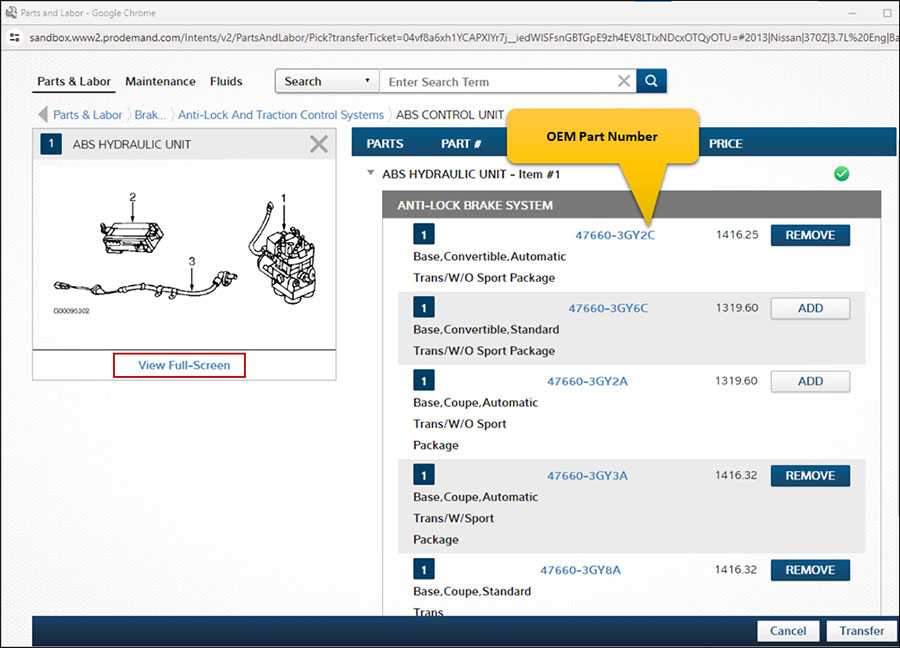
In August 2026, Manager SE added attachments at repair-order line-item level. An image or document can accompany a part, labor item, sublet or note. It is a modest feature with a sensible premise: a detail should travel with the thing it explains. Anyone who has searched for the photograph that belongs to an invoice will recognize the attraction.
04 / After the invoice, another job begins
Mitchell 1 did not arrive at marketing solely by making repair data searchable. Its history records a series of shop-owner focus groups in 2004 that endorsed a customer loyalty service. Reminder postcards followed in 2005, then emails. The shop owners’ request widened the company’s view of the problem: doing a repair well was one task; getting the customer to return was another.
SocialCRM now covers customer texts and emails, reviews and social media, while LocalSearch adds websites and local search services. The offering includes a dedicated marketing specialist. July 2026 brought an enhanced Book It Now scheduler, powered by SureCritic, with options to display service prices and suggest recommended services during booking.
The buyers are working businesses: independent garages, multi-shop operations, truck facilities, fleets and dealerships. Commercial vehicles have a separate information product, TruckSeries, covering Class 4-8 trucks, and a corresponding Manager SE Truck Edition. FinditParts supplies an integrated heavy-duty parts catalog. These connections matter because repair information is only useful if the shop can turn it into completed work.
05 / Count the minutes, then read the order
Mitchell 1 earns money through business subscriptions, bundles and optional services. TeamWorks combines ProDemand and Manager SE. The buying decision should account for the selected modules, equipment and training time, as well as the fee on the order form. Published subscription terms specify an initial twelve- or twenty-four-month period, during which customer cancellation is restricted.
The software’s economics invite a simple exercise. Suppose a shop values a productive labor hour at $150. Ten recovered minutes would represent $25 of labor capacity. That is an illustrative calculation, not a Mitchell 1 price or a measured saving. It also exposes the catch: capacity only becomes revenue when the shop has suitable work, staff and customers ready to use it.
Potential labor capacity. Subscription fees, utilization and actual time saved determine the outcome.
Manager SE has Windows-based host and workstation requirements; it is worth testing the actual counter setup. ProDemand and TruckSeries are browser-based resources. A shop wanting every management function in a browser should compare the architecture with alternatives such as Tekmetric. A truck specialist should test the vehicles it sees, rather than treating light-duty coverage as a promise about commercial equipment.
Start a demonstration with yesterday’s awkward repair order. Find its wiring, assemble the estimate, check the parts route and show the result to a service advisor. Watch where someone pauses or types the same information twice. That exercise can reveal more than an immaculate demonstration vehicle ever will.
06 / Put the answer beside the decision
The company changed delivery repeatedly: CD-ROM repair information in 1989, Windows shop management in 1995, web-based repair information in 2002. Snap-on acquired a majority interest in the repair division in 1998. Mitchell 1 now sits within its Total Shop Solutions brand family, with technical information, management and marketing sharing a commercial home.
The lesson other businesses can copy is precise. Start with a task someone repeats, collect the information it requires and place that information where the next decision happens. Glenn Mitchell’s customers asked for his lists because they had the same search problem. Software expanded what could be connected, but the original observation still does the work.
Success depends on the material being accurate, the workflow fitting the shop and the staff using it. A reference cannot supply missing expertise; a reminder cannot make an unsatisfactory repair worth repeating. Mitchell 1’s proposition is useful within those boundaries: give capable people less searching, less re-entry and a clearer path to the next job.
Explore the products, watch the demonstrations, or follow the next update.