Somewhere between a wallet connection and another browser tab, a promising financial tool can become an errand. Minik Kim’s project history is full of attempts to shorten that errand. There are bridges between wallets, dashboards that bundle transactions, and membership tools that put an ordinary social interaction in front of the blockchain machinery. The names change. The inconvenience is remarkably durable.
Kim is the CEO and co-founder of Blockwave Labs in Seoul. He has also been identified as the founder of Nexton Solutions, which set out to put automated financial operations inside Telegram. His career offers a particular view of the blockchain business: a succession of teams trying to make complicated systems usable by somebody who has something else to do.
The revealing early detail is a marketing credit. Before following the money, it helps to follow the work. A hackathon submission needs an explanation, an interface, and people who can make the underlying software function. In Kim’s case, the early project credits let those different contributions remain attached to their owners. That makes the story rather more interesting than a solitary founder standing beside a finished machine.
A marketing credit among the smart contracts
QuasarProtocol was a Solana project built around leveraged tokens using MangoMarkets. Its team described a system that would handle position adjustments behind a token a user could hold. The project appears among the company prize winners in the IGNITION hackathon. Kim’s contribution was running the marketing channel and building the community.
Other teammates took responsibility for the protocol, client software, web development, and design. The credits put Kim beside Chaeeun Kim, Ryan Huh, Dohan Kim, Min Park, and Hyunsik Boo. This was a collaborative piece of work with several distinct jobs, rather than an engineering feat conveniently assigned to the person who later became a CEO.
The team’s account of its pace had an appealing lack of ceremony: planning, studying, and building, all in three weeks. That brisk description sat beside a much more involved account of integrating financial software and managing positions. Even a short build can contain a considerable amount of homework.
“We made a plan, did the necessary studies, and then made a product.”
The QuasarProtocol team
A bridge, a dashboard, and fewer detours
By 2022, Kim’s project teams were addressing several versions of the same practical nuisance. Sail on Polygon grouped financial actions into a dashboard, with a helper intended to explain the process. Its development challenges included too many clicks and too much movement between pages. Anyone who has abandoned an online form can recognize the complaint, even without recognizing a single token symbol.
Sail’s proposed workflow included borrowing and taking offsetting positions. The interface was meant to let a user control a sequence together, through a wallet inside the contract. A separate Sail project on Evmos pursued a similar reduction in the number of actions required across services. In both cases, the interesting product question concerned the distance between understanding an intention and completing it.
EVRIDGE addressed movement more literally. Its team, including Kim, connected the Keplr and MetaMask wallet environments. A user supplied an address and an amount; the bridge coordinated the transfer process. An accompanying explorer made it possible to inspect movements, filter addresses and amounts, and open transaction details. The interface tried to make a journey easier while leaving a way to examine where the assets had gone.
These projects should be understood as specific experiments. They describe what the teams built and wanted to achieve. Their common thread is visible at the level of the task: fewer separate places to visit, fewer operations to coordinate, and a clearer account of what a user’s action would do.
Different tasks. A recurring effort to reduce the work around them.
The savings experiment with unfinished rooms
Another 2022 project, SYNC, explored a savings protocol on NEAR. Kim was one of the listed teammates. The design combined tokenized stakes, a money market, and governance. It imagined taking assets already committed to staking and making their economic position usable in another part of the system.
The team drew a useful distinction between its intended architecture and what it had distributed. It described a working staking component while saying that governance and money-market pieces were not yet distributed because of a stablecoin dependency. That distinction belongs in the story. A design, a working component, and a complete service are different stages of a product’s life.
The account also described a development period of about eight weeks, divided between protocols and additional components. This is a less glamorous detail than a launch announcement, but a revealing one. Building a financial product means working around dependencies. The interface can be drawn; the next step may still depend on something outside the team’s immediate control.
The reward has to be worth collecting
MEPEvmos brought the work closer to ordinary social activity. It offered tools for creating membership NFTs, managing communities, and sending tokens through a friend’s profile. Examples included coupons and memberships. The team wanted people to issue these assets without having to understand smart contracts first.
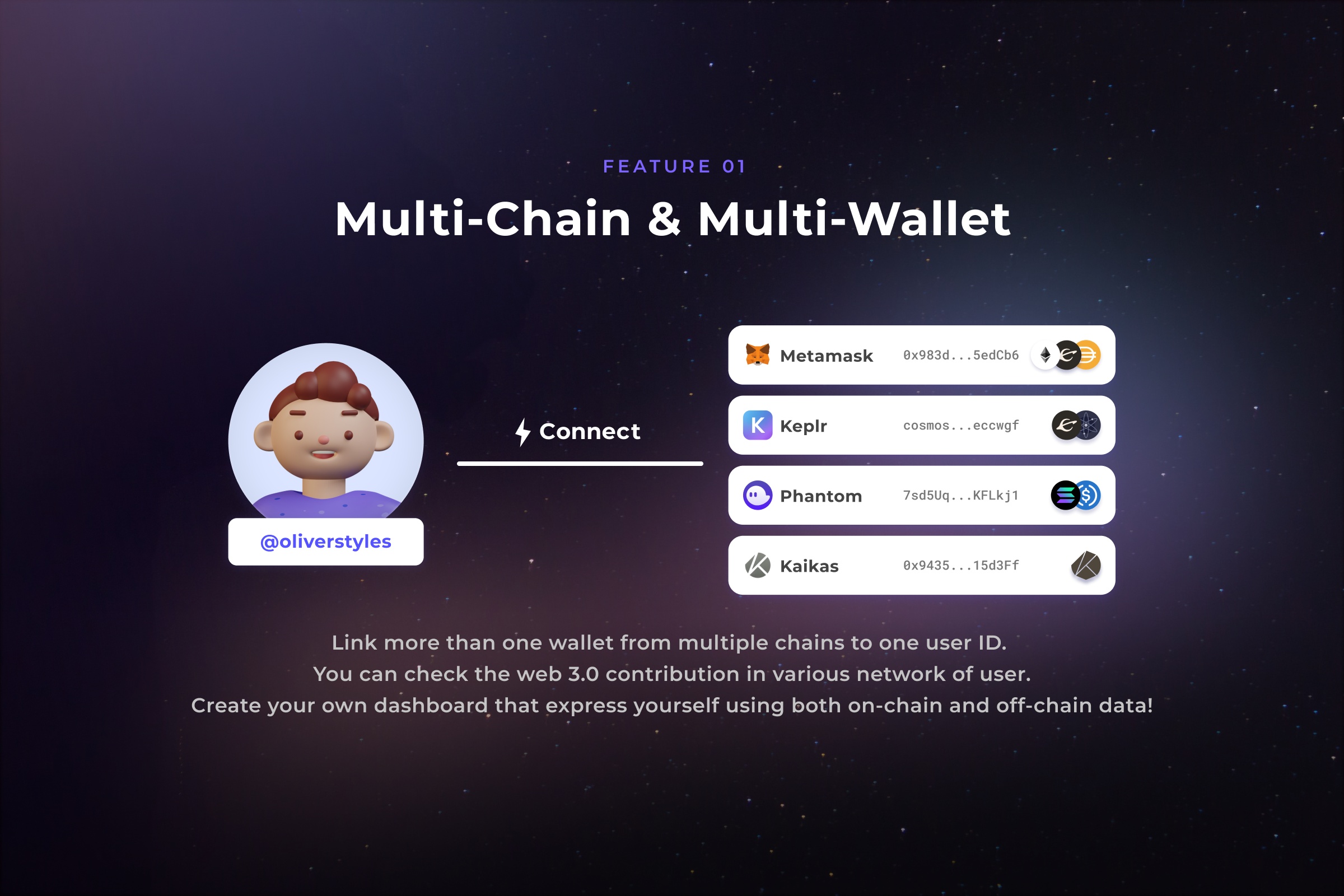
Kim was part of that team, alongside developers and a designer and product manager. Its multi-wallet concept gathered different blockchain wallets under a user identity. Seen together with the membership tools, it offered a more recognizable starting point for the user: a community to join, a person to find, or a reward to receive.
In August 2023, Blockwave Labs’ Yours joined the Aptos x Outlier Ventures Move Accelerator. Yours was presented as an enterprise solution for customer loyalty, covering points, membership rewards, and coupons. The customer was a business trying to manage a relationship that already existed. The reward needed to fit that relationship.
The program admitted eight companies and ran for twelve weeks. By October, the cohort had graduated. Its support included product work, community building, business structure, and access to mentors. For Kim’s company, Yours supplied a concrete business use case to bring into those conversations. A loyalty program has an identifiable operator and recipient. That gives the technology a fairly demanding audience: people who expect a reward to be easy to issue and easy to collect.
One of eight participating companies
Back at the hackathon, with a different badge
HackSeoul’s August 2024 program listed Kim among its mentors, under his Blockwave Labs CEO title. The event ran over August 24 and 25, combining a twenty-four-hour hackathon with talks, workshops, and mentoring. His earlier project participation now sat alongside a different role in the same kind of environment.
The mentor roster brought together people from companies including Coupang, Toss, Hyundai AutoEver, and other technology and finance businesses. Kim’s place on that list put the founder among people working on a variety of systems. It is a useful reminder that a blockchain company’s world contains more than blockchain companies.
A project competition and a mentoring program also expose different parts of product work. One asks a team to make something concrete under a deadline. The other creates room for questions about the attempt. Kim’s record contains both settings. There is no need to invent a backstage speech to see the change in position.
The company behind the product names
Blockwave Labs identifies Toil Kim as CFO and co-founder alongside Minik Kim. Its team also includes development, product management, and design roles. That mix helps explain why the product trail includes both financial mechanisms and the screens through which somebody might use them. The company has several kinds of work to coordinate.
Its current organization places Blockwave Labs within a broader system called BWL. The company describes its own remit around institutions, companies, payment networks, and strategic collaboration. Portfolio, Wave, and Labs preserve product and collaboration history, while the broader BWL presentation groups financial operations, market intelligence, and AI and automation.
These labels describe the company’s intended arrangement. The more concrete continuity is its work around execution: moving assets, managing liquidity, and connecting financial tasks. Wave groups experience into arbitrage, liquidity provision, and directional trading. Each involves a different decision, but all require software to do more than display a number attractively.
A chat window, then the financial rails
In November 2025, Nexton announced that its strategic financing round had expanded to $4 million, led by Danal. The announcement named Kim as founder. Nexton’s proposed combination was an AI arbitrage routing engine and an automated restaking module, with the user interacting through Telegram.
Kim described the significance of the partner plainly: “Partnering with Danal connects Nexton directly to real-world financial rails.” The emphasis was on connections to financial systems. A user-facing shortcut still needs a substantial amount of coordination behind it.
At that point, Nexton outlined expansion across TON, KAIA, Base, and BNB Chain, and set a goal of more than 500,000 organic users. Those were ambitions attached to a dated announcement. The useful connection to Kim’s earlier projects is the proposed user experience: a complicated sequence gathered behind a smaller set of actions.
Read across this history, and the recurring question becomes quite specific. How much should somebody have to organize before the software can help them? The answer has taken the form of a bridge, a dashboard, a membership tool, and a chat interface. Kim’s career runs through those attempts. The extra click keeps finding employment. His teams keep giving it reasons to retire.