Five hundred freezers make a persuasive argument for the limits of a pitch deck. Koolboks had already tested 50 solar-powered units with a customer’s vendor network. Then came the bigger order: 500 units for microfranchise vendors in Ghana. The next problem was financing delivery. In August 2026, Miller Center Capital announced short-term backing to help the company fill it.
For a university center whose work includes mentoring entrepreneurs, this is a revealing place to show up. The product had customers. The pilot had worked. Yet the jump in order size required money before the business could finish the job. Advice could help prepare the transaction; it could not purchase the freezers.
Miller Center for Global Impact, based at Santa Clara University, increasingly operates in that awkward interval between a promising enterprise and a financeable one. Its combination of an accelerator, executive mentors, student researchers and alumni lending offers a practical answer to a familiar problem: a business can be useful, viable and still short of the resources needed to grow.
10× the units. Financing announced to support fulfillment.
A good business can still run out of cash
Koolboks sells refrigeration for places where electricity is unreliable or costly. Its customers need goods to remain cold through disruptions. The financing announcement described a successful late-2025 pilot and a time-sensitive opportunity to supply a larger commercial account. Miller Center and fund manager Beneficial Returns provided the financial support for that next step.
“Small businesses lose income when they cannot keep products cold.”
Ayoola Dominic · CEO, Koolboks
A September announcement supplied another example. MAÏA Africa, a 2025 accelerator graduate, received a working-capital loan intended to help it purchase inputs and place production orders earlier. The Burkina Faso business distributes mosquito-repellent skincare through retail, community and nonprofit channels. Its financing supported inventory as sales grew, within a broader $2 million fundraising effort.
The distinction matters: $2 million was MAÏA’s fundraising target, not the disclosed size of Miller Center’s loan. The center’s role was to address a particular constraint inside that larger expansion. For a reader trying to understand impact investing, an input purchase and a production order are useful places to start.
Silicon Valley expertise, with a different destination
The institution began in 1997 as Santa Clara’s Center for Science, Technology, and Society. James Koch, a management professor and former business-school dean, was its founding director. The original combination was ambitious: apply the region’s technical and business expertise to problems that mattered to people living in poverty.
A 2004 university account describes entrepreneurs arriving for a two-week Global Social Benefit Incubator program. Speakers included marketing adviser Regis McKenna and Microsoft executive Akhtar Badshah. Participants could meet business leaders and foundations in Silicon Valley while bringing experience of markets those visitors and advisers might never have served themselves.
The Miller name came later. In 2015, Jeff and Karen Miller gave Santa Clara $25 million in a gift supporting the center and helping launch fundraising for a STEM facility. Jeff had already been mentoring entrepreneurs since 2006. Their contribution underwrote an existing institution; it was not a startup financing round.
Today, the center concentrates on poverty through women’s economic power and climate resilience. That includes women as business owners, employees, suppliers and customers. The environmental focus extends to water, sanitation, renewable energy and agriculture. Executive director Brigit Helms leads an organization whose university setting puts academic research alongside business advice and a stated commitment to local leadership.
No tuition. Plenty of homework.
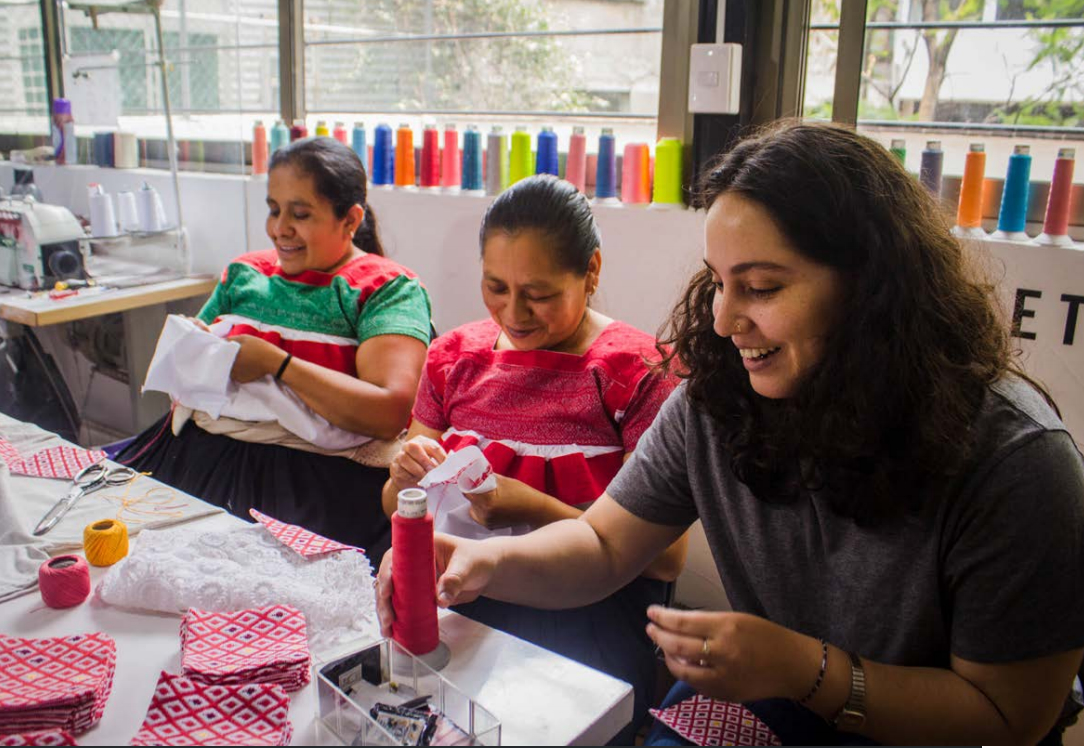
The main entry point is a free, six-month virtual accelerator. Participants work with two executive mentors on their impact strategy, business model and funding plan. The center draws from a network of more than 500 mentors, including experienced founders and executives. The program asks leaders to reserve time for weekly calls and additional preparation.
Its admissions requirements make the intended audience clear. Enterprises need at least a year of operations, $50,000 in annual earned income, three full-time-equivalent staff and three months of cash runway. A senior leader must participate, with English or Spanish fluency, reliable internet and spreadsheet skills. As of September 9, the regular deadline for the January 2027 cohort is October 16, 2026.
Those thresholds answer an important fit question. A founder with only an idea would need an earlier-stage program. An organization entirely dependent on donations would also fall outside the published earned-income requirement. Miller Center is preparing an operating enterprise for its next phase, which gives mentor conversations something concrete to interrogate.
A July account of the 30th cohort describes 19 entrepreneurs from 12 countries. Among them was Ecuador’s ReciVeci, which connects brands with inclusive recycling services and grassroots recyclers. Its founder described mentors translating corporate experience into the enterprise’s own context, while challenging the team to explain its work more clearly. The deliverable was useful partly because the advice had to survive contact with an actual business.
Someone has to pay for “free”
Miller Center’s business model combines philanthropy, partnerships and volunteered executive expertise. Its partners can contribute funding, technical knowledge, local connections or services. Entrepreneurs receive the core accelerator without tuition; supporters supply resources that make that possible. The exchange also gives partners access to enterprises, research and opportunities to participate.
The capital operation adds a separate mechanism. Launched in 2021, Miller Center Capital currently offers eligible graduates customized loans of $50,000 to $250,000 through its Innovation Fund, managed by Beneficial Returns. Graduating creates eligibility to apply, not an automatic financing award. Supporters can contribute grants or recoverable grants to the fund.
That arrangement places Miller Center among organizations connecting social-enterprise development with impact investing. Acumen, Halcyon and Village Capital are adjacent options in that wider market, and also collaborators on its research. Miller Center’s particular combination includes a university home, individualized executive mentoring, ongoing alumni relationships and a loan channel for graduates.
- 01 / PrepareBusiness model, impact strategy and funding plan
- 02 / Stay connectedPeers, mentors, researchers and introductions
- 03 / Apply for capitalEligible alumni can seek a tailored loan
A support pathway, not a promise of admission or investment.
The expense of doing this became a research subject. In June 2026, Miller Center published a study spanning eight impact-first investment organizations managing $197.2 million across 362 investments. It reported lower average costs per investment than comparable traditional funds, but higher costs relative to dollars deployed. Small transactions and intensive support change the arithmetic.
The study argues for philanthropic support of the organizations delivering those investments. Its practical challenge to funders is straightforward: paying for the loan without adequately funding the work around it can leave the delivery model short of resources. The claim comes from participating investment organizations’ research, rather than an independent verdict on every impact fund.
The alumni network was happening in the group chat
In March 2025, Miller Center announced its Global Impact name and a strategic shift toward sustained community and capital support. The accelerator remained central, but the relationship was meant to continue beyond a program calendar. Subsequent listening sessions exposed a specific weakness in how that ambition worked in practice.
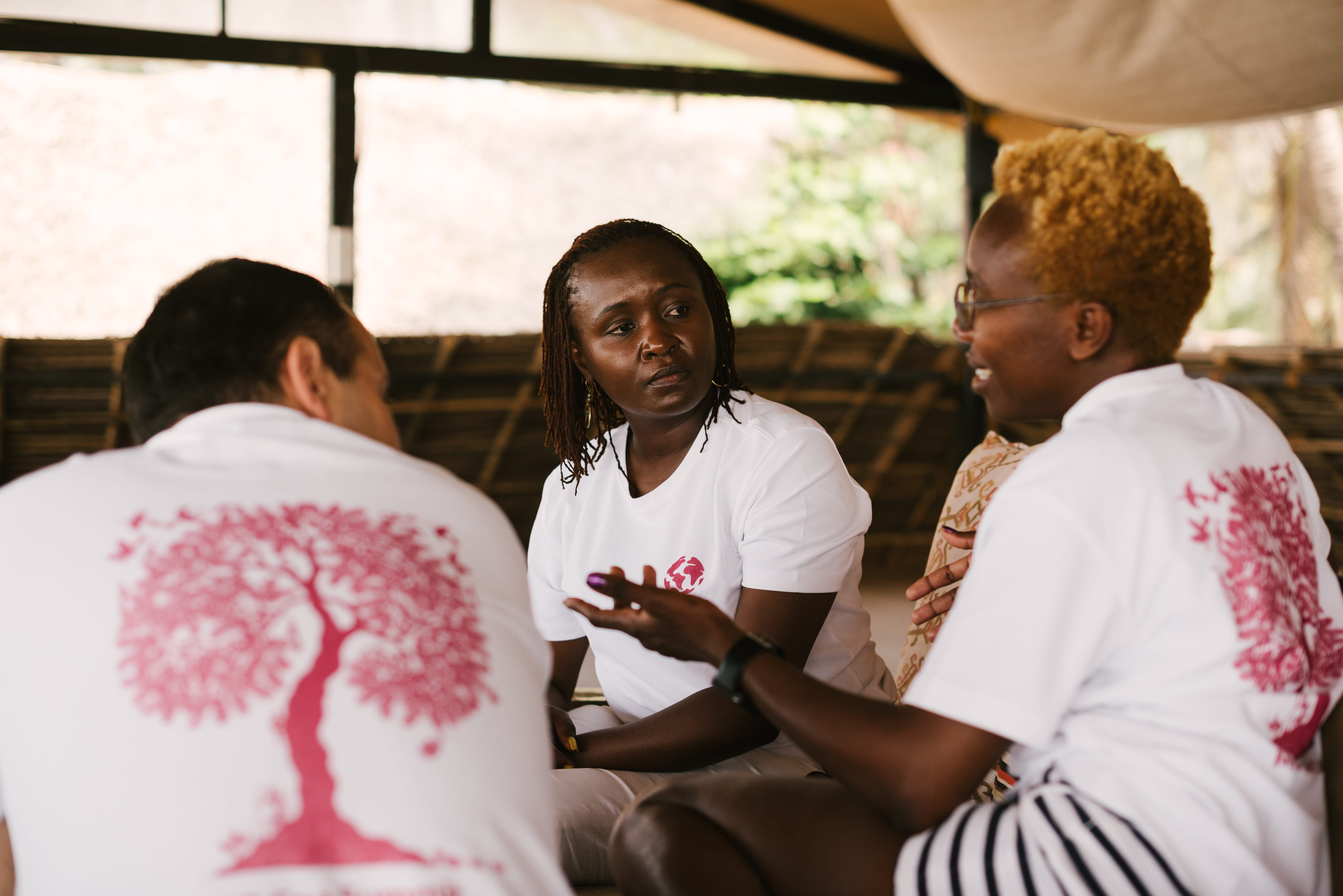
Entrepreneurs were already helping one another in side conversations and group chats. Miller Center’s August 2026 account reported that founders wanted timely, relevant introductions and smaller gatherings. Nairobi and Mexico City became testing grounds for Impact Tables: locally shaped conversations, including a Mexico City session attended by ten people, two of them investors.
The lesson is available to anyone running a membership group or accelerator: identify the problem a person faces now, then connect them to someone equipped to help. A large contact list is a starting resource. Making one appropriate introduction requires attention, judgment and a reason for both people to participate.
The university earns its place in the room
The student contribution is unusually concrete. Miller Center’s Lewis Family Fellowship includes academic preparation, six weeks of field research and a $5,000 stipend, with essential travel and living expenses covered. Projects respond to enterprise needs. Fellows have studied agricultural customers for Good Nature Agro and environmental-certification preparation for artisan brand LIKHÂ.
That work can supply information a growing organization needs but struggles to gather. It also gives students a client whose questions cannot be answered solely by producing an elegant presentation. A separate collaboration with Sopact has developed impact-measurement coursework and advice for alumni, strengthening enterprises’ ability to collect and use their own evidence.
Leadership training is another addition. A three-year partnership with Applied Wisdom for Nonprofits, announced in May 2025, plans to extend tailored learning to entrepreneurs, mentors, students and other professionals. Across these services, the center’s expertise is less about prescribing one industry’s strategy than helping leaders connect finance, management and evidence of social benefit.
Count the progress. Keep the distinctions.
Miller Center reports 1,600 enterprises accelerated and 200 million lives improved in the first three years after participation. Its capital program separately reports 32 investments and $19.8 million in capital catalyzed. These describe different activities and populations. They should not be added together, treated as revenue or read as proof that mentoring alone caused the reported outcomes.
The model also depends on conditions that enthusiasm cannot waive: an enterprise ready to do the work, mentors who understand its constraints, supporters willing to fund the service and financing that fits the business. Debt requires repayment capacity. Introductions need suitable counterparties. A useful accelerator cannot manufacture either on demand.
For founders, the most transferable habit is to name the next constraint precisely. Is it an unclear financial model, a missing customer insight, a leadership problem or cash for an order already won? Miller Center’s recent work is most convincing when it answers at that level. Five hundred freezers give everyone something specific to get right.