Michelle Songy found a place to stay in Indonesia by reading a travel article. The owner wanted to know how she had discovered his guesthouse. When she told him, the conversation acquired a business problem: that piece of coverage brought in much of his trade. He wanted more of it. He had a place worth visiting, proof that publicity worked, and very little idea how to arrange a second helping.
Songy recognized the situation. She had already built a company, sold it, and spent considerable time trying to persuade people to pay attention to it. The guesthouse owner’s question followed her across a familiar gap: the distance between having something useful to offer and becoming visible to the people who might want it.
It is an excellent way to spoil a founder’s vacation. There you are, finished with one business, and somebody casually hands you the premise of another.
The bill before the business
Before publicity became her work, Songy was interested in a more literal kind of settlement. She and Charlotte Kohlmann, later Charlotte Dales, were living in London and considering an escape from corporate finance. During a restaurant visit in 2012, the nuisance of paying a group bill presented an opening. Dinner had supplied both a pleasant evening and an unnecessarily complicated final act.
The resulting venture became Cake, a mobile app for paying and splitting restaurant and bar bills. Songy’s education at the University of Georgia’s Terry College of Business was in Management Information Systems. Her background combined business processes with technology, a useful pairing when the proposed product had to fit around restaurant staff, payment systems and customers who would eventually like to go home.
She prepared by working in a restaurant. Her partner went to work at a startup. Those were practical apprenticeships: an effort to understand the environments they were about to enter before presenting themselves as people with a solution. By 2015, Songy described her responsibilities as stretching from onboarding restaurants and integrating point-of-sale systems to training staff, fundraising and acquiring customers.
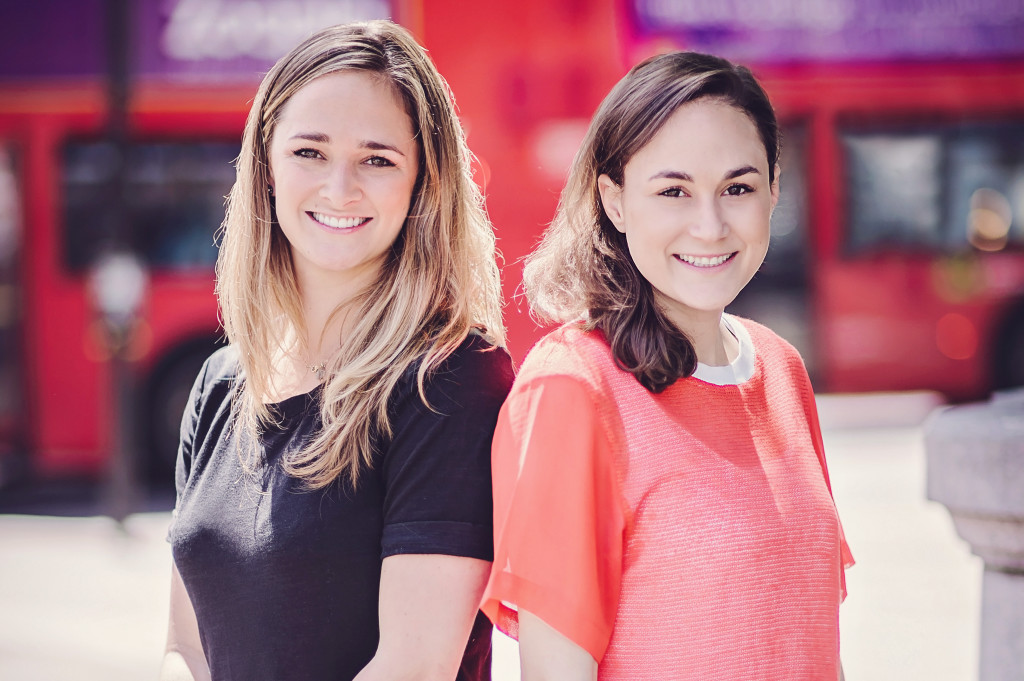
Even the job title moved with the job. In that contemporary interview she called herself co-founder and COO; a later career announcement describes her contribution as CMO. The work sounds less interested in tidy boundaries. A restaurant needs its staff trained. A young company needs customers. A founder fills the space between the two, sometimes with a laptop and sometimes, as Songy recalled, by helping behind the bar.
Cake was acquired by American Express in 2017. Songy subsequently worked for American Express in New York. The transaction supplied a recognizable milestone. Building the business had supplied a less tidy education, especially in the business of getting somebody else to tell your story.
“We were the small but mighty guys.”
Michelle Songy, recalling Cake
One article, a whole guesthouse
At Cake, agency support could become difficult to sustain. Songy took on publicity herself and discovered how much knowledge was hidden inside an apparently simple task. Find a journalist. Make contact. Explain why the business matters. Repeat until something happens, while continuing to run the business that is supposed to be the subject of all this effort.
When coverage did arrive, she could see its value in customer, investor and client interest. That made the difficulty of obtaining it more irritating. An expensive process with disappointing results is easy to abandon. A difficult process that occasionally works very well can occupy a founder’s attention for years.
The Indonesian guesthouse gave the problem another setting. This owner had neither a technology startup nor an investor presentation. He had bookings that could be traced to a piece of travel journalism. Songy and her host considered possible approaches, but the available tools and services did not suit his time, budget or experience.
The analogy she reached for was Airbnb: a meeting place that helps people discover something they would otherwise struggle to find. Brands and media needed a similarly useful connection. She dates the start of her work on Press Hook to her return home in January 2020; the company’s later funding announcement places its founding in October that year. The idea came first. The platform took work.
A place for both sides of the pitch
Songy had also been writing her company’s blog. Looking for material gave her a glimpse of the work on the receiving end of an inquiry: locating information, finding the right person and assembling enough usable detail to publish. A company with a complete press kit made that work easier. A polished website did not necessarily contain the things a writer actually needed.
She started a small PR agency focused on startups before pursuing the platform. That progression matters. She had tried doing the work for her own business, then helping other businesses do it. Press Hook attempted to give the exchange a shared place to happen. A brand could assemble its information; a journalist could discover it and ask for what was missing.
The mechanics were deliberately concrete: searchable press kits, relevant tags, contact details and requests for product samples. Much of media relations involves obtaining an ordinary thing from a busy person by a particular deadline. Organizing the ordinary things can be a useful business in its own right.
Press kits, products and people.
Relevant details, contacts and samples.
The first market was hospitality. Then the disruption of 2020 forced a change of course. The company shifted toward categories including home goods, beauty and fashion. Songy later described that adjustment as an exercise in agility, and said outside funding became attractive when it could accelerate development and expand the team.
In October 2021, Press Hook announced $1.5 million in venture funding, led by Emergent Ventures, The Fund and TnT Ventures. By March 2023, Songy described a distributed team of 20, with people in Atlanta, Austin and New York among other locations. She had returned to Atlanta in 2020. The marketplace she wanted to build was taking shape well beyond one office.
The useful word is “wait”
A founder selling help with publicity has a clear commercial reason to encourage publicity. Songy’s writing is more interesting when she advises a prospective customer to pause. In a May 2024 Captain Hook essay, she argues that businesses sometimes seek media attention before they are ready for it. A confused brand message will not become clearer merely because more people encounter it.
Her writing uses films, celebrities and jokes to discuss a trade that can take its own vocabulary rather seriously. The newsletter’s title, Captain Hook, gives an early indication of the approach. She writes about media strategy with room for amusement, including the occasional imagined robot overlord. A reader is allowed to learn something without dressing for a conference panel.
The underlying advice is practical. A company should understand its audience and what it can offer before approaching a writer. On a 2025 small-business podcast, she discussed preparing a pitch for its particular recipient and maintaining the relationship after coverage appears. Gratitude, attention and relevant updates belong in that relationship. So does restraint.
She has linked the work to a wider ambition: helping women- and minority-owned businesses gain exposure. In December 2024, she reported that Press Hook had raised more than $3.5 million through venture investment and debt and reached profitability that June. Those are company milestones she disclosed at the time, rather than a claim about its finances today.
Where the next answer comes from
Her later public conversations turn repeatedly toward what attention is worth. A February 2025 podcast examined PR measurement beyond a publication’s monthly audience. A January conversation explored AI-assisted outreach and the risk of losing authenticity. The question running through both is how a business can tell whether its communications are doing useful work.
She had already anticipated a generation of communications professionals who would begin their careers with generative AI as part of the furniture. Her interest included whether automating routine tasks could let them reach strategic work sooner. That is a different question from how many additional pitches a machine can send before lunch.
In 2023, Press Hook partnered with EZ Newswire on creating and distributing releases. Both Songy and EZ Newswire founder Neel Shah belonged to PRWeek’s Dashboard 25 class that year. Three years later, the connection became a career move: on October 8, 2026, EZ Newswire announced Songy as Head of Growth, overseeing inbound, outbound, partnerships and paid acquisition.
She described the product’s technical depth and visibility into AI answers as reasons for joining. The setting had moved from a restaurant payment to a press kit to a company appearing in a machine-generated response. The practical concern remained recognizable: a business needs people to discover it, and some evidence that the discovery matters.
Back in Indonesia, the guesthouse owner could point to an article and to the visitors it brought through his door. There was something appealingly legible about that result. Songy’s career has kept circling the work required to make such a connection possible. For all the software involved, the useful question still fits into a conversation: how did you find us?