The perfect movie, according to one survey, lasts 92 minutes. It is just long enough to disappear into another world, but not so long that you begin negotiating with your bladder. The number is peculiar, precise and instantly debatable. By 2025, it had attracted more than 133 referring domains. This is the kind of statistic We are Talker likes: less a conclusion than a small argument people cannot resist joining.
The Brooklyn communications company occupies a narrow but valuable seam between market research and journalism. A normal research firm may hand over the tables. A normal PR agency may hand over a pitch. Talker begins earlier and stays later. Its researchers help frame the question; its editorial team looks for the human conflict inside the answers; its designers turn findings into visual material; and its media-relations operation puts the resulting story in front of publishers and broadcasters.
The meeting where people forget the brief
Rick Maughan, Talker Research’s head of content and partnerships, has a charmingly analog test for a survey idea. Put researchers, editors, journalists and communications people in a room. Offer the topic. If ten minutes pass and everyone is still trading stories and opinions, there may be something there. If eyes glaze over, kill it. AI, he observed in a BuzzStream interview, tends to congratulate every idea. Humans are more useful when the idea is bad.
“There’s something about resonating with that human creativity - seeing people’s eyes either light up or die inside when you’ve thrown out a terrible idea.”Rick Maughan, Head of Content + Partnerships
That is the first useful thing to copy. Do not begin with the product. Begin with a behavior people recognize in themselves. Talker’s blunt house rule is “people stories, not product promos.” A tax-software client does not need a poll announcing that taxes exist. It needs an overlooked anxiety or misconception that makes tax season newly legible. A travel brand needs the awkward fact that even people who love one another require two hours alone on a group vacation.
The second useful move happens before fieldwork: ask what a reporter will need after the result arrives. Can the sample be explained plainly? Can a respondent be interviewed? Were permissions gathered for open-ended answers? Has the idea already been done, and if so, why is this version timely? Survey PR often fails here. The questionnaire is optimized for a client message, then the team discovers that the result is neither surprising nor usable.
A factory, but for quotable evidence
The company began in New York in 2014 as OnePoll U.S. and 72Point Inc., the American arm of a British research-and-news business. In 2024, after a decade, 72Point became We are Talker and OnePoll U.S. became Talker Research. The rename was unusually honest. The product was not the poll. It was talk: a credible little unit of public evidence designed to move.
Company-reported cumulative figures, accessed September 2026.
The customer list makes the breadth visible: Chime, Slack, TurboTax, HelloFresh, Tillamook, IHG, Califia Farms, Club Wyndham, Mayflower and others. These are not companies buying the same audience. They are buying the same conversion - from proprietary question to publishable proof. Talker can poll a national sample, a niche demographic, business leaders or respondents in several countries. It can produce a news story, an infographic, a trend report, Spanish-language copy, a custom microsite or a satellite media tour. The client owns the data and creative assets.
The rare public receipt
Talker prices bespoke work, so there is no neat menu taped to the wall. Public procurement records from Visit Anaheim offer two useful glimpses. A December 2024 agreement listed $14,875 for a campaign in which Talker would survey 2,000 people, create a news story and distribute it to media. A March 2025 agreement listed $12,000 for a PR survey campaign supporting a live-entertainment topic.
One documented scope: a 2,000-person survey, news-copy production and media distribution. It is an example, not a rate card; audience, geography, deliverables and amplification change the job.
The costs make sense only when compared with the alternative. A buyer could hire a research firm, a writer, a designer, a PR agency and a broadcast producer separately. Talker’s business model is to compress those handoffs. Its researchers participate in ideation. Its editorial people influence the questionnaire. Its media team brings current publisher feedback into the room before anyone presses “field.” The service is integration disguised as a survey.
The newest editor is an algorithm
For years the finish line was coverage. In 2026 Talker began talking more insistently about a second life for the same work. AI systems answer questions by drawing on material they can discover, parse and attribute. The company’s Talker Pulse program packages recurring original research, owned publishing, earned coverage and what it calls citation architecture. The aim is not merely to rank a page, but to make a brand into a named source.
A Mayflower campaign surveyed 761 adults in long-distance relationships and coined “The Long-Distance Tipping Point.” It generated 150 online mentions and 42 broadcast mentions. Talker’s later measurement found Mayflower appearing across ChatGPT, Gemini, Perplexity and Google AI Overviews, with overall AI visibility rising from 20 percent to 70 percent. For Club Wyndham, research on the “Vacation Compatibility Gap” generated 193 online mentions, eight broadcast mentions and a claimed combined audience of five billion. The major AI platforms later cited the brand’s research in answers about group travel.
Company case-study measurement for the Mayflower campaign.
There is a sensible idea underneath the fashionable vocabulary. Original research creates information that did not previously exist. Earned media gives that information independent validation and additional paths through the web. Clear owned content gives machines something stable to attribute. Repeat the cycle and the brand may become associated with the category it studies.
But the conditions matter. The method must survive scrutiny; Talker Research participates in AAPOR’s Transparency Initiative, whose purpose is disclosure rather than a blanket judgment of quality. The finding must be new enough to interest editors. The subject must connect naturally to the brand. And AI visibility is a moving target, not a permanent shelf position. A thin poll, a forced product plug or one burst of syndicated copy cannot manufacture durable authority.
The small reversal worth stealing
The temptation in corporate communications is to treat the public as the last person in the chain. First comes the product, then the message, then the campaign, and only then the question of whether anyone cares. Talker reverses the order. What do people already experience? What do they disagree about? What would they text to a friend with the words, “Is this true?”
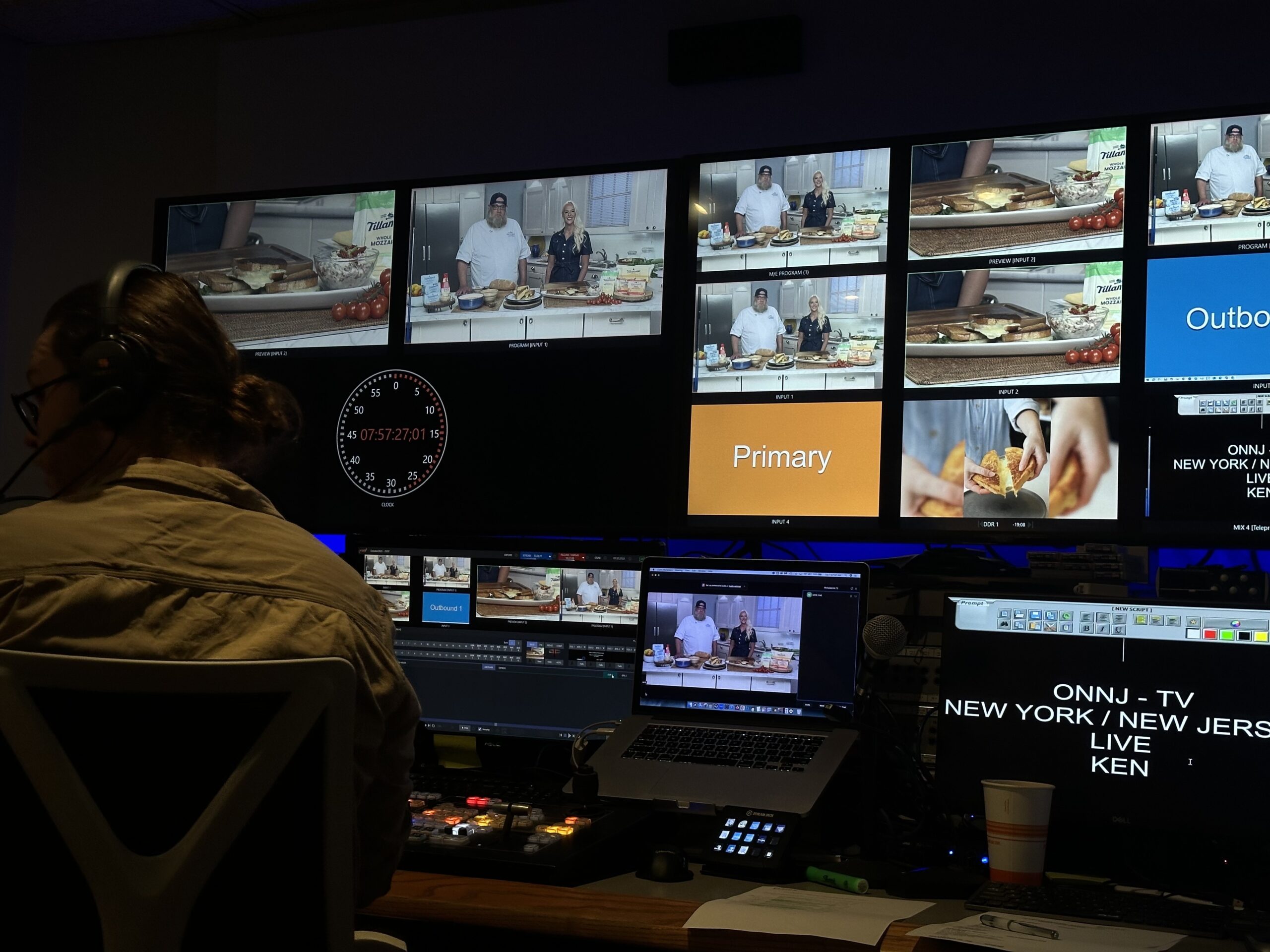
Once that question is good, the rest of the machinery has something to work with. The poll supplies scale. The open answers supply humanity. The editor supplies form. Distribution supplies reach. Sometimes a television control room supplies melted cheese. And now, somewhere beyond the newsroom, a language model reads the evidence and decides whether to repeat it. The name changed after ten years. The wager did not: if a fact makes people talk, it can travel farther than an advertisement.