A Canadian bank put out a rap song about paying a credit-card bill. The artist was bbno$, a Vancouver-born musician whose name is pronounced “baby no money.” The chorus worked as entertainment and as a recurring financial reminder. The card behind it rewarded customers for paying on time. The campaign, “Bills Paid on Time,” reached 30 million views on TikTok, drew engagement nine times the benchmark and lifted sign-ups for BMO eclipse Rise by 129 percent in its first four weeks.
The conspicuous piece was the song. The more revealing piece was the alignment. Product, behavior, message and medium pointed in the same direction. Michelle Feeney, then BMO’s Chief Marketing Officer for Personal and Business Banking in North America, was the senior client marketer credited on the work. Her career explains why an idea that looked like a cultural wager also carried the bones of direct response.
Feeney has spent decades close to the moment when attention becomes action. Before TikTok, she worked in product management, direct-mail acquisition and digital acquisition at American Express. She later led direct-response marketing for the Canadian Red Cross. At BMO Insurance, her remit combined direct and digital marketing. There is a useful continuity in that sequence: find an audience, make an offer, remove friction, count the response.
first four weeks
engagement
The old questions survived the new channels
Marketing careers are usually narrated as a march toward newer media. Feeney’s reads better as an accumulation of questions. Who should respond? What should they do next? Where does the customer hesitate? Which part of the experience belongs to the message, and which part belongs to the product?
By 2017, she was Managing Director and Head of Digital Marketing for BMO in North America. Her published conference biography said she was responsible for digital marketing, design and user experience across bmo.com and bmoharris.com. Her team handled campaign delivery through those properties, conversion optimization and customer needs-based journeys. It is the language of infrastructure, not slogans. A website was not simply a place to put creative. It was a system of decisions.
A career built across the response chain
Feeney briefly moved to Scotiabank, taking vice-president roles in credit-card acquisition and engagement and then retail customer acquisition. She returned to BMO in 2019, first leading Canadian Personal and Business Banking marketing and then personal banking and payments marketing. From 2022 to 2023 she served as CMO for Wealth Management. That movement gave her a view across several kinds of trust: the immediacy of payments, the long horizon of wealth, the utility of insurance and the everyday repetition of retail banking.
Her education has a similar duality. Feeney holds a Bachelor of Science from the University of Western Ontario and an MBA from Wilfrid Laurier University. Public biographies do not turn those credentials into an origin myth. They do, however, fit the work: analytical discipline alongside commercial judgment.
“Award winning innovation does not just happen.”Michelle Feeney, on her team’s CMA results
A bank enters the feed
The challenge with a bank on a social platform is not merely tone. The institution needs to be recognizable enough to earn trust and surprising enough to earn the next second. In 2021, Feeney was credited as BMO’s head of marketing on a millennial-focused campaign featuring Priyanka, winner of Canada’s Drag Race. The campaign used influencer-created video and YouTube’s Director Mix to tailor creative across audiences and contexts.
“Bills Paid on Time” pushed the same operating idea further. BMO and its agencies worked with bbno$ on a song whose utility was embedded in the hook. It promoted a card designed to reward sound credit habits. The entertainment did not sit beside the product lesson. It carried it.
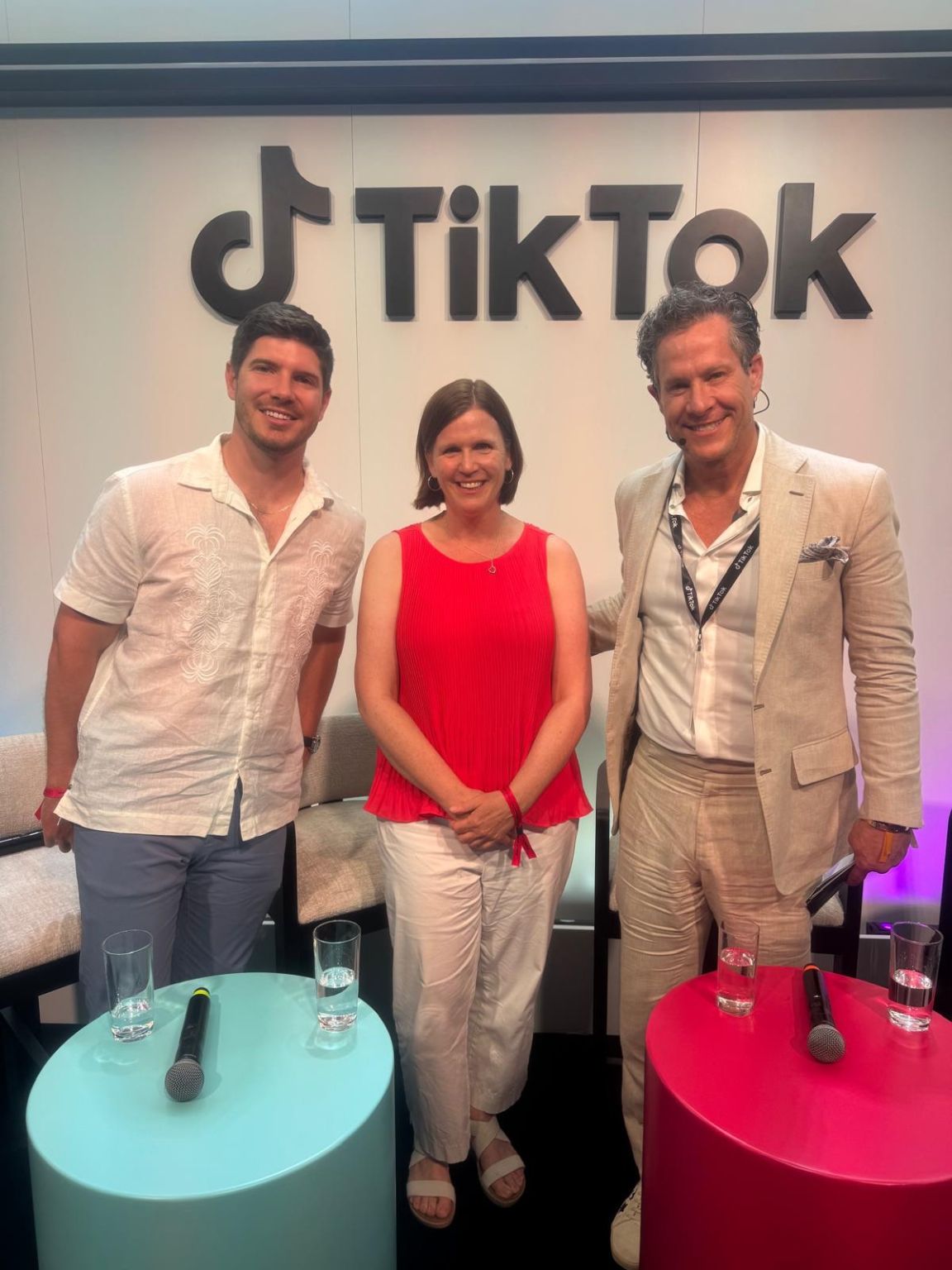
In June 2025, Feeney joined creator Frank Michael Smith and TikTok executive Joshua Bloom for a Cannes Lions discussion about marketing in regulated categories. Bloom described the conversation in terms of bold creativity and calculated risk. Feeney thanked the hosts for the chance to discuss BMO’s progress and “the future of the platform.” The phrasing is telling. The campaign was not treated as a one-off costume for the bank. It was evidence in a longer experiment about how a regulated brand participates.
The work still needed permission from many directions. A creator has an audience relationship to protect. A bank has legal and reputational obligations. Agencies need enough room to make the idea legible as culture. Product teams need the promise to remain true after the view becomes an application. The CMO’s practical role is to keep those constraints from flattening the work.
Feeney once summarized award-winning innovation as a function of “intentionality, bravery and strong partnerships.” It is an unusually compact management model. Intentionality keeps a campaign attached to a customer outcome. Bravery protects the surprising part. Partnership carries the idea through an organization whose scale creates both reach and review.
The names behind the numbers
One pattern in Feeney’s public writing is how often she names people. When BMO’s Personal and Business Banking marketing team took 11 Canadian Marketing Association awards, including four golds, her celebration became a roll call of marketers, business partners and agencies. When Blue Rewards launched in June 2026, she again singled out leaders and their teams before widening the credit to “countless others.”
That habit matters because modern marketing results are easy to compress into the CMO’s personal brand. The actual work sprawls. A loyalty launch touches partnerships, cards, accounts, travel, technology, customer communication, brand and operations. Blue Rewards arrived as a reimagining of AIR MILES, connecting cards, a chequing account and commercial-card products. Feeney described the launch as the product of strong partnerships and “disciplined execution at scale.”
Scale is the quiet word. Thirty million views sound dramatic. Moving an established rewards base into a new system is less photogenic and more consequential to the people using it. The marketer’s job is partly to make the complicated machinery feel simple at the surface while resisting the temptation to pretend the machinery is simple underneath.
“Human expertise is more important than ever.”Michelle Feeney, after a BMO workshop on AI-shaped search
A practical optimism about technology
Feeney’s latest public comments place artificial intelligence inside that same customer-journey frame. After a two-day generative engine optimization workshop for more than 300 BMO colleagues across marketing, communications, digital, UX and technology, she noted that customer behavior was changing quickly. Brands needed to be accurately understood and reflected by AI. Then came the balancing line: human expertise mattered more than ever.
It is consistent with the rest of the career. Direct mail did not vanish when digital acquisition appeared; its discipline migrated. Websites did not stop mattering when feeds took attention; they became the destination where the promise had to hold. AI search does not abolish the need for a clear offer or a trustworthy institution. It changes the route by which a customer arrives and the intermediaries that explain what they will find.
Her community-facing work follows a parallel logic. BMO’s recurring Wrap the Good campaign gives visibility to products from underrepresented businesses during the holiday season. In one post, Feeney confessed she normally considers December 1 the official start of the holidays but made an exception because she was eager to share the campaign. Her sample shopping list was specific and ordinary: a soy candle, a teapot, a chocolate gift basket. Big institutional purpose became a set of small things a person might actually buy.
This is where Feeney’s public record is most coherent. The aim is rarely novelty alone. A song should reinforce a payment habit. A gift guide should route demand to small businesses. A loyalty program should make everyday spending more useful. A workshop on new search behavior should prepare hundreds of colleagues to meet customers there. The creative surface changes. The operator keeps asking what happens next.
The stealable part
For marketers, the tempting lesson from a viral bank campaign is to imitate the visible object. Find a musician. Make a track. Go to TikTok. That would miss what Feeney’s route through direct response, UX, acquisition and product marketing made possible.
The more portable lesson is alignment. Choose one behavior the product can genuinely support. Put that behavior inside the creative mechanism, not in a disclaimer beneath it. Work with people who already understand the platform’s social contract. Give the surprising part enough protection to survive review. Decide in advance which business response will count. Then name the team that carried it across the line.
Feeney now sits at the point where a long-established Canadian institution meets customers whose expectations are set by the quickest, most personal interfaces on their phones. Her career offers no evidence that the tension disappears. It suggests something more practical: old institutions can learn new behaviors when the people leading them remember the old questions.