Michael Winnick's children once proposed an unusually accurate birthday decoration: an iPhone. Their father had owned one since the first generation and, by his own calculation, was touching it about 5,000 times a day. At that pace, over seven years, he had performed nearly 12.8 million taps, swipes and presses. The arithmetic took 14 more touches on the calculator. A lesser person might have put the phone down. Winnick turned the compulsion into a research question.
What were all those touches for? Which were useful, which were reflexive, and what did they reveal about the tiny bargains people strike with technology all day long? The number was amusing. The moments underneath it were valuable. Winnick had built Dscout to catch them before memory tidied everything up.
The company asked participants to document experience through the devices already in their pockets. A video, photograph or short diary entry could arrive during the commute, in a shop aisle, at the kitchen table or at the exact instant a product disappointed. Research no longer had to summon life into a fluorescent room and hope it behaved naturally. Life could report from the scene.
The useful instrument was already in the room
Winnick arrived at that idea by a route through products, design and consulting. After Stanford, and graduate coursework at IIT's Institute of Design, he led product-development efforts at Bay Area startups and media companies, including WIRED. He then spent nearly a decade at gravitytank, the Chicago innovation consultancy, eventually serving as managing partner. The work exposed a stubborn problem. In-home ethnography could be intimate and revealing, but it was expensive, episodic and difficult to scale.
Dscout began inside gravitytank as an attempt to widen the aperture. The consultancy provided direction and early financial support, then spun the platform out as an independent company in late 2011. Its first language was the diary study. Participants became “scouts,” assignments became “missions,” and the phone became a pocket-size field notebook with a camera attached.
The trick was not merely collecting more material. It was collecting the kind of material that disappears when a researcher asks about it three days later. A person can reconstruct why they chose one package, abandoned a purchase or opened an app at midnight. They are also very good at producing a clean explanation after the mess has passed. Dscout wanted the mess while it was fresh.
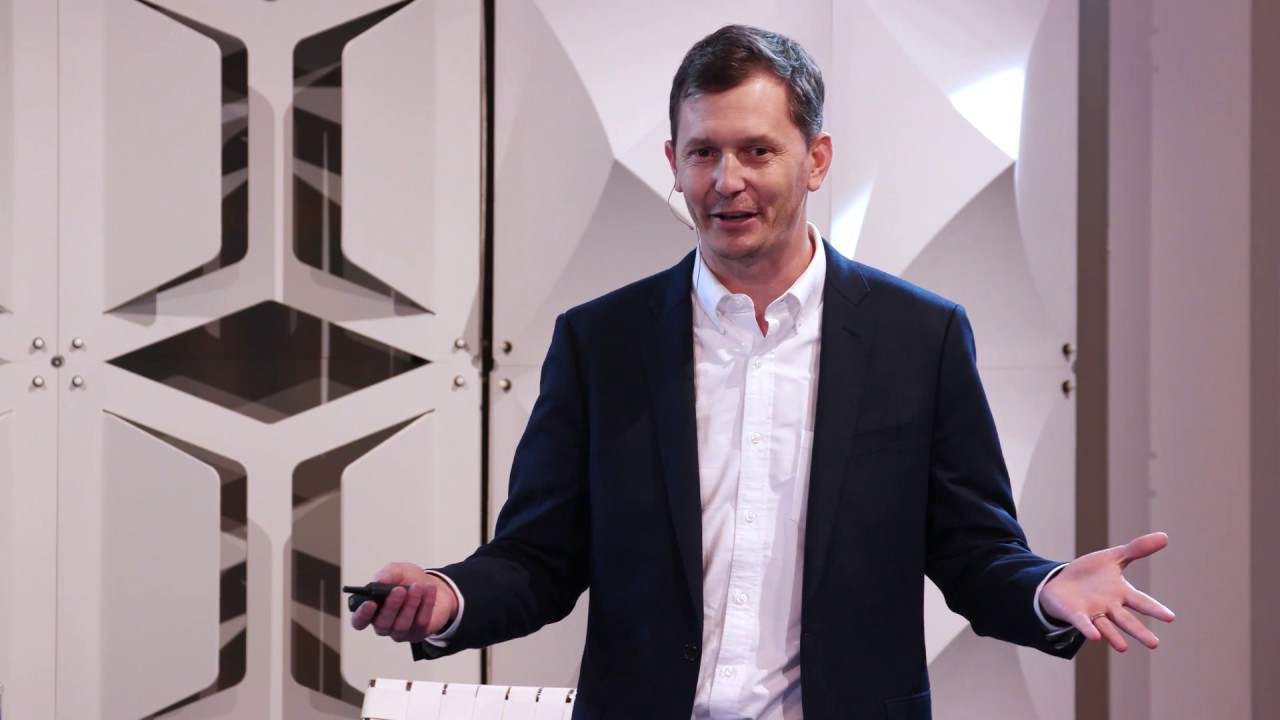
Onstage in 2016, Winnick divided apps into two comic species. A few behave like best friends, rewarded for frequent low-stakes contact. Most are better understood as employees, summoned for a specific job and expected not to chatter when they are off duty. An employee app that dresses like a best friend becomes needy. The point was product strategy disguised as social observation: know your moment, know what triggers it, and understand what else is competing for the person's attention.
“Data begets curiosity.”Michael Winnick
The market arrived late
A good research idea did not automatically make a good software company. Winnick has said that when Dscout started, he was not sure there was a user-research market at all. Software teams were still learning to give design a permanent seat; its more bookish cousin had to wait in the hall. Dscout tried service work, pay-per-use arrangements and subscriptions. For four or five years, the shape of the business remained unresolved.
Around 2015, the company committed to the subscription model. Its early customers tended to be large organizations, the very places with enough complexity to need ongoing research and enough internal borders to lose it. Dscout invested heavily after the sale, in account management, support and customer success. Winnick called the result “human relationship capital.” A software account rooted in one enthusiastic employee is fragile. When that person leaves, the product can leave with them. More relationships create a root system.
The agricultural language became literal. Winnick once took a six-person leadership group to an organic farm on Chicago's South Side for a workshop on “farming” customer relationships. It is a charmingly muddy image for a SaaS strategy meeting, but it fits. Retention grows from attention paid over time. Dscout was selling research software while learning to behave like a researcher toward its own customers: start open, listen for what is happening, then resist the urge to force the answer.
A category, slowly coming into focus
The market finally caught up. Research became a defined discipline, remote work made distributed methods ordinary, and product teams wanted evidence faster. In March 2022, Dscout announced a $70 million Series C led by Guidepost Growth Equity. The capital was earmarked for expansion, product development and hiring. The more revealing achievement was simply reaching the round after spending years building for a category that had not yet learned its name.
A machine can sort the evidence. Then what?
AI has given Winnick a version of his original problem at much higher speed. Research teams now face pressure to produce more while product teams can move from idea to prototype in days. Summaries, themes and draft studies can be generated quickly. Dscout has added AI-assisted analysis and newer workflows to its platform. Yet the old problem of bias has not vanished. It has acquired better grammar.
Winnick defines insight in deliberately human terms: a connection that happens in a person's brain. Software can assemble the material and reduce the clerical burden. It can help expose patterns. It cannot relieve the researcher of deciding which connection is sound, relevant and useful. The distinction is less romantic than it sounds. It assigns responsibility. A polished summary is still an object to examine.
He learned the danger through ordinary research mistakes. Winnick has recalled an old project about turning housecleaning into a game. The team asked whether people enjoyed cleaning. They said no. Then it asked whether prizes would make cleaning more enjoyable. Of course they said yes. The questions had built a corridor with only one exit, and the team briefly mistook the exit for discovery. His lesson is to begin wider, analyze before leaping from interview to conclusion, and invite another person to inspect the pattern.
That argument now extends from study design to leadership. Winnick does not want researchers to become the ceremonial brake on an AI project already moving at speed. He favors what he calls judo over karate: use the organization's momentum and redirect it toward a real customer problem. A team determined to ship can still be asked what will make people adopt the thing after it ships. Research becomes a partner in movement, not a tollbooth.
“The number one challenge in AI is technology for technology's sake.”Michael Winnick
The ampersand is a small strategy
In a 2025 talk, Winnick chose an ampersand as his emblem for the next phase: quantitative and qualitative, speed and depth, innovation and integrity, AI and human. It is a modest piece of punctuation asked to carry a considerable management philosophy. The charm is that it refuses two easy refuges. One is nostalgia for a slower craft. The other is surrender to automatic abundance.
His public manner suits the symbol. Winnick speaks in metaphors, admits uncertainty and leaves the door open. He has called himself profoundly underprepared as a founder. He jokes about wearing a researcher hat and a CEO hat, then returns to the serious problem beneath the wardrobe: a researcher must suspend premature certainty, while a chief executive eventually has to decide. His career has been an attempt to make those roles cooperate.
Teaching has been part of that attempt. Winnick has taught concept definition at IIT's Institute of Design and served as an adjunct lecturer in Northwestern's MMM Program. Both settings join design with the harder edges of organizations: engineering, management, budgets, deadlines. Dscout occupies the same intersection. It sells a way to listen, but listening earns its place by changing what a team builds.
The phone in Winnick's original story was both culprit and instrument. It consumed attention, then helped reveal where the attention went. AI may follow the same pattern. It can flood a company with agreeable prose and premature answers. It can also clear away transcription, tagging and sorting so people spend more time on interpretation. The outcome depends on whether the machine is treated as an oracle or a piece of equipment.
Winnick's bet is consistent across the decades: technology is most useful when it returns us to the unruly context of human life. The important action still happens after the count, after the capture, after the summary. Someone looks at the evidence, notices the odd thing that does not fit, and asks a better question. Twelve million phone touches later, curiosity remains the only gesture worth repeating.