The cloud has a loading dock. It has electricians, sheet metal, power panels, cages, cable pathways and the occasional forklift reversing with a sharp electronic complaint. Michael Rubiera built Accelevation around this impolite physical truth. Behind every frictionless prompt and invisible stream of data is a room that must be designed, fabricated, delivered and installed. Software may float. Its infrastructure most certainly does not.
Rubiera's route to that room began far from the mythology of the hoodie and the pitch deck. He worked in large companies including General Mills, Ecolab and Valspar, then moved through Champion Windows and into Senneca Holdings, a private equity-backed specialty industrial door business. At Senneca, he led sales, marketing, customer service and product development. He also helped with the acquisition and integration of 16 companies in 18 months, followed by Senneca's $555 million sale.
That is a great many org charts before lunch. It also gave him a practical education in what happens when products, people and processes are asked to become one business. Rubiera would later use the same muscles on a company he owned.
His earlier posts crossed several disciplines: finance at General Mills, global marketing and innovation at Ecolab, then marketing, business development and general management at Valspar. The pattern is less a ladder than a tour of the rooms where a business makes decisions. Finance asks whether an idea pays. Marketing asks whether anyone wants it. Product development asks whether it can exist. Operations must make it arrive on Tuesday in the right quantity. By the time Rubiera became a founder, he had heard each department's dialect.
A kitchen table, then two shops
Around 2017, Michael and his wife, Shawn Rubiera, sat at their kitchen table in southwest Ohio and discussed the kind of company they wanted to create. The premise reached beyond products. Teams would be encouraged to take calculated risks. Work would create value for employees, their families, customers and the surrounding community. The idea became Accelevation, which began operating in 2018 with two Dayton-area CNC machine shops, Southeast Tool and Coach Tool & Die.
This was a founder story with steel-toed boots. The company added Revolution Iron Works in 2019 and took on customized work for automotive, aviation and robotics customers. Rubiera had an MBA from UNC Kenan-Flagler and a BA from William & Mary, but the emerging company demanded another kind of curriculum: machinery utilization, production schedules, customer concentration and the unforgiving arithmetic of payroll.
Then 2020 arrived. Major customers closed and orders vanished. Accelevation had equipment, people and bills, but not enough work. Rubiera built the first prototypes for protective barriers in his garage. The factory retooled to make them for offices, schools and hospitals. The move kept the machines active and, by the company's account, kept every employee on the payroll.
Pivots are usually narrated backward, with every turn polished into destiny. This one looks more mechanical. A factory had capacity. A new problem fit the tools. Solving it created a skill. That skill opened a neighboring door. The glamour, if there is any, belongs to sequence.
The seven-person stretch
In 2021, Accelevation won a large contract for data center containment. Taking it meant inventing a business unit almost at once: finished product, suppliers, processes and a manufacturing facility. A core group of seven turned an empty shop floor into a working operation called Conatech. This was Rubiera's wager in miniature. Commit to a demanding customer, then build the system required to keep the promise.
“We manufacture a lot of the key components that go into the interior of a data center, infrastructure products, and then we do the installation of all these solutions across North America.”Michael Rubiera, 2025
The bet expanded through acquisitions. Workplace Modular Systems joined in 2023, bringing modular workstations and product expertise. Instor Solutions followed, adding data center integration, project management and installation experience. Accelevation accumulated the pieces of a single-source model: design, containment, structural conveyance, security caging, power distribution, electrical fit-out, structured cabling and field installation.
Vertical integration can sound like a financier's phrase for owning more things. Here its practical purpose is to remove waiting. A design change can reach the factory without passing through a chain of vendors. A lesson from an installation crew can travel back to engineering. The product is partly the equipment and partly the absence of awkward seams between companies.
In January 2025, Conatech, Instor, Southeast Tool, Revolution Iron Works and Coach Tool & Die were unified under the Accelevation name. The same month, the company announced a partnership with Olympus Partners after its foundational period with LFM Capital. The brand consolidation made the organization easier to explain, but the operating thesis stayed the same: keep more of the journey from drawing to finished data hall inside one system.
Speed acquires an address
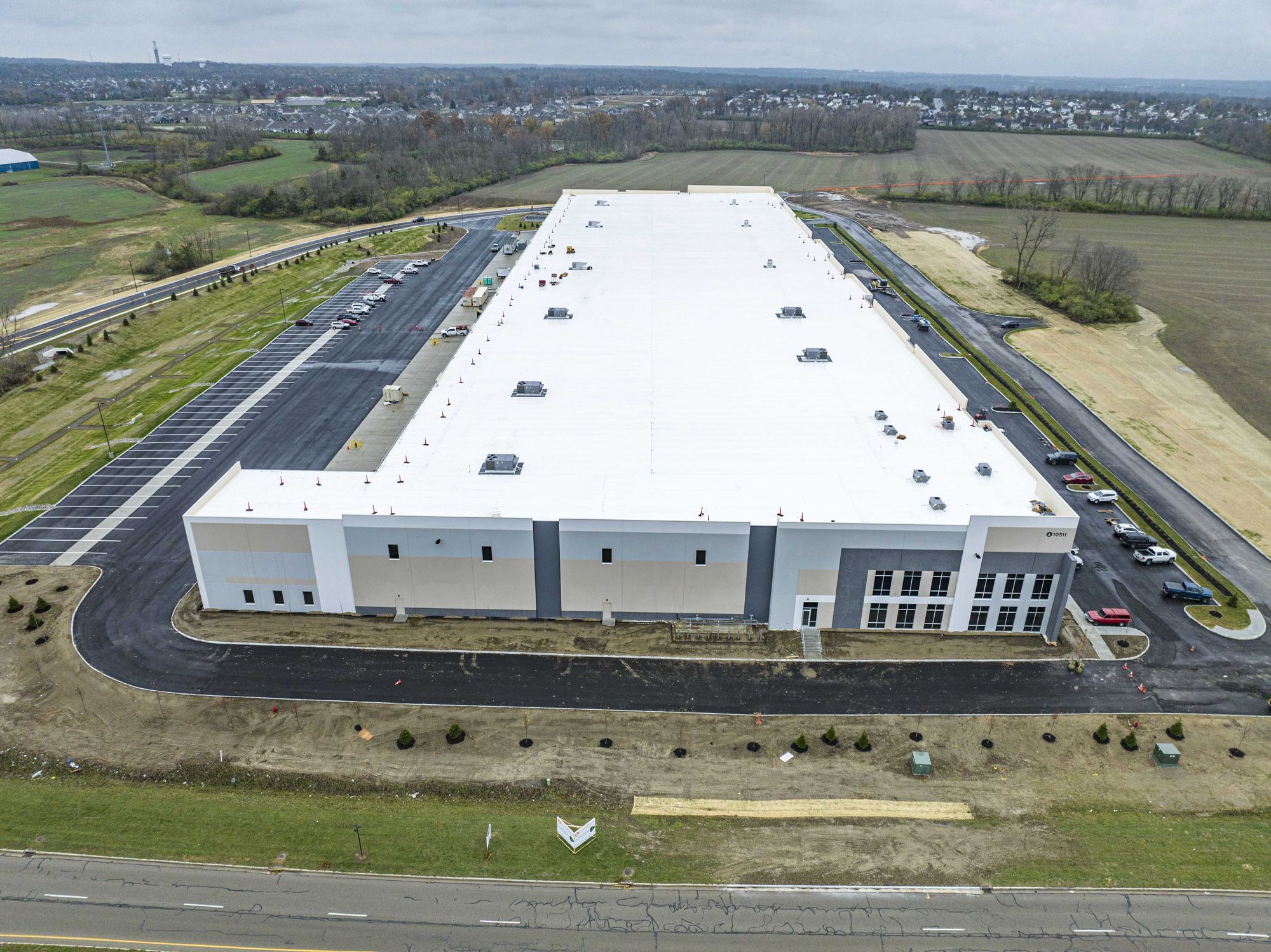
The physical evidence appeared in Miamisburg. Accelevation opened a 264,000-square-foot facility at the First Flight Commerce Center in April 2025, after consolidating other local operations. Within months, demand had prompted plans for another 300,000-square-foot building. Rubiera said the company entered 2025 with about 300 employees, added 100 in the first quarter and expected to reach roughly 500 by the end of April.
The numbers are striking, but Rubiera's preferred measure has a human face. He has said the original goal was to create high-quality manufacturing jobs in the United States and in Ohio. That ambition explains why the kitchen-table culture story matters. A factory is not only a box for productive assets. It is a place where a company's decisions become commutes, skills, wages and family plans.
“When we started Accelevation, our goal was to create high-quality manufacturing jobs here in the U.S. and here in Ohio.”Michael Rubiera, at the 2025 facility opening
The company's expansion continued. In October 2025, Accelevation acquired SteelPro, adding structural steel operations in Mississippi and Tennessee. Rubiera described speed and scale as the new currency of the data center market. The phrase is corporate, but the machinery behind it is wonderfully literal. If a hyperscale customer needs capacity quickly, steel fabrication cannot be a distant abstraction. Nor can power assemblies, containment or installers.
Accelevation was also named the Dayton region's fastest-growing company for the second consecutive year in 2025. Rubiera's LinkedIn profile lists a 2023 finalist recognition from ACG Cincinnati's Deal Maker program and the 2024 fastest-growing-company honor. Awards make tidy plaques. The more revealing artifact may be the company's map of facilities, stretching from Ohio to field operations in Texas, Georgia and Arizona, plus fabrication in Mississippi and Tennessee.
The operator away from the factory
Rubiera's personal interests are almost suspiciously on theme. He enjoys woodworking, an occupation in which the material punishes vague thinking. He plays guitar, where speed without timing is merely noise. With Shawn and their family, he is restoring a centuries-old 56-acre farm and caring for its many animals. A farm is the original vertically integrated business, though the livestock remain famously resistant to quarterly guidance.
Former colleagues describe him as inclusive, deliberate and able to think through multiple outcomes. Those traits fit the public arc. The acquisition record suggests comfort with complexity. The garage prototype suggests comfort with getting his hands dirty. The decision to place design, manufacturing and field work close together suggests impatience with information lost between handoffs.
There is no clean line between those qualities and Accelevation's rise. Markets matter. The rapid buildout of AI and cloud infrastructure created a powerful current, and Rubiera has been candid about the scale of investment from large technology companies. Yet currents reward boats that are already rigged. The years spent integrating companies, selling industrial products and learning how a factory changes direction became unusually relevant when data centers needed to be built faster.
What founders can steal
Rubiera's useful lesson is not “buy 30 companies.” Most founders should not buy one before breakfast. The transferable idea is to watch the distance between promise and execution. Every external handoff adds time, interpretation and another calendar. Accelevation's model treats those gaps as a design problem.
The second lesson is to value capabilities created during a crisis. Protective barriers were a response to an emergency, but the materials knowledge survived the product. The third is to make culture operational. Keeping employees through a shutdown, placing jobs near home and inviting calculated risk are decisions before they become values-page copy.
There is also a quieter lesson in the choice of market. Digital businesses attract attention at the interface, where users click and type. Rubiera went several layers down, toward the equipment that makes the interface possible. These layers are less visible but rich in stubborn constraints: dimensions, tolerances, electrical codes, travel time and the finite number of trained hands available on a site. Software can be copied. A fabricated structure must be made again, correctly, and delivered. That difference gives an operator plenty to improve.
Rubiera's company builds the pieces most people never see inside buildings most people never enter. This is fitting. His own story is largely about hidden infrastructure too: integration experience, manufacturing discipline, local relationships and a willingness to prototype in the garage. The visible growth came later. It usually does.