Breaking
Ovitz proposes $64B UMG takeover - it was his idea • CAA founded on $21,000 + card tables in 1975 • Disney paid him $140M to leave after 16 months • "Mystique is 10x better than publicity" - Ovitz • 3,500+ artworks collected over 50 years • Paul Newman: "A cross between a Barracuda and Mother Teresa" • Senior advisor to Palantir's Alex Karp for 10+ years • Invested in 200+ companies from Silicon Valley • Speaking at Milken Institute Global Conference, May 2026 • Ovitz proposes $64B UMG takeover - it was his idea • CAA founded on $21,000 + card tables in 1975 • Disney paid him $140M to leave after 16 months • "Mystique is 10x better than publicity" - Ovitz • 3,500+ artworks collected over 50 years • Paul Newman: "A cross between a Barracuda and Mother Teresa" • Senior advisor to Palantir's Alex Karp for 10+ years • Invested in 200+ companies from Silicon Valley • Speaking at Milken Institute Global Conference, May 2026 •
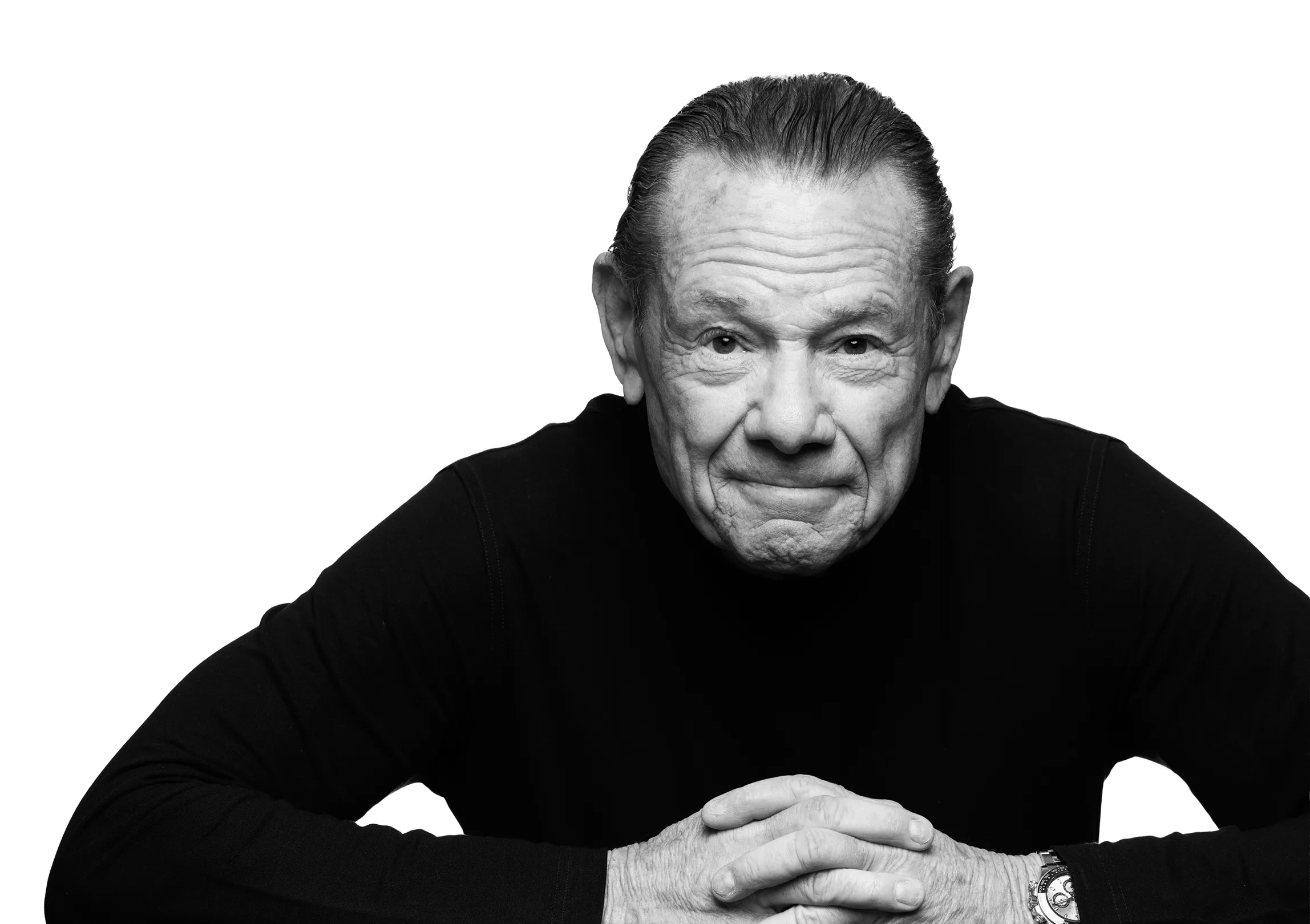
Michael Ovitz
Profile • Hollywood Dealmaker

MichaelOvitz

The man who built Hollywood. Then got paid $140M to leave Disney. Then backed Palantir. Now wants UMG. Still climbing.

"Mystique is ten times better than publicity; it's much better to be thought of as the great and powerful Oz than to be revealed as merely another schemer behind a curtain."

$21K CAA seed money
$6.6B Matsushita deal
3,500+ artworks collected
200+ investments made
1975 CAA founded
$140M Disney exit
20yrs at the top of CAA
$64B proposed UMG deal
$600 first art purchase
Profile

He is 79 years old, currently angling to chair the world's largest music company, and his idea for the deal was supposedly hatched over a conversation with Bill Ackman. Three things are worth noting: Michael Ovitz always has the idea, Michael Ovitz always makes the call, and Michael Ovitz never quite leaves the room.

The biography usually starts with the mailroom. But the mailroom was already too late for Ovitz. At 17, he was working Universal Studios tours, reading the industry from the inside while his classmates - Sally Field among them - were still figuring out what to do on weekends. Birmingham High School, Encino. Student body president. Future power broker. He was always the one holding the room.

UCLA gave him a degree in Theater, Film and Television. He arrived pre-med to satisfy his parents, pivoted on instinct, and finished in 1968. Within weeks he was in the William Morris Agency mailroom - the Hollywood purgatory through which every ambitious young person passed. He didn't pace himself. He studied patterns. He noticed that the people at the top weren't smarter than the people below them - they just had leverage.

In January 1975, that leverage led to a $21,000 bank loan, four co-conspirators fired from William Morris the same day, and a small office furnished with rented card tables. Their wives took turns as receptionist. Within a week, Ovitz had three film packaging deals closed. Within four years, the Creative Artists Agency reported $90.2 million in annual bookings and had become the third-largest talent agency in Hollywood. By the late 1980s, there was no meaningful distinction between CAA and the center of gravity in the entertainment business.

"Nothing in Hollywood is anything until it's something, and the only way to make it something is with a profound display of belief. If you keep insisting that a shifting set of inchoate possibilities is a movie, it eventually becomes one."
- Michael Ovitz

The packaging model sounds simple now because Ovitz made it work so thoroughly that nobody remembers the world before it. Instead of representing individual clients, CAA would deliver entire films to studios as finished packages - director, cast, and script, all from the agency's own roster. The leverage shifted. Studios stopped deciding what films got made; CAA did. If you wanted Spielberg, you got CAA. If you wanted Tom Cruise, same deal. If you wanted both in the same film, you called Ovitz's office and listened to whatever he said next.

By 1989, his power over the industry was thorough enough that when a New York Times reporter profiled him, industry executives refused to speak on record without CAA's prior permission. He kept a bowl with three fresh floating gardenias on his desk. He modeled his management culture on Japanese nemawashi - consensus-building, collective ownership of decisions, everyone serving clients outside their specialty. It was Zen architecture applied to Hollywood. It was also terrifying to compete against.

He closed the Sony/Columbia deal in 1989 ($3.4 billion). He closed the Matsushita/MCA deal in 1990 ($6.6 billion). He got Coca-Cola to hand a talent agency its global advertising account. He negotiated David Letterman's jump to CBS: three years, $42 million, a number that stunned an industry that thought it already understood what television talent was worth.

The Disney chapter is told differently depending on who's telling it. In October 1995, Ovitz left CAA to become President of The Walt Disney Company under CEO Michael Eisner. He discovered, at dinner the night before the announcement, that major executives would report to Eisner rather than to him. The role he thought he was taking turned out to be a different role entirely. Sixteen months later, Eisner let him go. The severance package - roughly $140 million - became a landmark corporate governance controversy. Disney shareholders sued. In 2005, the Delaware Supreme Court upheld the payment, finding no breach of fiduciary duty. Eisner later called Ovitz a "psychopath." Ovitz wrote a memoir. You can read both accounts and come away fairly certain that two very powerful men were in a room together and neither of them blinked.

He tried again. In 1999, he launched Artist Management Group, signing Leonardo DiCaprio, Cameron Diaz, Martin Scorsese. The conglomerate collapsed by 2002, sold for roughly the price of a decent Beverly Hills house. He lost money. He kept moving. "I'm not good at being static," he has said. "I have to be climbing a mountain."

By 2010, the mountain had moved to Silicon Valley. He co-founded Broad Beach Ventures and began investing in companies with the same methodical approach he'd applied to entertainment packages. Palantir. GoodRx. Medium. He helped architect the organizational structure of Andreessen Horowitz. He has been a senior advisor to Palantir's Alex Karp for over ten years, one of the few figures from Hollywood's pre-digital era who found genuine purchase in the valley's power structure - not as a celebrity consultant but as someone who understood how institutions are built.

He has invested in more than 200 companies across two decades. In December 2025, he made a bet on Black Forest Labs, an AI image generation startup, as part of their Series B. He told an interviewer in January 2025 that AI would reshape entertainment more slowly than the industry expected. He is currently at work on a potential chairmanship of Universal Music Group, where Bill Ackman is proposing a $64 billion acquisition of the world's largest music company. Reports indicate it was Ovitz who suggested the full acquisition rather than a simple stake sale - a pivot so consequential it reframed the entire deal. He and UMG CEO Lucian Grainge have known each other for forty years. The call Ackman needed to make was already warm.

The art collection runs to 3,500 or 4,000 works - exact counts vary, possibly because the house keeps changing. The Beverly Hills home is 28,000 square feet, commissioned from architect Michael Maltzan and completed in 2010, and it doubles as a gallery. He bought his first serious work at 25: a Jasper Johns print for $600. ARTnews lists him among the world's top 200 collectors. He sits on MoMA's board. He gave $25 million to UCLA Medical Center in 1999 - the second-largest philanthropic gift in UCLA's history at the time. He chaired the medical center's executive board for more than a decade afterward.

His daughter Kimberly Ovitz is a fashion designer in New York. His fiancee, Tamara Mellon - who co-founded Jimmy Choo - became engaged to him around late 2014. Their dog's name is JJ. Paul Newman once described him as "a cross between a Barracuda and Mother Teresa." The gardenias were replaced when he left CAA, but the approach never changed. Ovitz is always preparing. He is always reading. He always knows where he wants to end up before he engages.
The Timeline

1946

Born December 14 in Chicago. Family moves to Encino, California.

1963

Works as Universal Studios tour guide at age 17. His first view from inside the machine. Student body president at Birmingham High alongside Sally Field and Michael Milken.

1968

Graduates UCLA with BA in Theater, Film and Television. Joins William Morris Agency mailroom. Rises quickly to TV agent; early clients include Merv Griffin and Bob Barker.

1975

Co-founds Creative Artists Agency with Ron Meyer, Bill Haber, Rowland Perkins, and Michael Rosenfeld. Capital: $21,000. Furniture: rented card tables. Three packaging deals in week one.

1979

CAA hits $90.2M in annual bookings. Becomes third-largest Hollywood agency in four years.

1989

Advises Sony's $3.4B acquisition of Columbia Pictures. NY Times profile: Hollywood executives won't speak without CAA's permission.

1990

Advises Matsushita's $6.6B acquisition of MCA/Universal. CAA earns between $8M and $40M in fees. Spy magazine: "Mike the Manipulator."

1991

CAA wins Coca-Cola's global advertising account - unprecedented for any talent agency.

1993

Negotiates David Letterman's $42M three-year CBS contract. A number that rewrites what television talent is worth.

1995

Departs CAA. Becomes President of The Walt Disney Company under Michael Eisner. Learns the night before the announcement that the role is not what he thought.

1997

Fired from Disney after 16 months. Exits with ~$140M severance package. Donates $25M to UCLA Medical Center.

1999

Launches CKE/Artist Management Group. Signs Leonardo DiCaprio, Cameron Diaz, Martin Scorsese.

2002

AMG sold for ~$12M after collapse. Delaware Supreme Court upholds Disney severance in 2005.

2010

Co-founds Broad Beach Ventures. Begins investing in Silicon Valley; helps architect Andreessen Horowitz.

2018

Publishes "Who Is Michael Ovitz?" (Portfolio/Penguin). His first comprehensive public account.

2025

Invests in Black Forest Labs AI Series B. Keynotes Prime Quadrant Conference: "From Mailroom to Mogul."

2026

Named proposed Chairman of Universal Music Group under Bill Ackman's $64B takeover bid - reportedly his own idea. Speaks at Milken Institute Global Conference.

Transactions That Reshuffled the Deck

1989

Sony Acquires Columbia Pictures

$3.4B

Ovitz served as key advisor bridging Hollywood and Tokyo. Proved that entertainment assets were worth more than studios admitted, and that agents could operate at the highest levels of M&A.

1990

Matsushita Acquires MCA/Universal

$6.6B

The largest Japanese acquisition of an American company at the time. CAA earned between $8M and $40M in advisory fees. Spy magazine called him "Mike the Manipulator." He did not object.

1991

Coca-Cola Global Account

Historic

CAA became the first talent agency in history to win a major consumer brand's global advertising and communications business. Changed what an agency could mean.

1993

David Letterman to CBS

$42M

Three-year deal that moved Letterman from NBC to CBS, setting a new record for television talent and demonstrating that Ovitz could extract premium prices from any medium.

1997

Disney Severance Package

~$140M

Became a landmark corporate governance case. Delaware Supreme Court upheld the payment in 2005. Ovitz received more money for leaving Disney than most people will earn in ten lifetimes.

2026

Proposed UMG Acquisition

$64B

Bill Ackman's Pershing Square moves to acquire Universal Music Group. Ovitz is named proposed Chairman. Reports indicate it was Ovitz who first told Ackman to buy the whole company, not just sell his stake.

What He Actually Built

🎥

Invented the Packaging Model

CAA assembled directors, actors, and scripts from its own roster into finished film packages, shifting leverage from studios to talent permanently.

🏢

Built CAA from $21,000

From a bank loan and rented card tables to the dominant Hollywood agency in under a decade. Three film deals in week one.

🌎

Cross-Pacific Deal Architect

Facilitated $10 billion in Japanese acquisitions of American entertainment companies, bridging two industries that didn't speak each other's language.

🌟

World-Class Art Collector

ARTnews top-200 collector. 3,500-4,000 works including Picasso, Rothko, Jasper Johns, de Kooning. His Beverly Hills home is the collection.

💰

Silicon Valley Investor

200+ company portfolio. Early Palantir. Helped build Andreessen Horowitz's architecture. GoodRx, Medium, and counting. The entertainment agent who became a VC.

🏠

$25M UCLA Philanthropist

The second-largest philanthropic gift in UCLA's history at the time. Chaired the Medical Center's executive board for over a decade afterward.

3,500 Works and Counting

He bought his first serious artwork at 25 - a Jasper Johns print for $600. At the time, $600 was more money than he had any business spending. He bought it anyway.

That purchase was a blueprint. The Ovitz Family Collection, begun in the late 1970s, now spans an estimated 3,500 to 4,000 works. It includes Picasso, Rothko, de Kooning, Barnett Newman, Roy Lichtenstein, Ellsworth Kelly, and Ming Dynasty furniture alongside African antiquities. ARTnews lists him among the world's top 200 collectors.

The collection lives primarily in his 28,000-square-foot Beverly Hills home, designed by architect Michael Maltzan and completed in 2010. The house is the gallery. There are no velvet ropes. There is no gift shop. It has been exhibited at the Kansas City Art Institute and ASU Art Museum.

He serves on MoMA's Board of Trustees in New York. He has opened his home for charitable art tours auctioned through Charitybuzz. The collection is serious, not decorative - the difference between a person who buys art to live with it and one who buys it to own it.

The $600 Johns print is no longer the most valuable thing he owns. Not even close.

Collection Overview

Modern & Contemporary Painting~60%
Sculpture~20%
Asian Antiquities & Furniture~12%
African Art & Other~8%
Key Artists
Picasso Jasper Johns Rothko de Kooning Lichtenstein Ellsworth Kelly Barnett Newman

The Quotebook

"It's not about money. The money will flow. It's about power and influence."
Michael Ovitz
"When I get on a plane, I don't want a laid-back pilot. I want a pilot who is a control freak, who is paying attention to every single detail of his job."
Michael Ovitz
"You need to know where you want to end up before you engage."
Michael Ovitz - on negotiation
"I could have worked ten percent less, and it wouldn't have made a difference in my professional success. But I would have been a lot happier."
Michael Ovitz - memoir, 2018
"I've always made my decisions based on two factors: intellectual analysis and my gut. And when they meet, that's a go from me. That's when I see the goal."
Michael Ovitz
"A cross between a Barracuda and Mother Teresa."
Paul Newman, on Michael Ovitz

The Operating System

Obsessive Preparer
Control-Oriented
Long-Game Thinker
Consensus-Builder
Perpetual Climber
Intellectually Voracious
Mystique Over Publicity
Gut + Analysis

The gardenias on the desk were not decoration. Three fresh ones, floating in a bowl, every day. The immaculate office, the Zen management philosophy borrowed from Japanese corporate culture, the role-playing of negotiations before they happened - these were not affectations. They were the method. Ovitz prepared the way other people play chess: several moves ahead, knowing the end state before the opening exchange.

He applied nemawashi - the Japanese practice of quiet consensus-building - to an industry that ran on ego and dominance. The paradox worked because the consensus always pointed in the direction he'd chosen before the meeting started. He made his agents serve clients across specialty lines, creating a culture of collective ownership that was nearly impossible for William Morris or ICM to replicate without starting from scratch.

The mystique wasn't accidental either. "Mystique is ten times better than publicity," he has said. For most of his Hollywood career, Ovitz was the most powerful figure in entertainment and one of the least publicly known. Studios knew. Directors knew. But he wasn't giving interviews. He was building leverage. The great and powerful Oz behind the curtain, by design.

What makes him genuinely unusual is the second and third acts. Most people who fall from the height Ovitz occupied after Disney don't reconstruct from there. He did it twice - once with AMG (which failed) and once with Silicon Valley (which did not). The method stayed the same: prepare more than the other person, build the relationship before you need the deal, and know where you want to end up before you engage.

Details That Prove the Point

01

Three deals in week one. CAA opened its doors in January 1975 with $21,000, card tables for desks, and the founders' wives rotating as receptionist. Within seven days, Ovitz had closed three film packaging deals. He later said the first year they had "nothing to lose and everything to gain."

02

By 1989, Ovitz's power was so complete that when a New York Times reporter profiled him, Hollywood executives refused to go on record without CAA's prior permission. The agency's approval was required to comment on the agency's own head.

03

The gardenias. Three fresh ones, floating in a bowl of water, on his desk at CAA every day. A small, precise, daily ritual that said everything about the man who kept them there.

04

He discovered, at dinner at Michael Eisner's home the night before his Disney hiring was announced, that major executives would report to Eisner - not to him. He took the job anyway. Sixteen months later, Eisner let him go with $140 million.

05

His first serious art purchase at 25: a Jasper Johns print for $600. More than he could afford. That instinct compounded into 3,500-4,000 works and a spot in ARTnews's global top-200 collector list.

06

Reportedly, Ackman's plan to bid for UMG started as a plan to sell his existing stake. Ovitz, in conversation, told him: don't sell. Buy the whole company. A $64 billion suggestion made in passing, now the basis of one of the biggest music industry plays in history.

From Hollywood to the Valley

The entertainment industry assumed Ovitz's power was about Hollywood. Silicon Valley figured out it was about something more transferable.

In 2010, he co-founded Broad Beach Ventures and began building a portfolio from the same foundation he'd used at CAA: deep preparation, long relationships, and knowing what the end state looked like before the first meeting. He backed Palantir when it was still an unusual bet. He helped architect the organizational structure of Andreessen Horowitz, one of the most influential VC firms of the past fifteen years.

Alex Karp, Palantir's CEO, has relied on Ovitz as a senior advisor for more than a decade. The relationship predates Palantir's IPO, its military contracts controversy, and its current position as a data analytics giant. Ovitz understands how to build an institution that lasts, and institutions that are trying to last call him.

Over two decades, he has invested in more than 200 companies. His most recent publicly known investment is Black Forest Labs, an AI image generation startup, which completed its Series B in December 2025. When asked about AI's impact on entertainment in January 2025, he was characteristically counterintuitive: "I think it will have a substantial effect on a number of things in creativity, but I don't think it's going to happen as quickly as everyone has hoped. The entertainment business over the years has been very slow to adopt outside technologies."

That assessment reflects the same pattern-reading that gave him CAA. He sees the industry before the industry sees itself.

Known Portfolio (Selected)

Palantir Technologies Data analytics
GoodRx Healthcare
Medium Publishing platform
Klout Social analytics
Priceonomics Data company
Black Forest Labs AI image gen (2025)
+ 190 other companies
Affiliations
Andreessen Horowitz - Board of Advisors
Treville Capital Group - Chairman
Gallery Ventures - Chairman
Palantir Technologies - Senior Advisor
MoMA - Board of Trustees
Council on Foreign Relations - Member

Latest Updates

May 2026

Listed as a speaker at the Milken Institute Global Conference in Beverly Hills - one of the most selective stages in finance and media.

April 2026

Named proposed Chairman of Universal Music Group's board under Bill Ackman's $64B takeover. Reports indicate Ovitz himself suggested to Ackman that they buy the entire company rather than exit the existing stake. The deal awaits approval from the French Bollore family, which controls 28% of Vivendi.

December 2025

Invested in Black Forest Labs (AI image generation) as part of their Series B funding round - his most recently disclosed investment.

November 2025

Keynoted the Prime Quadrant Conference with a talk titled "From Mailroom to Mogul: Michael Ovitz's Journey." One career, fifty years, three complete chapters.

January 2025

Gave an interview on Big Tech, Hollywood, and Washington. Predicted AI's impact on entertainment would unfold more slowly than the industry expected. Called the convergence of tech and entertainment in Washington "positive for the country."

February 2026

DOJ files released publicly revealed the extent of his email correspondence with Jeffrey Epstein following Epstein's 2008 guilty plea. Ovitz's spokesperson characterized the interaction as "very limited." The disclosure added a layer of scrutiny to the UMG deal coverage.

People in His Orbit

Ron Meyer
CAA co-founder
"The soul of CAA"
Steven Spielberg
Former CAA client
Film director
Tom Cruise
Former CAA client
Actor
Michael Eisner
Disney CEO
Complicated history
Alex Karp
Palantir CEO
10+ year advisee
Bill Ackman
Pershing Square
UMG deal partner
Lucian Grainge
UMG CEO
40-year relationship
Tamara Mellon
Jimmy Choo co-founder
Fiancee

Fun Facts

His high school classmates included Sally Field and Michael Milken. He was student body president.
First job: Universal Studios tour guide at 17. He was already on the inside before he started at the bottom.
CAA's opening capital: $21,000 borrowed from a bank. Their wives rotated as receptionist in year one.
He married at 21. His wife Judy typed CAA's first business proposals and served as the agency's first secretary.
First serious art purchase at 25: a Jasper Johns print for $600. The collection now runs to 3,500-4,000 works.
Three fresh gardenias, floating in a bowl, on his desk every day at CAA. Not decorative. Intentional.
His daughter Kimberly Ovitz is a fashion designer based in New York.
His fiancee Tamara Mellon co-founded Jimmy Choo. Their dog is named JJ.
He helped design the organizational architecture of Andreessen Horowitz - one of the most influential VC firms of the past 15 years.
His Beverly Hills home is 28,000 square feet, commissioned from architect Michael Maltzan, completed in 2010. The house IS the art gallery.