A grain of rice that glows when it tastes glucose
Push a tiny speck of hydrogel just beneath the skin and, if Mike McShane has done his job, it starts to shine. Brighter when the glucose climbs, dimmer when it falls. No needle redraw, no finger prick, no lab. A reader held against the arm catches the glow and turns it into a number. The body, finally, talking back.
He calls them smart tattoos, which undersells the engineering and oversells the ink. There is no pigment - only chemistry tuned to fluoresce or phosphoresce in proportion to a molecule it has been taught to recognize. Glucose today. Oxygen, lactate, nutrients next.
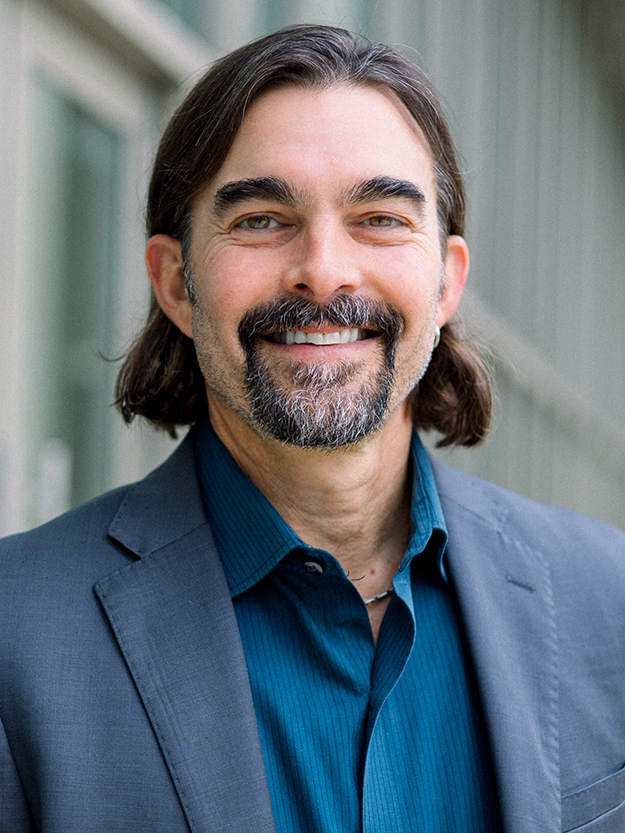
McShane is the James J. Cain Professor II and head of the Department of Biomedical Engineering at Texas A&M University, the same school that handed him a Ph.D. in 1999. He now runs the department he once trained in, which is a tidy kind of circle.
The pitch is continuous chemical sensing: instead of a snapshot of your blood once a quarter, a stream of readings from tissue, in real time, sent somewhere a clinician can watch. That ambition has filled the better part of a quarter century and pulled in millions in federal grants.
Four steps from molecule to message
Before he led the department, he was its student
After the doctorate, McShane went to Louisiana Tech University as an assistant professor, working on biomedical optics and micromanufactured biosensors - the unglamorous machine shop of the field, where you learn to build the small thing that actually works rather than the big idea that only sounds good.
He came back to Texas A&M and kept climbing: the E.D. Brockett Professorship in 2010, the named Cain professorship in 2017, and eventually the head's chair. Along the way the lab pioneered the use of micro and nanoparticles, capsules, and hydrogel-particle composites for optical biosensing - the materials grammar that makes an injectable sensor possible at all.
The applications stretched past the wrist. Bioreactors for cell manufacturing. Tumor-egg models. Anywhere a process needs to be watched chemically without being interrupted, the same trick applies: organize receptors at the microscale, amplify with light, read from outside.
His collaboration with Profusa Inc. and researcher Natalie Ann Wisniewski aimed squarely at the headline version of the work - highly miniaturized, injectable sensors for continuous, simultaneous monitoring of multiple body chemistries, the kind a physician could check remotely.
"My most important collaboration came from a chemist. They had unique things that could be applied directly to solve some of our problems."- Michael McShane, on building across disciplines
A career, dated
What the field has given back
The Big One
The 2012 NIH Director's Transformative Research Award - reserved for work meant to shift a paradigm, not nudge it.
Technical Achievement
The 2023 IEEE Sensors Council Technical Achievement Award, for smart tattoos and implantable biomaterials built for the long haul.
Four-Fellow Sweep
Elected Fellow of IEEE, SPIE, BMES and AIMBE - membership in four of the field's most selective rooms.
He Ran The Council
Past President of the IEEE Sensors Council, 2016-2017, steering the global home of sensor research.
Founder's Gavel
Founding chair of the IEEE BioSensors conference, setting the technical bar in London in 2023.
Fresh Funding
A 2023 NIH R01 for minimally-invasive technology that reads how your body absorbs nutrients after a meal.
Reading dinner, not just blood
The newest grant points the sensor at the dinner plate. Funded by the NIH in late 2023, the project asks a deceptively domestic question: how does your particular body handle the meal you just ate? Two parts - study individual nutrient absorption, then build a device that turns those readings into personalized dietary advice.
It is the same philosophy that has run through every project: precision over averages. McShane has described the goal as control over what is delivered to the body, where, when, and how much - and the mirror image, control over what is measured coming back out.
He still talks like someone who would rather be in the room than at the podium. Founding the IEEE BioSensors conference was less about a title than about building a community, where, in his words, conversations help researchers see their own work differently and try experiments they hadn't planned.
Catch him mid-stride and the picture is consistent: a person who decided early that the body should be legible, and has spent decades closing the gap between that idea and a thing you can actually inject.
Five things worth knowing
Tattoos, no ink
The "smart tattoo" name is pure metaphor - there is no pigment, only chemistry tuned to glow.
Smaller than rice
The sensors are designed to be tinier than a grain of rice yet read multiple chemistries at once.
Full house of fellowships
IEEE, SPIE, BMES, AIMBE - he holds Fellow status in all four.
Home turf
He now heads the very Texas A&M department that granted his doctorate.
Best idea, wrong building
His single most valuable collaboration, by his own account, came from a chemist - not an engineer.
Four-discipline bridge
Optics, chemistry, materials science and medicine all meet on his bench.