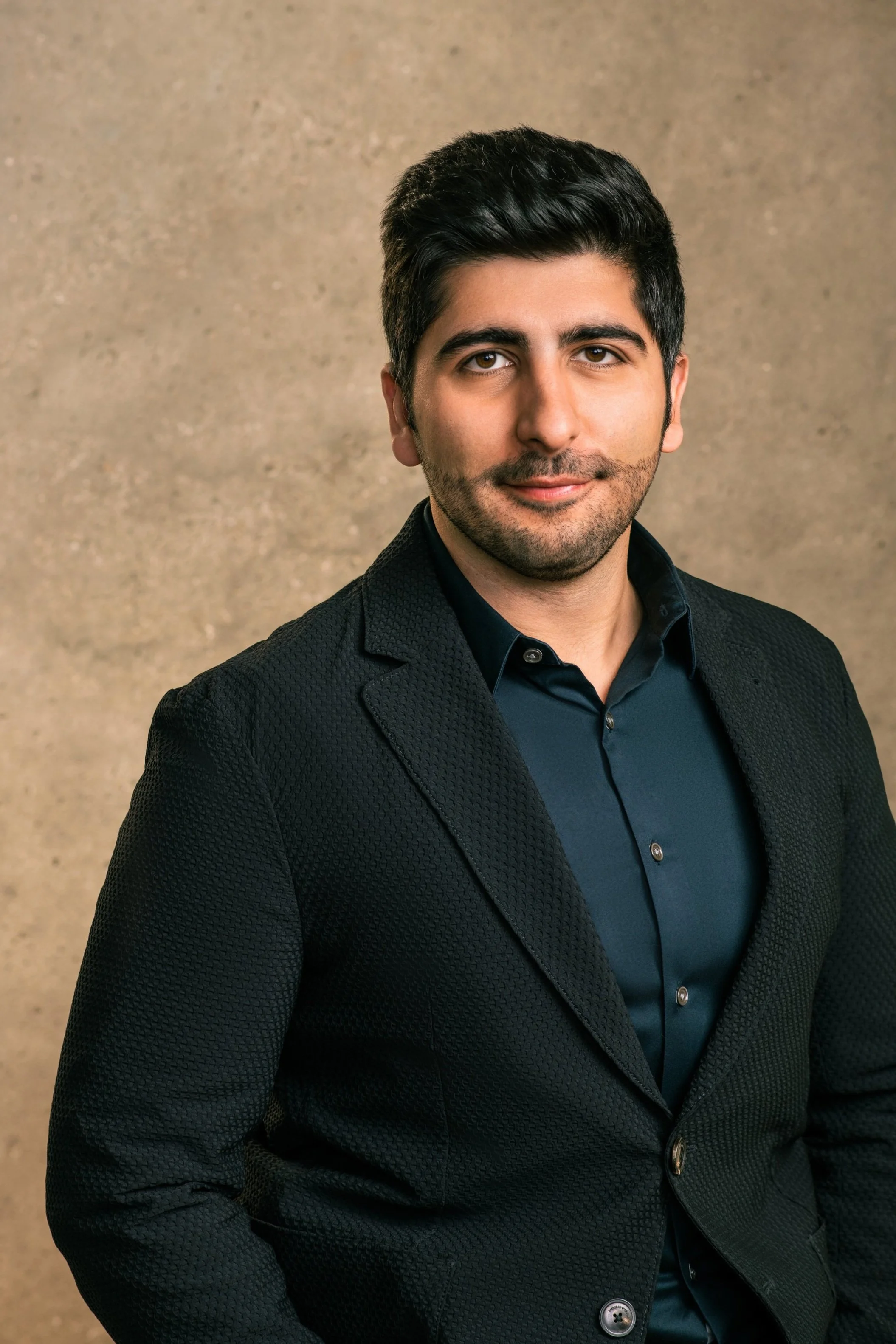
The investor who turned a hunch into a spreadsheet.
Most venture capitalists tell stories. Ali Tamaseb opened Excel.
For four years, while his peers traded gut takes about what kind of person becomes a billion-dollar founder, Tamaseb did the unglamorous thing. He pulled down LinkedIn profiles. He cross-referenced funding histories. He logged ages, schools, prior employers, founding teams, and the gap between graduation and first check. He built one of the largest hand-collected datasets ever assembled on startups - roughly 300 unicorns plus a control group of companies that had raised real venture money and still missed the mark. He measured what could be measured, then asked which of venture capital's favorite tropes survived contact with the numbers.
Most did not. Age stopped mattering. Domain expertise stopped mattering. Being first to market stopped mattering. The book that came out of the work - Super Founders: What Data Reveals About Billion-Dollar Startups - landed in 2021, hit bestseller lists, and quietly rearranged some pretty firmly held opinions about who gets to build the next big thing.
Today Tamaseb is a General Partner at DCVC, the Palo Alto deep-tech firm with roughly four billion dollars under management and a stable of more than ten billion-dollar portfolio companies. His mandate ranges across crypto, fintech, healthcare, biomed, materials, chemicals, electrification, mining and construction. The pitch he hears at 9 a.m. might be antibody discovery. The one at 4 p.m. might be geothermal drilling. He listens to both with the same calm look of someone who has already checked the priors.
What didn't predict unicorns
Of billion-dollar companies, 70% of repeat founders had previously founded at least one successful company - vs 24% in the random control. Source: Super Founders, 2021.
Many of the things we assume about successful founders simply don't hold up in the data. Age is a non-factor. Being first to market does not actually matter.— Ali Tamaseb, on the central finding of Super Founders
From Tehran olympiads to Sand Hill Road.
The biography reads like a research abstract written by someone with a very long attention span. Tamaseb earned an electrical engineering degree at the University of Tehran and a degree in biomedical engineering at Imperial College London. He picked up general management coursework at Stanford Graduate School of Business. Along the way he collected medals at national and international physics and programming olympiads, four granted patents, and authored five academic papers on machine learning and AI.
Most academics drift toward more academia. Tamaseb drifted toward hardware. He founded Blocks Wearables, an early stab at a modular smartwatch - bands made of stackable, swappable components, each with a different function. The product attracted a sizable community and millions in revenue before the broader category cooled. He learned what every hardware founder learns: shipping atoms is harder than shipping bits, and the people who survive both are worth studying closely.
So he started studying them. He joined DCVC in 2018 and, in parallel, began the multi-year project of trying to figure out, empirically, who actually pulls off the thing he had just attempted. The British Council named him a 2018 honoree of the British Alumni Award the same year. Imperial College had already given him the President's Medal for Outstanding Achievement.
Education stack
The receipts.
Super Founders, or: how to read a founder.
Super Founders arrived in May 2021 from PublicAffairs. It interviewed Eric Yuan of Zoom, Peter Thiel of PayPal and Palantir, Arie Belldegrun of Kite Pharma and Allogene, Nat Turner of Flatiron Health, and a long list of investors including Alfred Lin at Sequoia. It then quietly demolished a dozen cliches.
The conventional wisdom: young founders, technical depth, novel ideas, lone wolves, big swings. The data: average unicorn founder age was 34. Many founders had no prior experience in the industry they entered. Over half had strong competitors at launch. Teams of two or more dominated. What separated the winners, Tamaseb argued, was not raw genius but a cluster of underrated soft skills - hiring well, selling well, building strategic relationships across industries, and being willing to grind on a problem long enough that small advantages compounded.
The book has since become required reading inside several venture firms and corporate strategy groups - a strange fate for what was, at its core, a four-year side project.
Five myths Tamaseb retired
- Young founders are statistically luckier than older ones.
- You must have deep expertise in your sector to win it.
- First-mover advantage is decisive.
- Solo founders outperform teams.
- The right university is the price of admission.
Two columns, one argument.
The founder is a 22-year-old technical wunderkind with a never-before-seen idea and no competitors.
Average unicorn founder age is 34. Many entered industries they didn't know well. Over half launched into crowded markets and won anyway.
Repeat founders just got lucky once. Past success doesn't predict the next one.
70% of repeat founders in the billion-dollar cohort had at least one prior successful company. In the random group: 24%.
At DCVC: a people capitalist with a portfolio.
DCVC, formerly Data Collective, has been quietly betting on hard science for more than a decade. The firm writes seed-to-Series-A checks into companies that look more like physics problems than software apps - geothermal energy, antibody discovery, synthetic biology, geospatial analytics, computational drug design, industrial automation, sustainable manufacturing, space tech. As of 2024 it managed approximately four billion dollars in assets, with a portfolio that includes more than ten unicorn outcomes.
Tamaseb's calling card inside the firm is the same instinct that produced the book. He calls himself a People Capitalist, which in plainer language means he believes the founder is the asset and everything else - the deck, the tech, the TAM - is downstream of who is sitting across the table. He runs an internal program called the Superfounders Club, his way of operationalizing the dataset into ongoing relationships with the kind of people his own research told him to look for.
His investments have spanned crypto, fintech, healthcare, biomed, materials, chemicals, electrification, mining and construction. He has backed multiple billion-dollar companies on DCVC's behalf. He has also publicly argued that VC needs less folklore and more falsifiable claims, which is exactly the kind of thing that wins you a book deal and a partner title and a polite distance from the louder corners of Twitter.
Deep Tech
Frontier science where most VCs lack the patience.
Climate & Industrial
Energy storage, geothermal, sustainable manufacturing.
Bio & Health
Antibody discovery, genomics, precision medicine.
AI & Compute
Industrial AI, AI hardware, deep-compute infrastructure.
A timeline, compressed.
Selected lines.
On myths
"Many of the things we assume about successful founders simply don't hold up in the data."
On age
"Founders of any age were equally likely to start billion-dollar startups."
On competition
"Being first to market with an idea does not actually matter."
On self-image
"I think of myself as a People Capitalist."
Things that amuse us.
The dataset behind Super Founders was built by hand. Not scraped. Not bought. Hand-typed, cell by cell, for four years.
Before he was investing in deep tech, he was building it. Blocks Wearables tried to make smartwatches you could rebuild like Lego.
Holds four patents. Co-authored five papers on ML and AI. Then chose to spend the next decade reading pitch decks.
Decorated at international physics and programming olympiads. The kind of teenager who actually enjoyed the after-school problem sets.
Interviewed Peter Thiel and Eric Yuan for the same book. Two founders who agree on almost nothing else.
Coined a job title for himself that does not exist on any business card: People Capitalist.
What he's actually trying to do.
Replace venture capital's pattern-matching folklore with falsifiable claims, and back the founders rebuilding biotech, climate, energy, and industrial AI from the molecules up.
It is a narrow ambition stated broadly. The narrow part: keep doing the work, keep updating the model, keep funding the next ten unicorns in industries that take a decade to mature. The broad part: convince an industry that runs on storytelling that the stories are sometimes wrong. Both, given his track record, look achievable.