Thirty years of building companies. Now writing the checks that fund the next ones.
Michael McBride joined GV in December 2023 with one unusual credential no spreadsheet captures: he's been on the other side of every conversation he now has.
As Chief Revenue Officer at GitLab, he watched a scrappy open-source company grow its revenue run-rate more than 100x, from single-digit millions to a billion-dollar-plus public company. The IPO bell rang. And then he walked into GV.
Three decades earlier, his career started the way most things in Silicon Valley do: with an obsession. For McBride, it was mechanical systems - Lego to motorcycle engines to a Mechanical Engineering degree at Stanford. He added an MBA from the same institution, then took a sharp left turn into the startup world rather than the predictable path to Boeing or McKinsey.
What followed was a 30-year sprint through companies that either got acquired, went public, or scaled past the point where anyone called them startups anymore. He was a founding executive at Starcode Software (acquired by Be, Inc.) and Lionside, a social gaming company scooped up by Japanese gaming giant DeNA. He helped build Meraki before Cisco paid $1.2 billion for it. He held roles at Good Technology (Motorola acquisition) and mobile security firm Lookout.
He is an operator-turned-investor who leads early-stage bets in AI, frontier technology, and open-source enterprise software. The portfolio includes names that are now among the fastest-growing companies in tech: Harvey, Synthesia, Vercel, Attio, Cribl, and Guild.ai.
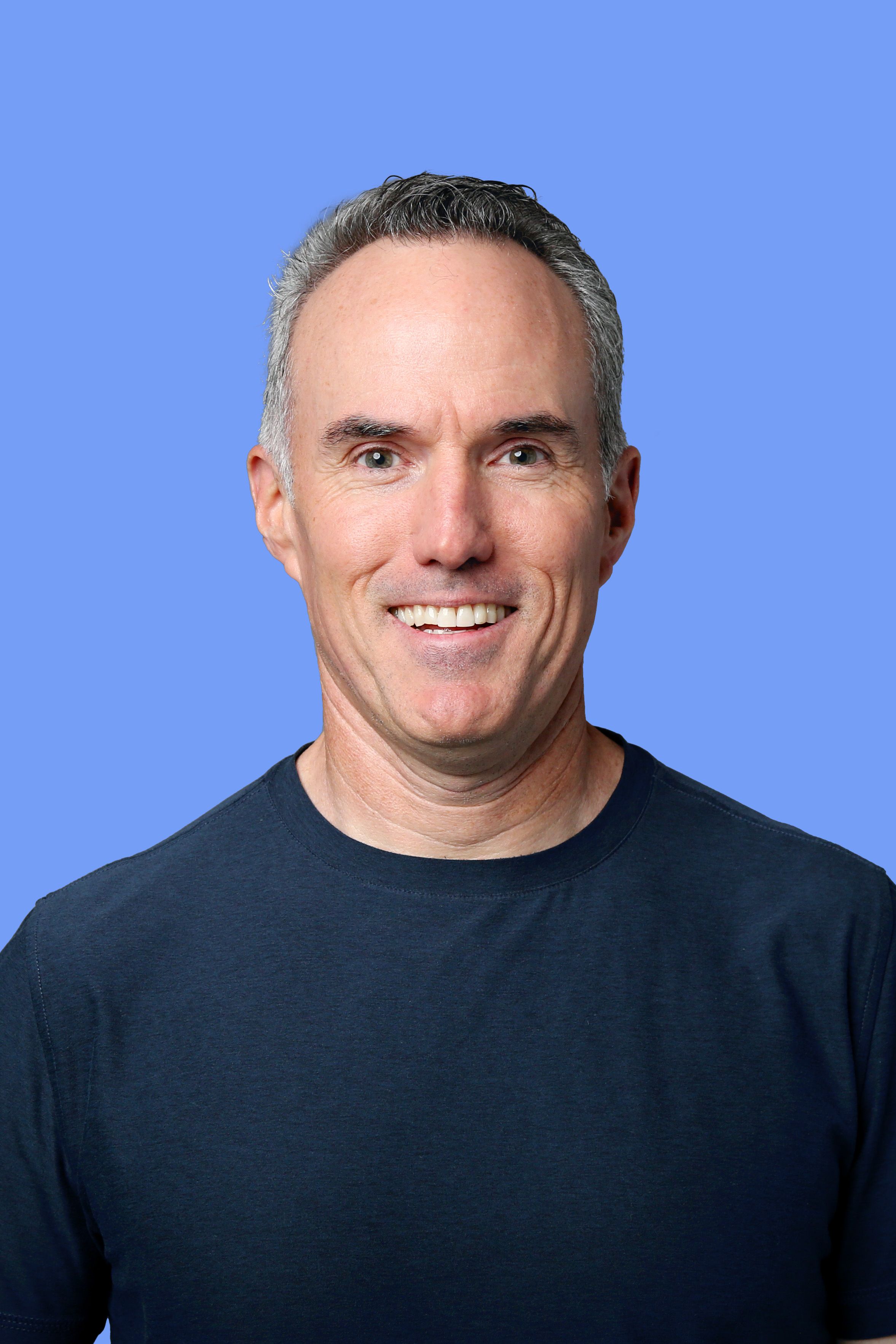
"My nonlinear career has been guided by an underlying love to build from the ground up - whether it's companies, teams, products, or cultures." - Michael McBride, GV General Partner
It was less than six months into his tenure at GV when McBride found himself chasing Cribl, an IT and security data startup based in San Jose. The company's CEO, Clint Sharp, mentioned casually during a call that he'd be in Portugal for a customer and employee event.
McBride took the hint nobody quite intended. He booked an 11-hour flight to Lisbon.
The two walked through Sintra - a resort town with pastel castles that once served as summer retreats for 19th-century Portuguese princes. Over cobblestones and views of the Atlantic, McBride demonstrated that he already knew the company's business better than most people in the building. Sharp later said: "Even in the realm of investor stories, I thought that was a pretty zany one."
GV led Cribl's oversubscribed Series E - $319 million at a $3.5 billion valuation - announced in August 2024. It became the firm's second-largest single investment in its history, behind only its 2013 bet on Uber. McBride joined Cribl's Board of Directors.
"I have not lost a wink of sleep since we did the investment, because I'm so confident in that team." - Michael McBride on Cribl
McBride coaches youth lacrosse alongside managing one of Silicon Valley's most active early-stage portfolios. The two activities share more than geography. Both require reading the field before the play develops, betting on individuals over systems, and knowing when to call the play versus letting the team execute on its own.
He's a guest lecturer at Stanford's Graduate School of Business - the same institution that handed him both of his degrees. He teaches a generation of MBAs how the messy operational reality of scaling a company compares with the clean frameworks they'll memorize for exams.
He describes himself as an outdoor enthusiast, which is perhaps unsurprising for someone who once built motorcycles and now builds investment theses. Both involve understanding systems, tolerating risk, and knowing which components actually matter.
Michael McBride's career began where most engineers' careers begin: taking things apart to understand how they work. Lego bricks became motorcycle engines. Motorcycle engines became Mechanical Engineering at Stanford. Stanford became an MBA. And the MBA became a 30-year experiment in applying engineering thinking to the thoroughly un-engineered problem of building companies with humans.
What's unusual about McBride's journey is that it never straightened out. Most operators-turned-investors arrive with one great company on the resume. McBride arrived with six exits, two IPOs, and an MBA he'd barely had time to use. The "nonlinear" descriptor he applies to his career isn't modesty - it's a precise accounting of a path that zigged through gaming, security, dev tools, and cloud before landing at a venture firm with Alphabet's backing.
At GV, McBride's stated ambition is to partner with entrepreneurs at the earliest possible moments - seed and Series A - when a founder's instincts haven't yet been tempered by scale. His ideal co-investment relationship is long: he wants to be in the room for the hard pivots, not just the victory lap.
"Even in the realm of investor stories, I thought that was a pretty zany one." - Clint Sharp, CEO of Cribl, on McBride flying to Lisbon to close the deal
McBride holds a B.S. in Mechanical Engineering and an MBA, both from Stanford University. The engineering degree isn't decorative. He brings a systems-thinking disposition to every company he backs - the same approach he used to disassemble and rebuild motorcycle engines, applied to the more complex machinery of sales organizations and revenue models.
He returns to the GSB regularly as a guest lecturer, staying close to the next generation of operators who will build the companies he hopes to fund. It's a rare loop - the operator who became an investor, coming back to tell the story before it becomes legend.
McBride joined GV at a specific inflection point. The firm - backed by Alphabet and operating since 2009 - has historically bet on breakout consumer and enterprise software. With AI reshaping every software category simultaneously, GV needed a partner who understood the enterprise go-to-market dynamics that determine whether an AI product becomes a business or stays a demo.
McBride's hiring - and his subsequent activity in Cribl, Attio, Guild.ai, and the broader portfolio - suggests the thesis is working. The operator with 30 years of scar tissue turned out to be exactly the kind of partner founders building in the current moment need.