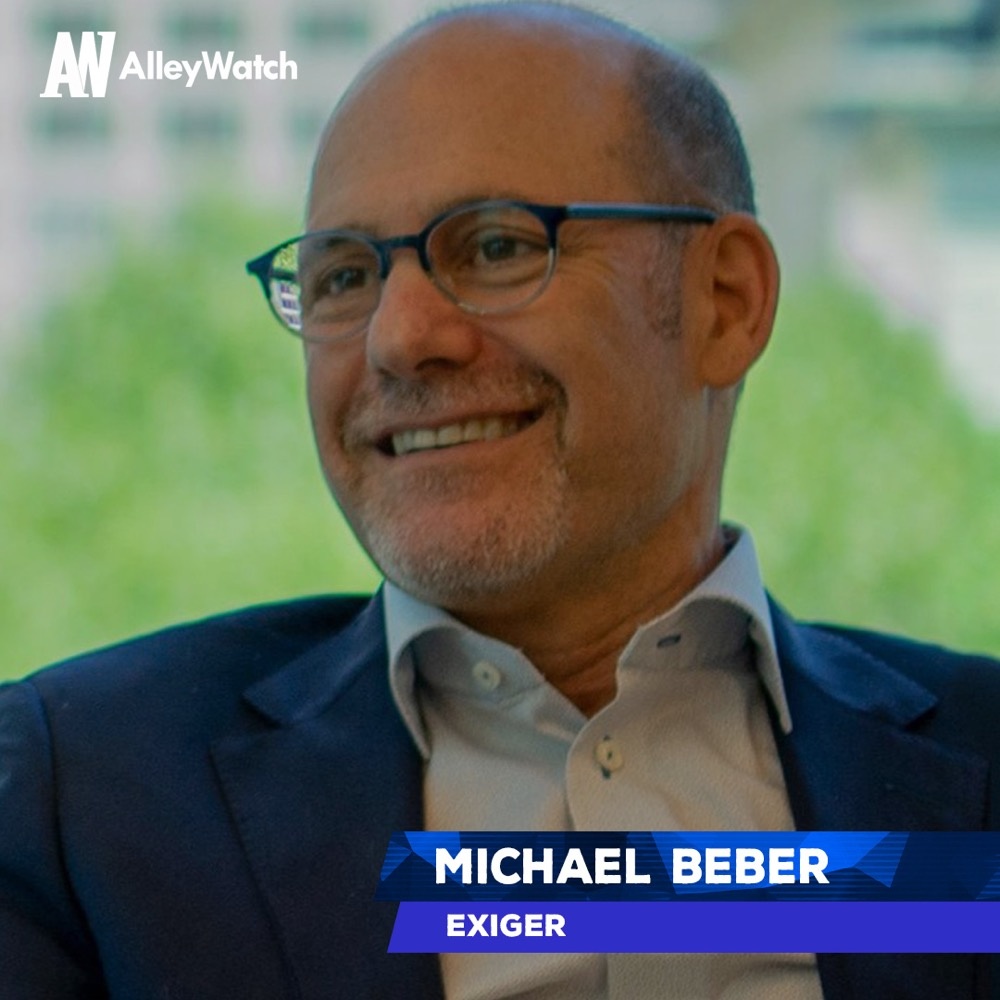
Michael Beber helped build a business devoted to checking what people say against what the evidence shows. Eventually, his own promise came up for inspection. When he and Michael Cherkasky founded Exiger, they wanted the people who joined the young company to participate as owners. A decade later, an investment agreement supplied an occasion to count.
In December 2023, Carlyle and Insight Partners announced plans to take a majority stake in Exiger. Cherkasky said employees across the United States, Britain, Canada and Romania would receive hundreds of millions of dollars for their shares. He listed assistants, receptionists, programmers and accountants among the participants. The distribution of names was as interesting as the distribution of money.
Beber’s own reflection began with five words: “Promises made promises kept”. For a founder whose career includes investigating accounts, buying companies and selling corporate assets, it was a characteristically concrete way to describe an emotional result. The paperwork had caught up with the intention.
The accountant learns to build
Beber’s working life began far from the contemporary vocabulary of supply-chain AI. He graduated from the University of Western Ontario in 1981, with a BA in Administrative and Commercial Studies, Financial Studies. His early career included KPMG in Toronto, BDO Canada and the forensic-accounting firm Lindquist Avey, which he helped found.
Forensic accounting gives a business career an unusual starting point. The work concerns what happened beneath the surface of the accounts: transactions, relationships, explanations that need examining. Before the executive titles came an occupation in which a tidy presentation could be the beginning of the inquiry. Anyone can admire a spreadsheet. Someone has to ask it awkward questions.
Between 1998 and 2004, Beber held senior positions at Kroll, including executive vice president for strategic development and president of its background-screening group. He worked on acquisitions that expanded its information-services businesses and was part of the executive team involved in Kroll’s sale to Marsh McLennan in 2004.
At Marsh McLennan, his responsibilities included corporate strategy and divesting more than $5 billion of non-core assets. He subsequently worked with MidOcean Partners and became president and CEO of Altegrity Risk International, alongside a strategic-development role at its parent. His experience now included examining businesses, expanding them and deciding what they should let go.
An assignment with room for a company
Exiger began in 2013 with Beber and Cherkasky. Its early opportunity came from the HSBC monitorship: Cherkasky had been selected to monitor the bank under a deferred prosecution agreement. The founders could have organized themselves around that engagement alone. They chose to create a broader business.
That choice is central to Beber’s story. A substantial assignment can occupy a firm without giving it a future beyond the assignment. Building a company around it requires more decisions: whom to recruit, which capabilities to retain, what other customers might need. Beber brought a career of making those decisions to a highly specific opening.
The firm’s early work involved regulatory compliance, financial crime, investigations and due diligence. Such work depends on finding and evaluating information about people and organizations. As the volume grows, so does the practical burden of searching it. The investigator’s appetite for another useful fact runs into the investigator’s finite working day.
By 2015, Beber was arguing that the volume of information available to investors had outpaced their ability to identify what mattered. The distinction had commercial consequences. More records could mean more work without a proportionate improvement in understanding. The opportunity lay in helping people make sense of what they found.
“Investors already have too much information. They need the right information.”
Michael Beber, 2015
In April 2017, Exiger acquired OutsideIQ, developer of the DDIQ search and cognitive-computing platform. The arrangement brought the software team together with Exiger’s subject specialists. Beber, then president and CEO, described banks struggling to meet compliance demands while containing costs. Software offered a way to change the economics of that work.
The deal also put his earlier career to use. Acquiring a company means choosing a capability, a team and a direction for the buyer. Here, the capability involved machine learning and natural-language processing applied to due diligence. A former forensic accountant was helping purchase a different way to search for evidence.
- 2013Beber and Cherkasky found Exiger
- 2017OutsideIQ acquisition brings DDIQ
- 2018Carrick commits $80m
- 2022Daniels becomes CEO in May
- 2023Carlyle and Insight agreement announced
A balance sheet in the branches
There is a second business in Beber’s history that makes a welcome interruption to all the corporate development. After experiencing a canopy tour in South America with his family, he helped start ArborTrek. A holiday had supplied the idea for a venture in which customers would spend part of their visit suspended among trees.
In 2009, he partnered with Michael R. Smith, an outdoor specialist with experience facilitating, building and advising canopy-tour and challenge-course businesses. Their founding account describes a year that included more than 100 site visits. Even a business selling adventure needed a considerable amount of looking before leaping.
ArborTrek’s first tour opened at Smugglers’ Notch Resort in Vermont in December 2010. The venture joined Smith’s experience in outdoor activities with Beber’s business-building background. It offered a very different customer experience from financial investigations, though both enterprises depended on assembling people who knew what they were doing.
The woodland chapter is useful because it gives Beber’s entrepreneurship a physical setting. Here the result was a place a family could visit, a route through a forest, an afternoon with a beginning and an end. Corporate strategy had acquired a harness. The souvenir from that South American trip required rather more administration than a photograph.
Capital arrives. The promise gets tested.
In July 2018, Carrick Capital Partners invested $80 million for a minority stake in Exiger. The stated purpose included developing technology, making acquisitions and supporting growth. Beber pointed to Carrick’s knowledge of machine learning and natural-language processing, along with its experience operating businesses.
The transaction placed money behind the direction established by the OutsideIQ acquisition. It also introduced another kind of partnership. Founders can select an investor for capital, expertise, connections or some combination of the three. Beber’s public explanation covered all three and included the challenge of scaling Exiger’s people and culture alongside its tools.
Leadership was changing, too. Brandon Daniels had joined Exiger in early 2017 and helped develop its products and their applications to third-party and supply-chain risk. In April 2022, the company announced that he would become CEO effective May 21. Beber was identified in that announcement as co-founder and board chair.
Beber later described the recruitment in personal terms. He said it had taken a year to persuade Daniels to join, with a promise that he would eventually become CEO. The detail gives the appointment a longer history than the announcement alone suggests. Before there was a succession date, there had been a conversation about a possible future.
For the founder, an appointment like that changes the practical expression of commitment. The company continues, while the work moves between people and roles. A board seat carries a different set of responsibilities from running daily operations. Keeping an enterprise moving can require making room for someone else to lead it.
The December 2023 investment agreement brought a further change in ownership. Exiger said its founders, managers and Carrick would reinvest equity as Carlyle and Insight became majority investors. The announced arrangement therefore combined new control with continuing financial participation by people already involved in the business.
There was also a disposal. In the autumn of 2023, Exiger sold its financial-crime compliance advisory business to Capgemini as it concentrated on software and related offerings. The move provides a useful companion to the earlier acquisitions. A business can develop by adding capabilities, but development can also involve giving a successful activity a different owner.
For Beber, whose Marsh McLennan responsibilities had included divestments, that kind of corporate decision was familiar territory. The Exiger transaction belonged to a later management chapter, under Daniels. It nonetheless reflected a question that had followed Beber through several organizations: what should this particular company own and operate as its ambitions change?
A different seat at the table
By that stage, Exiger had developed from its advisory origins into a software business serving corporate and government customers. Its technology addressed supplier networks, third parties and the layers beneath an immediate supplier. A company founded around a bank monitorship was working on the connections hidden inside other kinds of organizations.
The shift gives Beber’s career a discernible continuity. Investigative accounting concerns relationships and evidence. Corporate development concerns which businesses belong together. Supply-chain software concerns relationships between organizations, components and materials. The settings changed; the recurring commercial problem was how to make complicated information useful enough to support a decision.
The employee-ownership account adds another set of relationships to the picture. Cherkasky’s description of the 2023 transaction reached across countries and job descriptions. Its significance lies in the breadth of participation he described. Receptionists and engineers had different daily work, yet both appeared in the founders’ explanation of who had helped build the enterprise.
Today, Exiger lists Beber as a member of its board, with Steve Bailey serving as chairman. Beber’s public professional profile also identifies him as co-founder and chair of Crētiv, the Beber family office, based in Delray Beach, Florida. Company building, investment and governance remain part of his working life.
The job titles are a useful record, but the promise supplies a better ending. A founder can describe a company through its products, its investors or its eventual ownership. Beber’s account makes room for the people who joined while its future was still being negotiated. In a career spent examining how businesses work, that is a revealing detail to have put into writing.
Continue the conversation
Explore the interviews, company announcements and founding stories.