Michael Baum’s interest in wine reaches as far as the nitrogen cycle. He once helped businesses search the information pouring out of their computers. After years in Silicon Valley, the questions continued in Burgundy, where the material under examination included the ground beneath a vineyard. “Would I describe myself as a nerd? Oh yeah, definitely,” he said in a 2020 interview. The subject had changed. The pleasure of getting underneath it was familiar.
It would be easy to arrange his life as a sequence of trophies: software companies, a stock-market listing, a French château. That arrangement misses much of the interest. Baum keeps finding elaborate systems that people have learned to navigate through habit, specialist knowledge and patience. He asks whether they could be understood more clearly. Sometimes the answer becomes a search engine. Sometimes it involves Pinot Noir.
There is an appealing complication here. A founder accustomed to building technology bought a business whose production schedule depends on the seasons. Whatever else an acquisition gets you, it cannot persuade September to arrive in June.
A search box for the machine room
In 2003, Baum co-founded Splunk with Rob Das and Erik Swan. He became its founding CEO. The problem they pursued was already familiar to them: computer systems generated enormous quantities of information, yet finding the explanation for a failure could be miserable work. The machines were keeping records. Their human custodians needed a usable way to read across them.
The early research had a revealing detail. The team spoke with more than 90 prospective customers across different industries. Operations staff were taking error messages from routers and application servers, pasting them into web search engines and looking for someone who had encountered the same trouble. People responsible for a company's infrastructure were effectively asking the internet where their own machinery hurt.
Splunk collected machine data, broke it into events and made it searchable. That description sounds almost modest. Its usefulness came from reducing the distance between a system recording something and a person understanding what had happened. The appeal was particularly clear when a problem crossed several products and departments, with each individual component capable of looking innocent.
Baum even carried the joke onto his business card. In 2006, his title was “chief executive splunker”. The name borrowed from the idea of spelunking: entering a complicated interior and finding your way around. For a company selling help with technical frustration, it was a welcome admission that the people running the equipment deserved a little amusement.
A simplified view of Splunk's early proposition. The difficult work sat behind the useful search box.
The customers were already talking
Baum also spent time where users gathered. By 2008, he was reading and contributing to SplunkBase, the company's community wiki, at least weekly. Technical people traded tips, complained about vendors and explained how they used the software. They suggested improvements and contributed code. A place intended to encourage goodwill became a practical part of product development.
This is a less ceremonial view of leadership than the familiar founder on a stage. It involves reading what somebody has actually written after using the product. The complaint can be more valuable than the compliment; it contains instructions, if you are willing to look closely.
The product itself was opening outward. In March 2008, Splunk introduced APIs and shared services that allowed users, developers and partners to connect their own applications. Windows support joined the existing operating systems. A compliance application showed how a searchable foundation could serve a particular business need. A tool for investigating machines was becoming somewhere other people could build.
“We're opening up the basic platform.”
Michael Baum, 2008
Splunk went public in 2012, after Baum's tenure as CEO. Cisco completed its acquisition of the company on March 18, 2024, following a deal announced at approximately $28 billion. Those are milestones in a company's history. They also mark the distance between a widely tolerated nuisance and an enterprise willing to pay for its removal.
A château is a different kind of system
Baum's interest in French wine had been developing for years. In a 2017 account of his wine journey, he described returning repeatedly to French wines and wondering what made them distinctive. Terroir presented a particularly attractive puzzle: a word attempting to gather the influence of a place into the experience of a glass.
In 2014, Baum and his wife, Julie Carabello, acquired Château de Pommard. The estate's history stretches back through successive families, with the first château dating to 1726. They became the fifth family of owners. Silicon Valley celebrates founding dates; Burgundy gives a newcomer several centuries to catch up on.
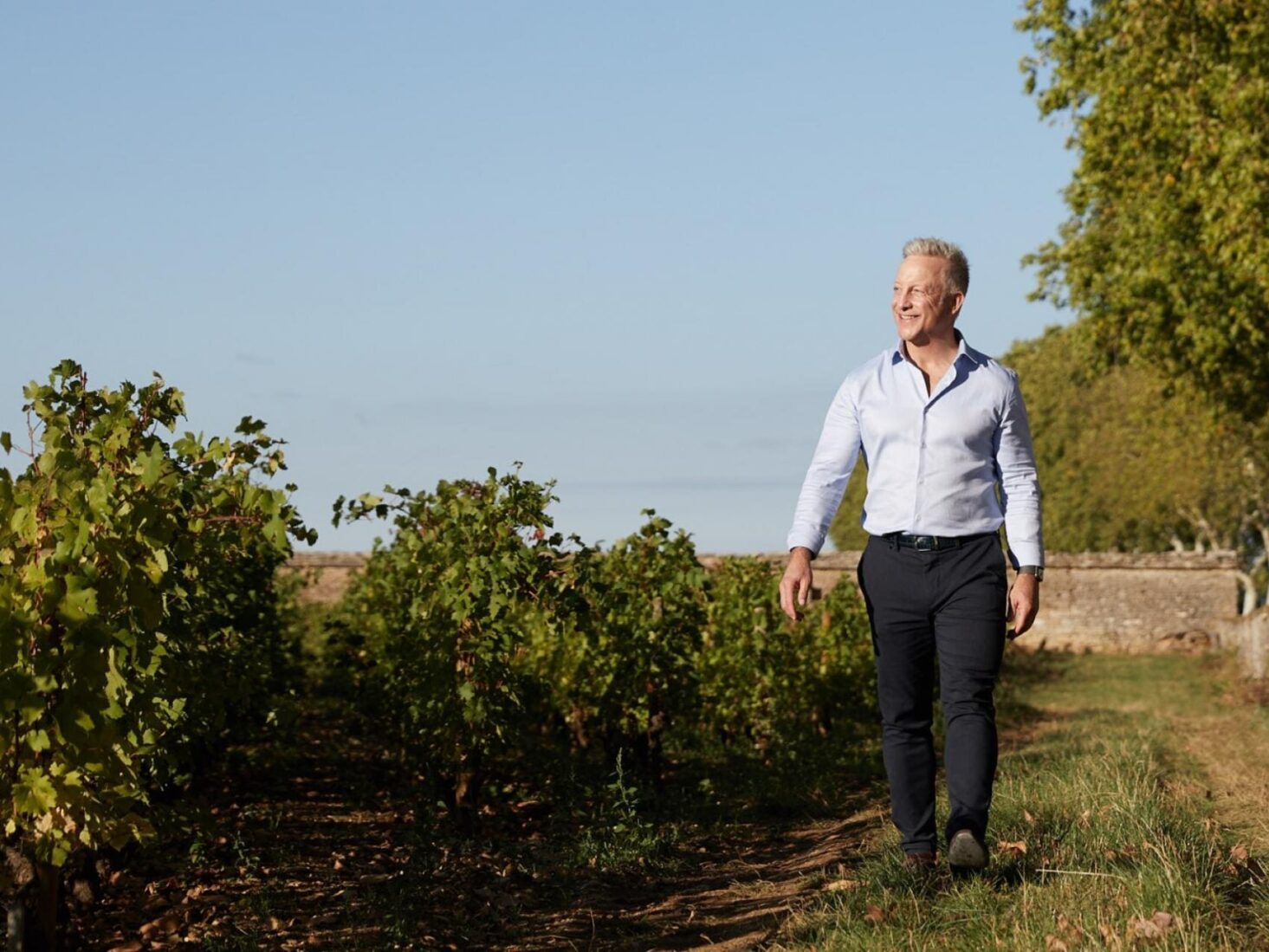
The family's work included converting the vineyard to biodynamic farming, a process begun in 2016. The project built on the estate's existing knowledge and involved its winemaking team. Treating this as the arrival of a technology founder with all the answers would overlook the people who understood the land before he bought it.
For Baum, the attraction was partly the chance to learn another complicated business. He had already moved through several kinds of software, from financial modeling to online payments. Wine offered a fresh set of dependencies, together with the awkward fact that its raw material grows outside.
The vineyard keeps its own calendar
In his January 2025 letter marking a decade of ownership, Baum described the estate receiving organic certification in 2019 and Demeter biodynamic certification in 2021. He also described the difficult 2024 growing season: frost, hail and heavy rainfall had reduced yields. Demand and the amount of wine available were heading in different directions.
The response included plans for an allocation system. Customers would have to share a limited harvest. The familiar language of growth met something stubbornly physical: a particular vineyard can produce only so much in a particular year. An operator can change a process, improve a relationship or make a different choice in the cellar. The weather retains a seat at the meeting.
- 2014The family acquires the estate
- 2016Biodynamic conversion begins
- 2019Organic certification
- 2021Demeter certification
These years provide a useful counterweight to the brisk recital of startup exits. Farming makes time visible. A conversion must be carried through, a harvest waited for, a bottle eventually opened. The result invites judgment long after the original decision has ceased to feel new.
The customer at the other end of the bottle
Baum did bring a recognizable technology instinct to the wine business: pay attention to the person buying it. In a 2021 conversation, he said 90 percent of Château de Pommard's sales were direct to consumers. The figure belongs to that moment, but the emphasis explains why tastings, education and customer relationships feature so prominently in his wine work.
Vivant extended the educational idea online. Its experiences combined wine tasting with lessons, quizzes and contact with wine professionals. A person could learn about a place without first arranging a journey there. For someone who had spent years making information easier to navigate, the ambition had a family resemblance.
Education also exposes a practical question: once someone becomes interested, can they afford to participate? In September 2025, the estate announced Pommard by Château de Pommard, a restaurant-focused cuvée intended to reach a new generation. Its launch positioning included €15 a glass in restaurants. That is still a considered purchase, though it lowers the commitment of buying a whole bottle.
The wine came from the 2023 vintage and three selected plots. The initiative connects an old appellation to an ordinary decision at a restaurant table. A regional tradition needs people who are curious enough to try it, and a way for that curiosity to become an order.
Back to the people with the first idea
Baum's career began closer to that uncertain first step than its later acquisition prices suggest. He studied computer science at Drexel and earned an MBA at Wharton. His early ventures included Reality Online, Pensoft and dotBank. In a later interview about Vivant, he traced his curiosity further back, to taking apart appliances, audio equipment and eventually computers to see how they worked.
By 2012 he was also thinking about what to support next. His investment outlook that year emphasized interesting problems, people committed to solving them and distinctive ways to reach a market. He resisted the idea that a company should be engineered around an eventual acquisition. There is room for ambition in that view, along with a useful limit on predicting the ending.
Founder.org put his attention back on young entrepreneurs. In March 2025 at NYU, he heard pitches from 14 founders and discussed the Yope accelerator. His university work gave him a different role in the room: the experienced builder listening to people still working out what their companies might become.
The 2026 Founder.org fellowship lists Baum as CEO and combines a $100,000 investment through a SAFE with six months of hands-on venture building and leadership coaching. Money is one ingredient. Another is the time of people who have dealt with customers, hiring and the many decisions a promising idea leaves unresolved.
Across these chapters, a consistent habit comes into view. Baum gets interested in what is happening underneath the polished surface: the records inside a computer system, the life of a vineyard, the decisions inside a young company. Each requires patience with details. Each offers the possibility that understanding something better will make it more useful to somebody else. He has given himself plenty to take apart.
Follow the questions
Continue with Baum's ventures, conversations and public profiles.