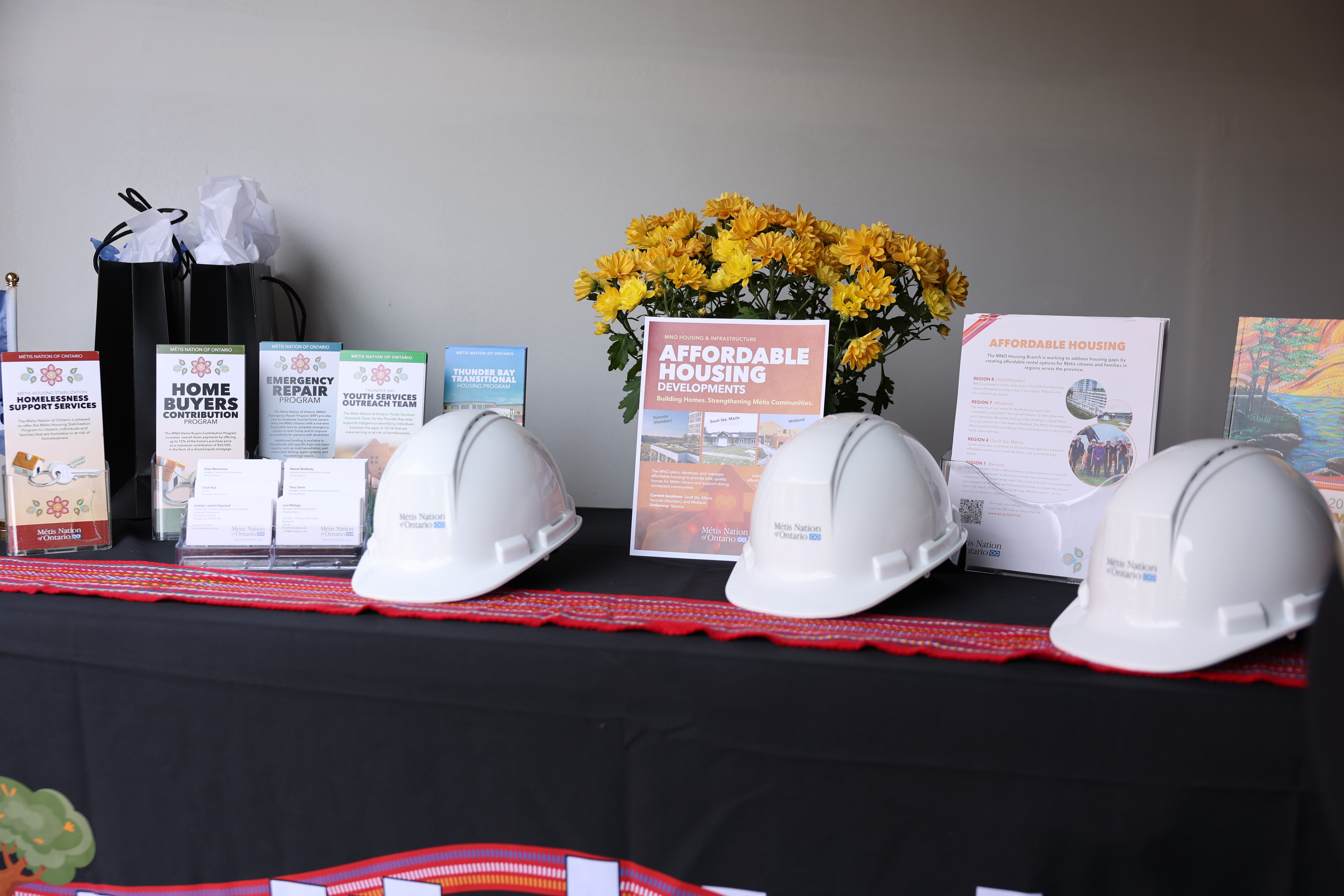
At the Midland housing opening, the hard hats sat beside brochures about homebuying, emergency repairs and homelessness support. A woven Métis sash ran underneath them. It was a small arrangement with a useful explanation tucked inside: the Métis Nation of Ontario works where identity meets the ordinary business of getting through the week. Sometimes that means a constitutional argument. Sometimes it means a roof that does not need fixing.
- A Métis government founded in 1993, representing more than 30,000 citizens.
- Education, employment and housing support sit alongside its rights work.
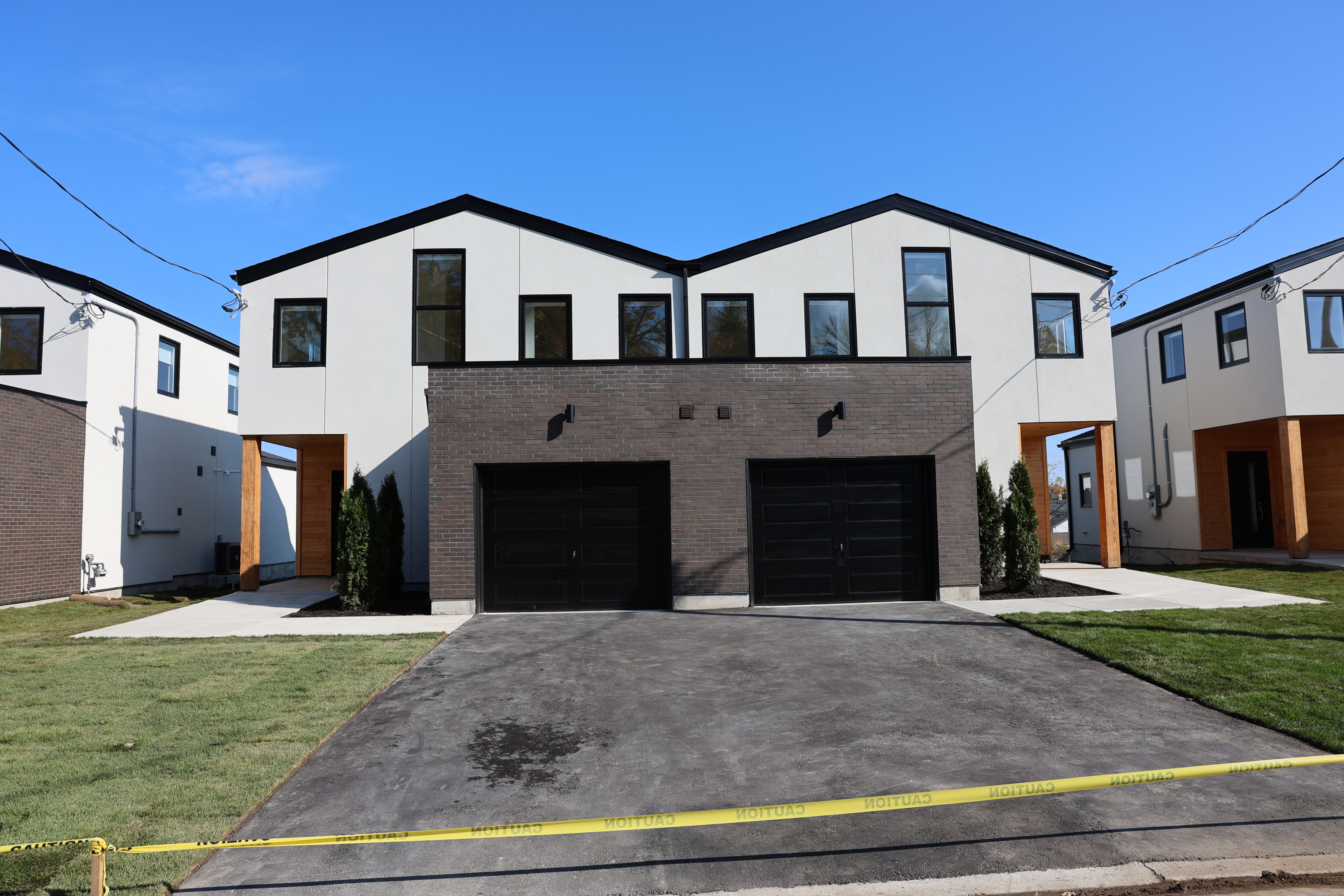
- Its latest completed housing project adds 14 affordable homes in Midland.
The houses opened on October 23, 2026. They are two-storey, three-bedroom homes, designed by architect David Fortin for Métis families. Getting here took four years. For an organization whose public history includes Supreme Court litigation and negotiations with Ottawa, fourteen front doors offer a particularly legible measure of progress. You can stand in front of them.
A government begins with a practical problem
MNO emerged in 1993 when Métis people and communities across Ontario came together to establish a Métis-specific governance structure. Tony Belcourt was its founding president. Its Statement of Prime Purpose puts democratic institutions, economic self-sufficiency, education, health and cultural continuity in the same document. The combination explains why its work can look unusually broad to an outsider.
The people it represents are citizens. That word matters. A student receiving assistance is also potentially a voter in the institution providing it. A family seeking housing belongs to a wider political community. MNO occupies a space that a college, charity or housing agency alone cannot fill: representation tied to a Métis-specific service network.
Its expertise consequently crosses several desks: citizenship documentation, public administration, rights advocacy, education partnerships and housing delivery. Mainstream institutions remain useful alternatives for individual needs. They do not provide the same representative mandate. Treating these organizations as interchangeable misses the reason MNO was formed.
The moose that went to court
In 1993, Steve and Roddy Powley were charged after harvesting a moose near Sault Ste. Marie without a licence. They maintained that they possessed a constitutionally protected Métis right to hunt for food. MNO supported the litigation. Ten years later, the Supreme Court of Canada upheld that right for their community.
The sequence is instructive. Constitutional recognition already existed on paper; the practical meaning remained contested. A particular prosecution supplied a particular test. The resulting judgment helped establish how Métis rights could be proved. It also made clear that evidence of a rights-bearing community matters. An assertion of ancestry alone does not do the work.
That concern with evidence reaches into MNO’s own administration. A registry review initiated in 2017 led to a 2023 plebiscite in which 71 percent of participating voters favoured removing incomplete citizenship files. A subsequent special assembly approved changes to the bylaws and registry policy. Building a representative government also means making difficult decisions about its membership rules.
Recognition has boundaries
Canada and MNO signed a self-government agreement in 2019 and an updated agreement in 2023. The latter recognizes MNO as the Indigenous government representing its citizens and communities, with jurisdiction over internal matters including citizenship, leadership selection and government operations. Canada’s explanation expressly excludes harvesting and land-related matters from that agreement.
The legislative route has been slower. A federal implementation report records that Bill C-53 did not receive royal assent, with progress halted when Parliament prorogued in January 2025. Recognition, legislation and a future treaty are separate steps. Reading one announcement as completion of the whole process would give citizens the wrong picture.
School support with more than one doorway
The Education and Training branch began in 1996. Its remit now runs from early learning through school, post-secondary study and employment training. In August 2026, MNO reported that the branch had supported 885 post-secondary students and 1,458 employment and training clients during the preceding year. These are reported service counts, rather than proof of graduation or employment outcomes.
The useful detail is in the connections. Post-secondary support includes financial assistance, travel help, personalized navigation and the Infinite Reach student network. Its bursary program spans 43 Ontario institutions. Someone who needs help finding the right office can need a person as much as a payment. The navigator service addresses that less photogenic part of educational access.
Count the need. Then build.
Housing adds another version of the same problem. MNO’s branch offers stabilization assistance, emergency repairs and homebuyer support alongside development work. Its 2022 Housing Census helped identify community needs; a ten-year action plan followed in 2024. The transferable idea is straightforward: gather evidence from the people being served, use it to set priorities, then connect those priorities to delivery.
Canada reported CAD 4.2 million in support for Midland. Separately, it announced a CAD 21.1 million housing top-up for MNO, building on a previously announced CAD 31.9 million allocation. These are public funding commitments, with different scopes. The Midland contribution should not be mistaken for the entire cost of buying land, designing and constructing the development.
“This is Métis self-government in action”Margaret Froh, MNO President, October 2026
This model depends on public funding, delivery capacity and a citizen mandate. Access also depends on each program’s rules; citizenship alone does not guarantee a housing placement or education award. Readers looking for support should check the relevant program and its eligibility requirements before planning around it.
At the August 2026 assembly, citizens directed consultations on a draft constitution, with a possible ratification vote in 2027 alongside a self-government treaty. That remains prospective. The homes in Midland are present tense. Together, they show the two clocks MNO has to manage: the long negotiations over authority, and the immediate needs of the people who have asked it to act.
Follow the work
Explore MNO’s website, education programs and housing supports. Read the Midland opening news or watch The Métis Nation of Ontario: 1993-2013, a documentary featuring founders and early leaders.