The problem was hiding inside a telecom unit. There were shelves, drawers and a deadline. The customer wanted each drawer to connect to power as it slid into place. Its own design was unsatisfactory. According to Methode Electronics’ published case study, the team realized it lacked the expertise to finish the job in time. A product launch had become a connection problem.
- Methode builds custom electronics for equipment makers, from vehicle controls to server power connections.
- Its advantage is combining design expertise with manufacturing.
- Industrial growth is encouraging. The company’s turnaround remains unfinished.
A launch deadline, a power problem
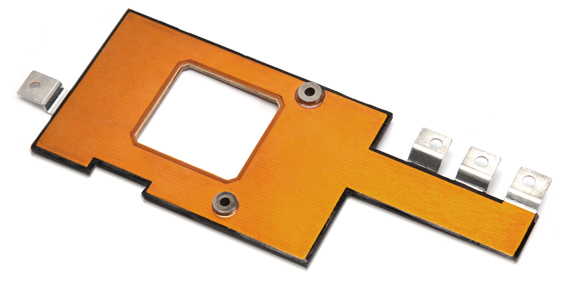
Methode’s answer was a multilayer laminated busbar, a structure that carries electricity through conductors separated by insulation. Its engineers combined that structure with socket technology and a custom connector that could mate without the installer seeing the connection. The drawer connector could handle 500 amps in total. This was a specific answer to an inconvenient physical problem.
The customer bought a way through a bottleneck. That is a useful introduction to Methode: a company whose work often sits behind the surface of somebody else’s product. Its name may never reach the person driving the vehicle or using the network.
A business built around the awkward bits
William J. McGinley founded Methode in Chicago in 1946 with $1,000. Vacuum-tube sockets came early; printed-circuit technology followed. The company’s history identifies a recurring habit: finding the connection that a new generation of equipment required, then learning how to manufacture it.
Today the portfolio includes automotive interfaces, lighting, sensors and power distribution. Grakon supplies specialized vehicle lighting. Nordic Lights addresses heavy-duty equipment. Hetronic makes configurable industrial radio controls. Methode Sensor Technologies develops automotive and industrial sensing. These businesses serve different machines, but each must translate an electrical intention into something that can be installed and used.
The buyers are equipment manufacturers and their suppliers. Methode’s automotive group develops products for interior and exterior interfaces, lighting, chassis and powertrain applications. Its history names a Ford center-stack console launched in 2010. Nordic Lights reports Caterpillar supplier recognition. Those examples give the customer base a recognizable shape without turning a historical application into a claim about every current vehicle.
Copper has competition
The power business is particularly revealing. Engineers can buy single-conductor, laminated and powder-coated busbars, flexible conductors, connectors and subassemblies. SonicFlexBus, for example, stacks flat conductors inside film insulation so they can slide and bend during installation. The product solves a packaging problem as well as an electrical one.
Methode’s pitch is the combination of application engineering, proprietary components and manufacturing under one supplier. Its power group explicitly offers integrated subassemblies as an alternative to managing several vendors. That can matter when the connector, insulation and surrounding structure all have to agree.
There are capable alternatives. Mersen also designs and manufactures custom laminated busbars, with engineering and production capabilities of its own. Methode’s breadth across controls, sensing, lighting and power is distinctive; it does not establish that every individual product beats a specialist’s. A buyer still has to compare fit, qualification, delivery and total assembly cost.
The factory gets a vote
Owning more of the process also means carrying more of its difficulties. In fiscal 2024, Methode disclosed automotive inefficiencies associated with program launches, labor turnover and higher costs. Lower demand and programs ending compounded the trouble. The full-year net loss reached $123.3 million, including substantial goodwill impairments. Those accounting charges were not a cash invoice for fixing a factory.
Jon DeGaynor became chief executive in July 2024. The response included sourcing and logistics savings, lower overhead, working-capital management and attention to weak-margin programs. The disclosures show execution and demand problems together. Redesigning a component is one kind of challenge; making an organization deliver reliably is another.
“Our transformation is a multi-year effort, and progress won’t always be linear”
Jon DeGaynor · September 2026
Selling a piece to sharpen the whole
In March 2026, Methode announced the sale of dataMate, its copper-transceiver business, to Bel Fuse. The reported purchase price was $16 million. Management linked the disposal to portfolio simplification, debt reduction and greater attention to power delivery, including demanding data-center applications. The company was choosing where its engineering resources should go.
Fiscal 2026 brought $1,019.2 million in sales and a $35.7 million net loss. Operating cash flow was $38 million; capital spending was $22.4 million. The resulting $15.6 million of free cash flow, a company-defined non-GAAP measure, showed improvement without settling the profitability question.

The latest reported quarter sharpened the contrast. Industrial sales increased while automotive remained under pressure. Company-wide revenue grew, but the net loss widened. Growing demand can coexist with higher expenses and cash tied up in inventory and receivables. The chart shows why one encouraging number cannot tell the whole story.
The useful lesson is in the tolerances
Consider another published case: a scalable server whose busbars needed to connect despite small mounting variations accumulating inside the cabinet. Methode developed a contact system with room to float, silver plating for repeated insertions and insulation around nearby metal. The engineering acknowledged the space between the drawing and the manufactured object.
A third case involved a power cable failing at cold solder joints. Methode replaced the arrangement with three cables terminated into one custom FusionLug. The company reports improved reliability and reduced assembly cost. Product teams can copy the method: identify the actual failure, bring manufacturing constraints into the conversation, and evaluate the complete assembly.
That approach is most useful when geometry, current or reliability justify custom work. A straightforward application may be served adequately by a standard component. Customized hardware also remains exposed to customer program changes and production errors. Methode’s opportunity lives in those awkward details. Its results depend on getting them right repeatedly.
Follow the connections
Methode website ↗ · LinkedIn ↗ · Explore busbars ↗ · Sensor products ↗
Company news ↗ · Latest quarterly results ↗ · Watch: Nordic Lights introduction ↗ · Nordic Lights videos ↗