Before Melisa Tokmak had an AI company, she wanted a turn behind the counter. Her parents ran a perfume shop in Salihli, Turkey, and she looked for opportunities to get her mother out of the shop so she could sell to customers herself. It is a pleasingly practical beginning for a technology founder: merchandise, a customer, and the small matter of persuading the adult to leave.
Years later, after Stanford, Facebook, Instagram, and Scale AI, Tokmak would build a company for businesses with similarly tangible responsibilities. Someone needs a roof repaired. Someone needs the heating restored. Someone has to answer the telephone and organize what happens next. Netic, which she founded in 2024, works in that interval between a request and a visit.
Her career crossed countries and institutions. The customer stayed in the picture. That gives her story a particular shape: a founder acquiring the means to build increasingly complicated software while retaining an interest in the kind of business she knew before she could write it.
The shop before the startup
Salihli was the starting point. At thirteen, Tokmak left home for boarding school near Istanbul. She later studied in India at UWC Mahindra College, before arriving at Stanford in 2013 on a full scholarship. Moving away was part of her education long before she reached California.
Her education included mathematics, physics, and theatre, along with a scholarship-funded Stanford summer experience. Seeing the university gave her a destination to aim for. The application process demanded better English as well as academic preparation. The distance between wanting to go somewhere and knowing how to get there can be considerable.
She won physics competition awards before completing her computer science degree at Stanford in 2017. Turkey, India, California: three places, each demanding a different adjustment. Her technical education developed alongside the experience of learning to operate somewhere unfamiliar. The next stage would take that education into businesses used by millions of people.
The perfume shop remained part of her account of herself. She has explained that the businesses around her upbringing did not receive the same attention from technology companies as the companies clustered around Silicon Valley. Her parents’ working world supplied a useful reference point when she began deciding which problems deserved her time.
Learning how the machinery works
After Stanford, Tokmak worked in product management at Facebook and Instagram. At Scale AI, her responsibilities expanded across the company itself: chief of staff to Alexandr Wang, the development of a government business, and leadership of Document AI. Her work involved both the technology and the organization required to make it useful.
Document processing sounds like something that happens at the edge of a more interesting story. In practice, documents contain information that businesses need before anything else can happen. Her WomenTech talk described the problem of extracting useful data from complicated layouts and putting machine learning to work on tasks that otherwise consume people’s time.
That experience belongs in the Netic story. A request arriving at a company rarely comes neatly arranged for the system receiving it. Information must be understood, matched to a business process, and used accurately. A fluent answer can leave the underlying work completely unfinished.
By 2022, she was discussing leadership and company growth publicly, including what a chief of staff actually does and how to build teams. Those interviews capture an operator thinking about people alongside products. There is a quiet continuity here: the work depends on how the parts connect, whether those parts are documents, departments, or the people responsible for a customer.
A house with a product problem
Then came the house. Tokmak and her husband bought a home in Mill Valley, California, and received an electricity bill for several thousand dollars. Finding the cause required finding someone who could investigate it. The heating system was eventually identified as the problem. The search for help supplied another one.
Businesses did not answer. Information had to be repeated. Getting an appointment did not necessarily bring a reliable sense of when someone would arrive. Homeownership had delivered an unsolicited seminar in the distance between a customer wanting to pay and a company being ready to serve them.
Tokmak had encountered the problem from the paying side of the transaction. Netic would approach it from the operating side. A home-services company can have capable technicians and still struggle to turn an incoming request into an organized visit. The office work matters because the physical work cannot begin until enough of it is done.
By June 2025, Netic had emerged publicly with $20 million in combined funding. Greylock had led its seed round; Founders Fund led the Series A. A $23 million Series B followed that November. By July 2026, Netic appeared on Forbes’ Next Billion-Dollar Startups list. The sequence put investor attention behind a problem that required no explanation to anyone waiting for a contractor.
Disclosed company funding / 2025
$43m total disclosed after the Series B. June combines the seed and Series A rounds.
The appointment is the point
Netic handles customer interactions across calls, texts, and online channels, with booking and follow-up tied to the way each service business operates. Tokmak’s chosen market includes HVAC, plumbing, roofing, and pest control. The apparent simplicity of those labels conceals a collection of decisions.
Can this business handle the request? Which appointment is suitable? Which technician has the relevant skills? What information does the company already have? A conversation has to connect to those answers. Otherwise the customer has merely enjoyed a more sophisticated way of being left waiting.
Timing changes the work, too. During busy periods, unanswered requests can go elsewhere. In quieter periods, technicians need work to fill their schedules. Netic combines incoming demand with outreach informed by customer records and signals such as equipment age and weather. The relationship is meant to continue beyond the first booking.
One reported example came from Hoffmann Brothers. When a tornado struck St. Louis in 2025, its roofing operation received more than 600 calls in ninety minutes. Chris Hoffmann said Netic handled most of them, helping the business respond and sort requests. A storm does not schedule its demand around the number of people available to answer.
“We should be building for the real world.”
Melisa Tokmak
That episode gives the product a more concrete test than an agreeable demonstration. Did the customer get through? Could the business act? It also explains why Tokmak’s account of AI keeps returning to service delivery. The person with the tools still has somewhere to go. Software is responsible for helping the visit happen.
Rules for the room she is not in
Building a company around removing bottlenecks carries an awkward possibility: the founder can become one. Tokmak addressed that directly in her June 2026 essay, Deriving the right decisions. When the team was small, she could hear the difficult conversations herself. Growth meant decisions happening in rooms she would never enter.
Her response was to write down five principles. They cover long-term commitment to customers, hiring standards, doing difficult work, integrity, and direct communication. She borrows the language of mathematics: shared starting assumptions should help people reach sound decisions without waiting for her personal explanation.
The idea suits an engineer with an operating background. A company cannot grow on instructions that exist exclusively inside its founder’s head. Written principles make her reasoning available to colleagues, including when applying them is inconvenient. Whether they work is a matter of the choices people make afterward.
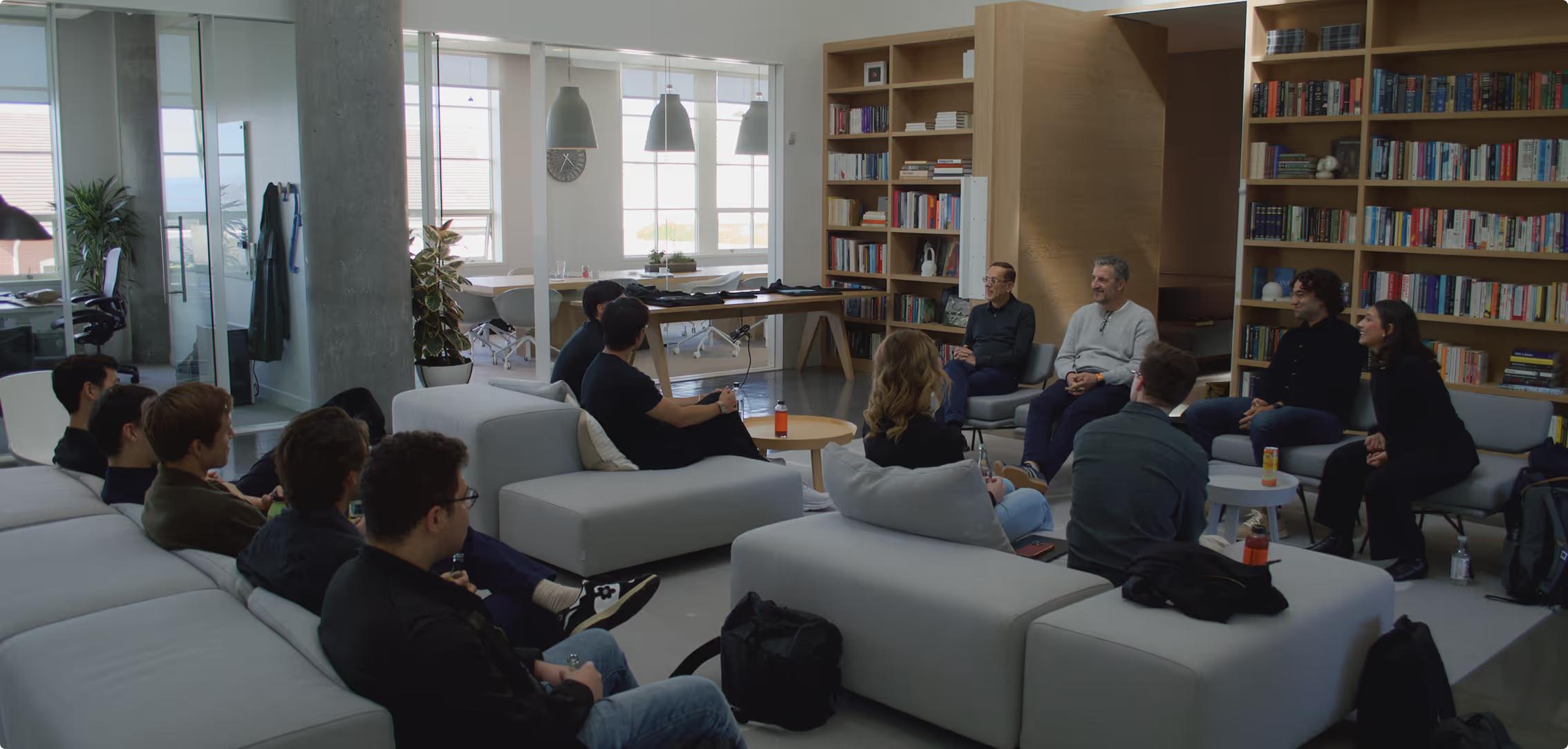
Her public company philosophy also calls for attention to details and self-directed work. Those expectations have a practical counterpart: she says Netic engineers visit customers on site. The visit gives an abstract workflow a location, a pace, and people who have to live with its mistakes. A process that looks tidy in San Francisco may require a more careful explanation beside an actual service operation.
At the 2026 EPIC industry event, she urged operators to distinguish working systems from persuasive AI demos. The point fits her own product obligation. Showing that software can respond is the beginning of the argument. Showing how it behaves inside someone else’s business is where the argument has to hold.
An education that leaves the classroom
In October 2026, Tokmak shared Netic’s gap-year engineering program for undergraduates. It offers a full-time year, salary, equity, and housing in San Francisco or New York. The company presents the arrangement as a chance to own work over a longer stretch than a summer internship allows.
The program follows an earlier gap-year engineer’s experience at Netic. For Tokmak, the announcement also included an opportunity for participants to shadow her, encounter company leadership, and build products. It extends a recurring interest in giving young people access to work they might otherwise observe only from a distance.
Her own education depended on people and institutions making unfamiliar possibilities reachable. She has spoken about the importance of educational access when considering AI’s future. The connection is personal without requiring a grand prediction: being able to learn something, ask for feedback, or reach someone elsewhere can change the options a student sees.
The route from Salihli to Netic has given Tokmak both a technical profession and a particular customer to think about. Her company now works on the conversations, records, schedules, and decisions surrounding jobs that people still perform in person. The ambition is substantial. The daily test remains satisfyingly ordinary: someone asks for help, and the business knows what to do next.