In 2025, more than 120 startups applied to the Melbourne Accelerator Program. Eleven got in. Among them were a business building secure, offline AI tools and another turning meat and seafood offcuts into dog treats. A university had assembled a room in which a discussion of sensitive data might plausibly be followed by a discussion of dinner scraps. The common denominator was the founder.
- The accelerator offers A$20,000 per selected team, with no equity taken.
- University affiliation, social impact and climate provide three eligibility routes.
- The earlier-stage Velocity program is now MEC Discover; it costs A$500 per founder.
MAP, powered by the University of Melbourne, supplies coaching, workspace and connections for people trying to turn an uncertain venture into a functioning business. Its distinctive bargain is that founders retain ownership while entering a community that expects them to help the next arrivals. The program makes generosity part of the operating instructions.
The cheque is small. The arrangement is interesting.
A$20,000 will not finance every ambition. It can fund an experiment, buy some time or remove an immediate obstacle. MAP couples the grant with a desk at Melbourne Connect, mentors and access to entrepreneurs who have already faced difficult commercial decisions. The current accelerator listing includes weekly one-to-one coaching and Claude team accounts.
That combination addresses a mundane problem with considerable consequences: a founder can be very busy without becoming better informed. Coaching gives the week a point of inspection. Another team nearby can supply an introduction or recognise a mistake. Office space creates opportunities for those exchanges without requiring every conversation to be scheduled as networking.
The university and its sponsors support this arrangement. LaunchVic announced funding for accelerator delivery in March 2025. The Cameron Foundation sponsors the social-impact pathway; Melbourne Climate Futures sponsors the climate pathway. It is a different proposition from buying access through an equity investment. Ownership stays with the startup, and the program’s institutional purpose extends beyond a financial return on shares.
First, find out whether anybody wants it
The earlier-stage offering makes the logic easier to see. MAP Velocity is now MEC Discover, an eight-week pre-accelerator using evening workshops to help founders explore commercial demand. It charges A$500 per founder, prefers a University of Melbourne affiliation and reserves some places for external participants, social-impact ventures and scholarships. Participants must be located in Victoria.
Here, the useful work is testing the assumptions beneath the idea. A founder with early validation can examine whether the proposed solution addresses a meaningful problem, then decide what to do next. The fee is only one cost. Attending workshops, comparing evidence and making time for experiments also demand attention that might otherwise go into building the product.
8 weeks
A$500 per founder
Early market validation
A$20,000 per team
No equity taken
Coaching + workspace
In May 2025, Velocity announced 41 founders, its largest cohort to that point. Three teams in the 2025 accelerator had previously participated in Velocity. That is evidence of a working pathway, although it does not establish that attending the pre-accelerator causes later success. People arrive with different ideas, skills and advantages.
A grant can end before the problem does
MAP began in 2012. Its founding history includes academic and institutional builders such as Thas Nirmalathas and Charles Day. By its second year, the package already included A$20,000, office space and investor networks. Early manager Rohan Workman described the task as “nursing entrepreneurship on campus”. The phrase has rather less swagger than most startup slogans, and considerably more patience.
One limitation surfaced early. In a 2015 policy submission, the University argued that teams could finish the development year and still require substantial support before becoming ready for seed investment. It identified a gap between the small accelerator grant and larger investment funds, proposing support for proof of commercial concept.
The funding gap tells a prospective founder something concrete: admission does not remove the need to plan the next financing step. A pitch can improve while manufacturing, regulation or customer adoption still requires time and money. A program can help expose those requirements; it cannot wish them away.
The room contains more than software
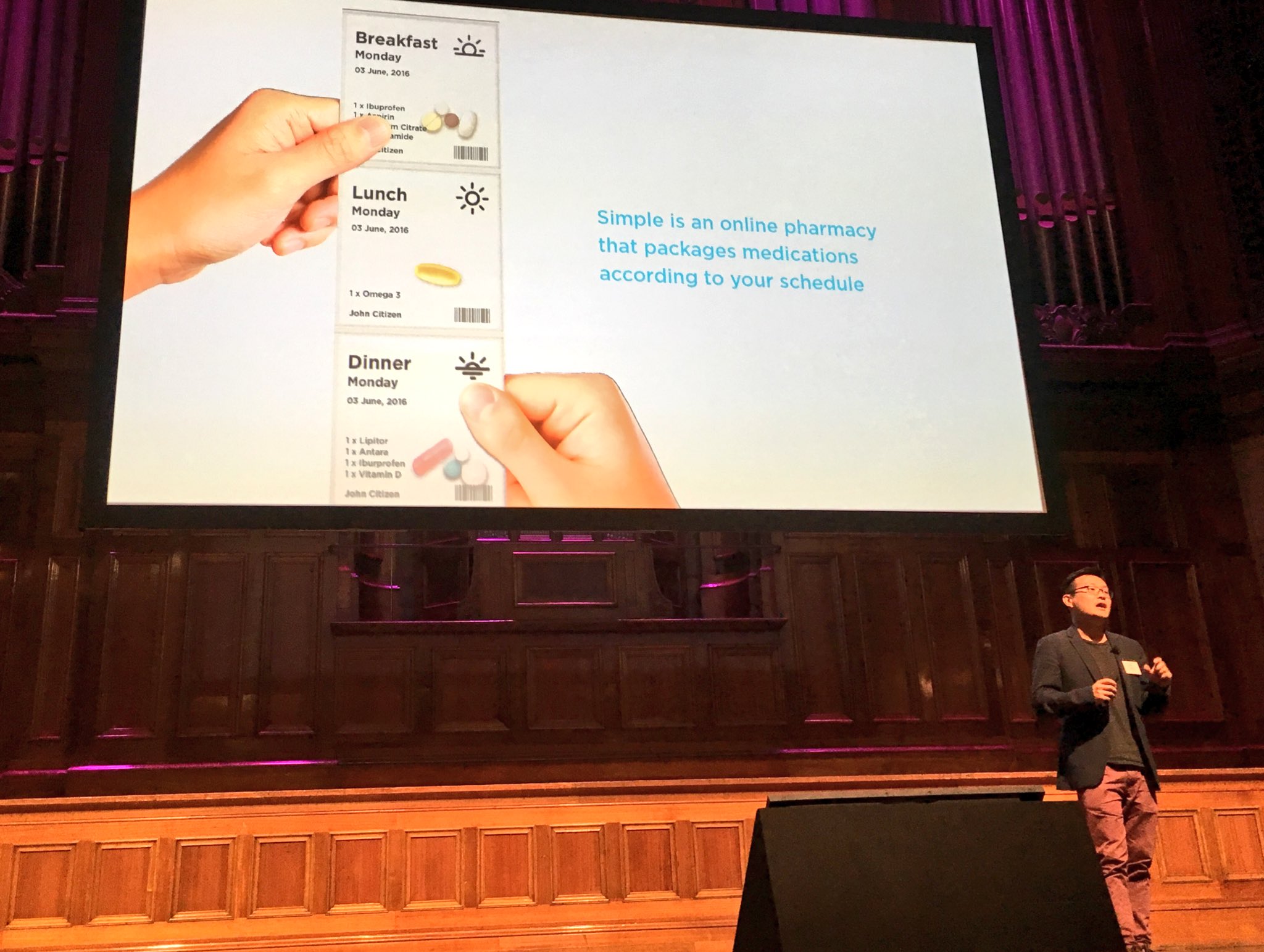
The 2025 intake gives MAP’s industry-agnostic approach substance. Boxed Logic works on offline AI tools for sensitive data. CliniScribe AI automates clinical administration for allied health practitioners. EnAccess Maps connects people with disabilities to venues suited to their access needs. Ferguson’s Treatos uses meat and seafood offcuts for dog treats. Each confronts a different customer, buying decision and route to market.
There are other routes through this market. CDL-Melbourne at Monash concentrates on science and technology ventures. Within Melbourne’s own university ecosystem, TRAM specialises in research translation. MAP occupies a broader space for scalable ventures, with eligibility shaped by university connections and sponsored impact pathways. A founder’s stage and problem should determine which door is useful.
“nursing entrepreneurship on campus”Rohan Workman / Melbourne University Magazine, 2013
What founders can borrow
The University’s 2023 review counted 285 MAP startup teams and 481 founders, with A$400 million in venture capital investment. Those are portfolio figures, not MAP’s revenue or a promise to the next applicant. They describe the scale of an accumulated network. The University has also documented Airwallex co-founder Lucy Liu’s involvement as a mentor.
The current accelerator page advertises a 2026 schedule from 28 July to 24 October; the 2025 program ran for five months. Founders should read the actual intake terms, especially the requirement to relocate to Melbourne. Participation suits people who can commit to the room. An exclusively remote founder, or a venture needing far more capital immediately, faces a different calculation.
The transferable lesson is practical: put a recurring conversation around the assumption that most needs testing. Invite somebody experienced enough to challenge it. Share what the experiment changed, then repeat. MAP adds money and institutional connections to that rhythm. Its alumni obligation gives the rhythm a longer life: come back with an introduction, a workshop or advice somebody can use.