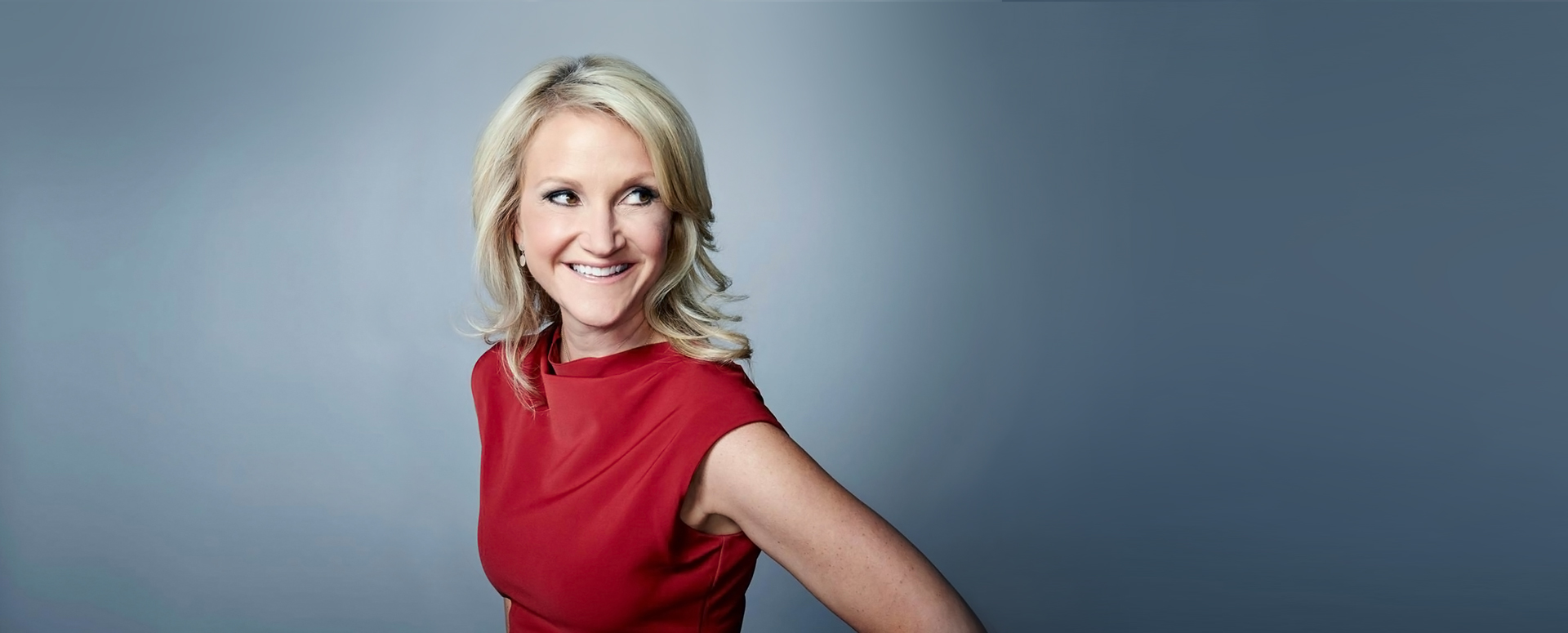
The Woman Who Counted to Five and Changed Everything
The alarm goes off at 6 a.m. in a Vermont home in 2008. The woman under the covers has a law degree from Boston College, a family to feed, and a husband whose restaurant business is failing. She owes money she doesn't have and hasn't worked in years. She knows she needs to get up. She knows everything she needs to do. She just can't move. So she tries something absurd: she counts down from five. 5-4-3-2-1. Then she stands up.
Mel Robbins - born Melanie Lee Schneeberger on October 6, 1968, in Kansas City, Missouri - built one of the most recognizable brands in self-help not by claiming expertise she didn't have, but by being the person who needed help the most and then sharing exactly what she did about it. The 5 Second Rule wasn't a product she designed. It was a coping mechanism she invented at rock bottom.
From the Courtroom to the TEDx Stage
Robbins spent her early career as far from motivational speaking as a person can get. She studied history, film, and women's studies at Dartmouth, graduated in 1990, then spent four years at Boston College Law School earning her JD in 1994. She worked as a public defender in New York City, including a stint at the Legal Aid Society in 1996, the same year she married Christopher Robbins. Later she became a CNN legal analyst, covering high-profile trials with the precision of someone trained to argue every side of a case.
That courtroom background - the ability to read a room, build an argument, and make complex ideas land fast - would become her greatest asset once she changed lanes. But first came the fall. By her early forties, unemployment and debt had swallowed whatever confidence she'd built. The family was draining savings. The marriage was under strain. She later described not being able to get out of bed as her lowest point.
In 2011, a relatively small event called TEDxSF invited her to speak. The talk she delivered, "How to Stop Screwing Yourself Over," was unpolished in the way that real things often are. She talked about her own mess. She explained the Rule - the countdown, the launch, the physical interruption of hesitation. The organizers posted it online. Nothing happened for a while. Then, slowly, it went everywhere. As of 2026, that talk has 34 million views, making it one of the most-watched TEDx talks in the format's history.
The 5 Second Rule as Infrastructure
The 2017 book version of The 5 Second Rule landed on bestseller lists and never really left. Robbins had created something unusual in the self-help genre: a tool, not a philosophy. You didn't need to believe in yourself to use it. You didn't need motivation or a vision board. You needed to count backwards and physically move before your brain talked you out of it. The neuroscience backing the approach - relating it to activation energy and the prefrontal cortex - gave it a vocabulary that resonated with skeptics.
The High 5 Habit in 2021 extended the logic to self-compassion - literally high-fiving your reflection each morning - which sounds ridiculous until the research on mirror behavior and self-perception lands. That book also hit multimillion-copy territory. Seven of her audiobook releases have hit #1 on Audible. Her books have been translated into 65 languages. By any measure, she had established herself as one of the most-read self-help writers in the world.
The Let Them Theory and a Whole New Gear
The Let Them Theory - published in 2024, sales exploding through 2025 - originated as advice Robbins gave her college-age daughter about a party she wasn't invited to. "Let them," Robbins said. Let them make their choices. Let them be wrong about you. Let them leave. The phrase became a framework for releasing the need to control other people's behavior. The book sold 10 million copies in its first year, making it the #1 selling book of 2025 by multiple measures.
The backlash was predictable - any idea simple enough to say in two words will be called reductive. Robbins' response was characteristically blunt: "It's a cheap trick - and it works."
The Podcast as a Different Kind of Medium
In 2022, Robbins launched The Mel Robbins Podcast. There was no pedigree here - no established radio career, no prior podcast following. Within three years she was ranked top 3 globally on both Spotify and Apple Podcasts, a position occupied by a short list of shows that include names who have been doing this for a decade. The Wall Street Journal called her a "billion-view podcaster." In 2026, the show received a Golden Globe nomination for Best Podcast - the first time many people realized podcasts were eligible.
The show received a People's Choice Webby Award in 2023, a Signal Award for Most Inspirational Podcast in 2023, and the iHeartRadio Award for Best Overall Host in 2025. These aren't participation trophies - the podcast market is one of the most competitive media spaces on earth, and she's consistently near the top of it.
143 Studios and the Corporate Play
Mel Robbins isn't just a content creator. She's the CEO of 143 Studios, a Boston-based media production company that develops courses, content, and professional development programs. The name is numerical code - 1 letter, 4 letters, 3 letters: "I love you." The company's corporate partners include Starbucks, JPMorgan Chase, and LinkedIn - organizations that have hired her not for inspiration but for curriculum. That's a different sale than a book, and it says something about how seriously large institutions take her work.
The Let Them Tour launched in May 2025 across 31 North American cities. Robbins fills arenas, not conference rooms. TIME named her to the inaugural TIME100 Creators list in 2025 and featured her at the 2026 Women of the Year Leadership Forum.
She lives in Vermont with Christopher, who has been her business partner through much of this run. They have three children. She grew up in North Muskegon, Michigan - population roughly 4,000 - which is possibly the fact that explains the most about how she communicates. She never learned to talk down to anyone, because there wasn't anyone to talk down to.