Matt Ebert’s first useful qualification in collision repair was a damaged car. He was 16, and the immediate problem was getting it fixed. He asked a local technician to show him how. The technician agreed. Once his own car was repaired, Ebert kept helping with other vehicles. A mistake had supplied him with something rather more durable than a repair bill: a way into a trade.
The neat version of the story jumps from that teenager to the founder of Crash Champions, a company with more than 650 locations across 38 states. It is a considerable jump. It also skips the part that makes Ebert interesting: the years spent learning a business before he began buying businesses, and the growing realization that repairing cars would require repairing the organization around them.
A body shop has an unusually awkward introduction to its customer. The customer generally wishes the meeting had never become necessary. Ebert has built his working life around that predicament. His company needs to make an unfamiliar process understandable, deliver the repair, and persuade people that the business behind the sign deserves their confidence. Multiply that job by hundreds of locations, and the dent begins to look like the straightforward part.
Fifteen years, then a different sign
In 1999, Ebert opened New Lenox Auto Body with a partner in New Lenox, Illinois. The name did the sensible thing a local business name often does: it told people where the shop was and what happened inside. There was no need for a national map. For roughly fifteen years, the business remained rooted in that local identity.
That interval deserves some room. The founding date and the later location count can make the company look like a growth project from the beginning. Its chronology suggests something more patient. Ebert had years of operating experience behind him before the business adopted the Crash Champions name in 2014 and began its next phase.
The change followed his buyout of his partner. A name tied to one town gave way to one that could travel. Ebert’s explanation of the new identity centers on helping customers at an inconvenient moment. The company’s cape motif makes the intention visible. A collision repair appointment is an unlikely occasion for theatrical dress, but branding is allowed a little optimism.
He also wanted the identity to work inside the company. As acquisitions brought established shops into the network, each arrived with its own history. Retaining confidence while changing the name required more than ordering replacement signs.
“The same name helps the culture”
Matt Ebert, on bringing acquired shops under one brand
In his 2020 discussion of branding, Ebert argued that a common name helped employees understand the direction of the whole company. It also gave outside partners a clearer view of the organization. He was trying to create something that a technician in one shop and an insurer dealing with another could recognize as the same business.
A map that changes in jumps
By the end of 2019, Ebert was running 13 shops. The expansion that followed relied heavily on acquisitions. Pacific Elite brought a Southern California presence in 2020. Signature Collision Centers added 24 East Coast locations in 2021. At the end of that year, the company’s network stood at 175 locations across 18 states and Washington, D.C.
These were changes in the kind of company Ebert had to run. A regional operator can carry a great deal of knowledge through personal relationships. A national business needs ways for information, expectations, and decisions to travel farther than its founder can. The map gets larger; the distance between a decision and its consequences can get larger, too.
Repair centers. Milestones reflect 1999 founding, year-end 2021, November 2022, and the 2026 network. Bars use the stated counts as minimums where marked +.
Then came Service King. In July 2022, Crash Champions announced a growth investment from Clearlake Capital and a combination with a business operating more than 330 repair centers. The announced plan put the combined company above 550 locations across 35 states and the District of Columbia, with a workforce exceeding 9,200.
Ebert and his management team would lead the combined organization. Financial terms were undisclosed. The operational proposition was plain enough: combine complementary footprints and support a much larger repair network. The human proposition was harder. Thousands of people would now be asked to place their confidence in leadership they had not necessarily chosen.
The same year, BodyShop Business named Ebert its Multi-Shop Executive of the Year. In 2023, he became an EY Entrepreneur Of The Year Midwest award winner. The awards mark the expansion. They also provide convenient punctuation in a story whose daily work continued after the photographs were taken.
The expensive part under the hood
Ebert’s case for getting bigger begins with the vehicle. More complex cars require investment in equipment, training, and specialized capabilities. He has described expansion as a response to those demands. Running a regional company might have been simpler personally; preparing it for the direction of the industry pushed him toward scale.
His example is practical. A network can concentrate expertise for a particular vehicle type in selected shops within a market. An independent location trying to handle the same range must find a way to support those capabilities on its own. The question becomes how much specialist investment each business can carry.
That helps explain why his acquisition strategy concerns existing operations and people. In the Columbus market, for example, Ebert worked with G2 Capital Advisors on an expansion that brought Auto Body Collision and Glass and its three locations into the group. He had asked the advisers to investigate markets with a smaller presence from the national chains.
The target was an operating business with local standing and insurance relationships. It came with knowledge that could not be delivered on a truck alongside new equipment. For an owner considering retirement, the transaction also involved the future of a team and a reputation built over years.
Ebert has spoken about treating sellers as he would want to be treated. It is a useful standard because it can be tested. An agreement transfers ownership. What happens afterward tells employees and customers what the agreement means. A founder buying another founder’s business acquires an audience with a particularly good memory.
Someone still has to teach the next person
Equipment does not solve the staffing question. Ebert’s public ambition is to make Crash Champions an employer people choose, with opportunities to learn and advance. His own beginnings give that ambition a concrete reference point: a technician once made time to teach him.
The company now puts a formal structure around that exchange. Its Skilled Technician Education Program, STEP, combines paid work, mentorship, and an I-CAR-based curriculum. Apprentices train alongside experienced technicians at repair centers and earn welding certification as part of completing the program.
In July 2026, Crash Champions reported 59 apprentice graduates that year, nearly 200 active apprentices, and an 86% retention rate among graduates. These figures describe a different kind of expansion. They measure people gaining the ability to do work that the company needs, and then choosing to remain.
“Our people are our greatest strength,” Ebert said when celebrating those graduates. The phrase is familiar in business. Paid training and time with a mentor give it a practical form. Someone must schedule the learning, supervise the work, and allow a beginner to become useful.
There is another route through the organization. In August 2026, the Associate Service Advisor Program reached 304 graduates. It prepares associates for service-advisor positions through experience and individual mentorship. Three graduates had already advanced to general manager, taking responsibility for entire repair centers.
That detail brings the career ladder into focus. A company can describe opportunity in broad terms for a very long time. Three people moving into responsibility for shops give the claim an address, a set of colleagues, and a working day.
A dinner bill, a microphone, a wider audience
Ebert has also taken the conversation outside the repair center. Daymond John became a mentor, and the two have discussed the company’s development publicly. John has written about the opportunities Ebert’s business creates for people whose careers did not follow a conventional college route.
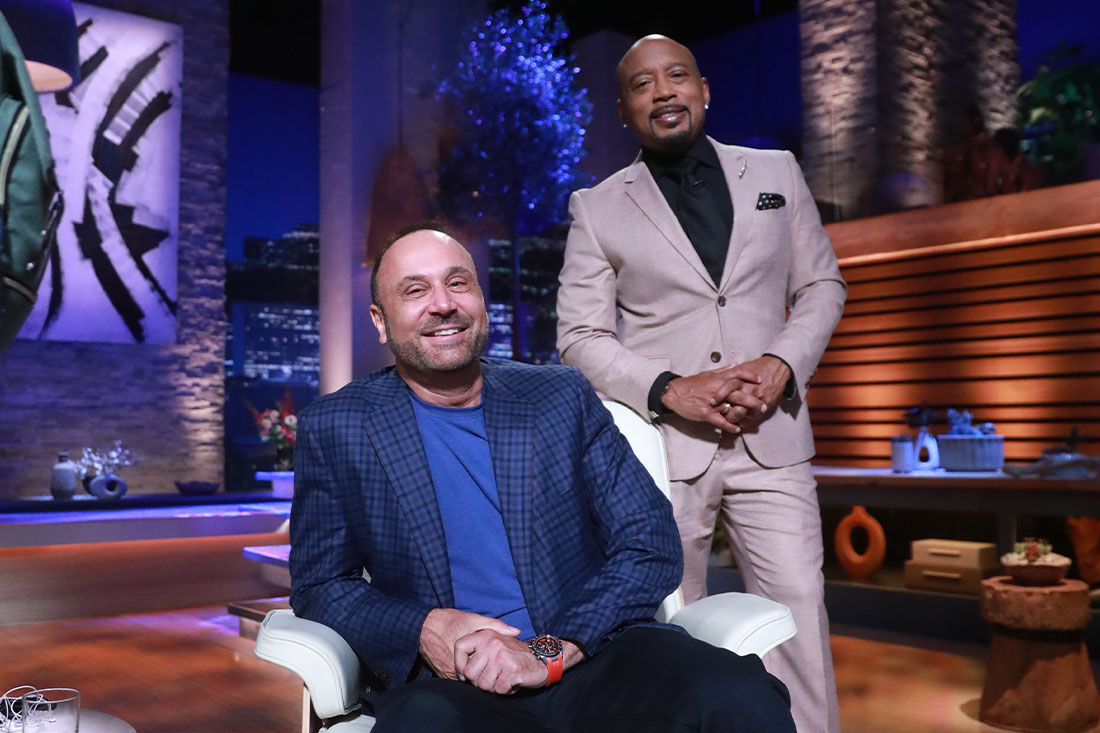
In June 2025, Ebert launched PodCrash. John appeared in the opening episode. The show gave Ebert a setting to ask other leaders about the experiences behind their decisions, with guests ranging from entrepreneurs to athletes. A second opening episode, with Anthony Amunategui, explored Ebert’s own path.
One connection began with a much smaller transaction. At SkillsUSA in Atlanta, Ebert saw Mike Rowe and his crew having dinner and paid the bill. Rowe later recounted that Ebert left before he could thank him. He found Ebert the next day, and an invitation to appear on his podcast followed.
Rowe described Ebert as being at the competition to recruit skilled participants. The eventual conversation appeared in 2026. The setting makes the anecdote more revealing than a routine celebrity encounter: Ebert was in a room full of people whose abilities his business needed. The dinner was a courtesy. The trip had a purpose.
There is a line connecting that recruiting visit, the apprentice programs, and the teenager asking for help with his own car. Each depends on somebody recognizing potential before the person has accumulated much proof. Ebert’s company now needs that recognition to happen repeatedly, across a national organization.
The first repair got him moving again. The business he built keeps presenting another version of the question: who will learn the work, who will teach it, and how will they find a place to do it? After all the acquisitions, Ebert is still dealing with the consequences of somebody saying yes to a beginner.
Keep the conversation going
Interviews, public profiles, and the programs behind the story.
- Matt Ebert’s website · Crash Champions
- Watch PodCrash on YouTube · Listen on Apple Podcasts
- Ebert and Daymond John in conversation
- The Mitchell Collision Podcast interview
- Mike Rowe on meeting Ebert · Daymond John’s perspective
- Explore the training programs · Company newsroom
- LinkedIn · X · Instagram · Facebook · TikTok