Matt Baer has a picture of good retail that sounds almost suspiciously analog. His grandfather walks into a tailor’s shop in South Bend, Indiana. The person behind the counter knows his name, knows his family, knows which suits are already in his wardrobe. Size, taste and budget do not have to be negotiated from scratch. Someone remembers. In an industry that has spent years making checkout faster, Baer keeps returning to the person who knew what you wanted before you reached the counter.
This is his own example, a story he has used to explain the opportunity at Stitch Fix. It is an unusually modest starting point for a discussion of artificial intelligence: a shopkeeper with a good memory. Yet it gets directly to the problem he wants to solve. Online shopping can offer an extraordinary amount of choice while leaving the shopper with an extraordinary amount of work. The trousers have multiplied. The helpful person has become harder to find.
Baer became Stitch Fix’s chief executive in June 2023, arriving from Macy’s with experience in startups, mass retail and department stores. His assignment was to rebuild a business whose combination of algorithms and human stylists had made it distinctive. He brought a conviction that better technology ought to make customers feel better understood. He also brought the less glamorous obligation to make the numbers work.
A family business, with a legal detour
Before the recommendation engines came furniture. Baer grew up working in his family’s Florida furniture business, gaining experience across its functions. He describes himself as the product of a fourth-generation retail family. That background gives his talk about customer relationships a particular weight: he encountered retail as a working business long before it became a collection of digital interfaces.
He graduated from the University of Michigan’s Ross School of Business in 2004, then earned a law degree at Yeshiva University’s Benjamin N. Cardozo School of Law. He practiced complex commercial litigation before returning to retail. The route was hardly direct. A business degree followed by law school is a considerable investment in a different sort of future.
At a February 2026 return to Ross, he recalled seeing the possibilities of ecommerce when the idea was still difficult to sell. He eventually left the legal career to pursue that interest. His advice to students was personal rather than financial: “Those who follow their passion end up in the right place.” It is easier to dispense that advice from a CEO’s chair. His own career, at least, contains the detour.
- FloridaFamily furniture business
- 2015Bezar co-founder & COO
- 2016Walmart ecommerce
- 2020Macy’s digital leadership
- 2023Stitch Fix CEO
- 2025La-Z-Boy board
Learning to sell at several different speeds
His startup experience included Fab.com and Quirky, followed by Bezar, the design marketplace he co-founded. In Bezar’s founding team, announced in 2015, Bradford Shellhammer was chief executive and Baer was chief operating officer. PieterJan Mattan handled creative direction and Justin Chen finance. Curating things people might love was already part of the work; so was organizing a company that could sell them.
In January 2016, Baer moved to Walmart’s ecommerce business as a vice president. He stayed until March 2020, helping expand and transform its digital operations. A small design marketplace and Walmart offer rather different answers to the question of scale. His career carried him through both, then into another retail institution with its own habits and expectations.
At Macy’s, he became chief digital officer in March 2020 and chief customer and digital officer in November 2021. His responsibilities extended to the digital businesses of Macy’s and Bloomingdale’s. The projects included a third-party marketplace, livestream shopping, changes to the website and app, and delivery and pickup services. They covered the places where a retailer’s promise meets the awkward practicalities of getting an actual item into someone’s hands.
The box came with a rebuilding job
On June 26, 2023, Baer took over Stitch Fix and joined its board. Founder Katrina Lake, who had returned as interim CEO, remained executive chair. He was taking responsibility for an existing idea, with existing customers and expectations. There was no blank sheet of paper, however appealing one might have looked.
The numbers around his appointment made the difficulty plain. In the recently reported quarter, revenue had fallen 20% from a year earlier and active clients had dropped 11%. The task required a retailer’s attention to product, service and execution alongside the technical capabilities that had helped define the company.
Baer has described the transformation in three phases: rationalize, rebuild, then return to growth. The order matters. In October 2026, discussing the process with his executive coach Jamie Ramsden and interviewer Jonathan Kirschner, he emphasized the relationship between promises and delivery. Their discussion gave an unromantic measure of leadership its due: the say-do ratio. A turnaround plan is easier to announce than to make believable. People have to watch the promises turn into things that happen.
The CEO also picks the clothes
Baer works as a stylist himself. That detail offers a useful way into his management: he participates in the service whose value he is asking customers to recognize. At Ross, he talked about the relationships stylists develop, including hearing about a client’s move or a family wedding. Clothes arrive with reasons attached. A new address or an invitation can change what a person needs.
There is something quietly demanding about that understanding of the job. A recommendation has to make sense in a person’s life, as well as in a product catalog. Remembering a preference is helpful. Recognizing that the preference might have changed is helpful too. His grandfather’s tailor had the advantage of a conversation across a counter. Stitch Fix has to build familiarity across a screen and through a box.
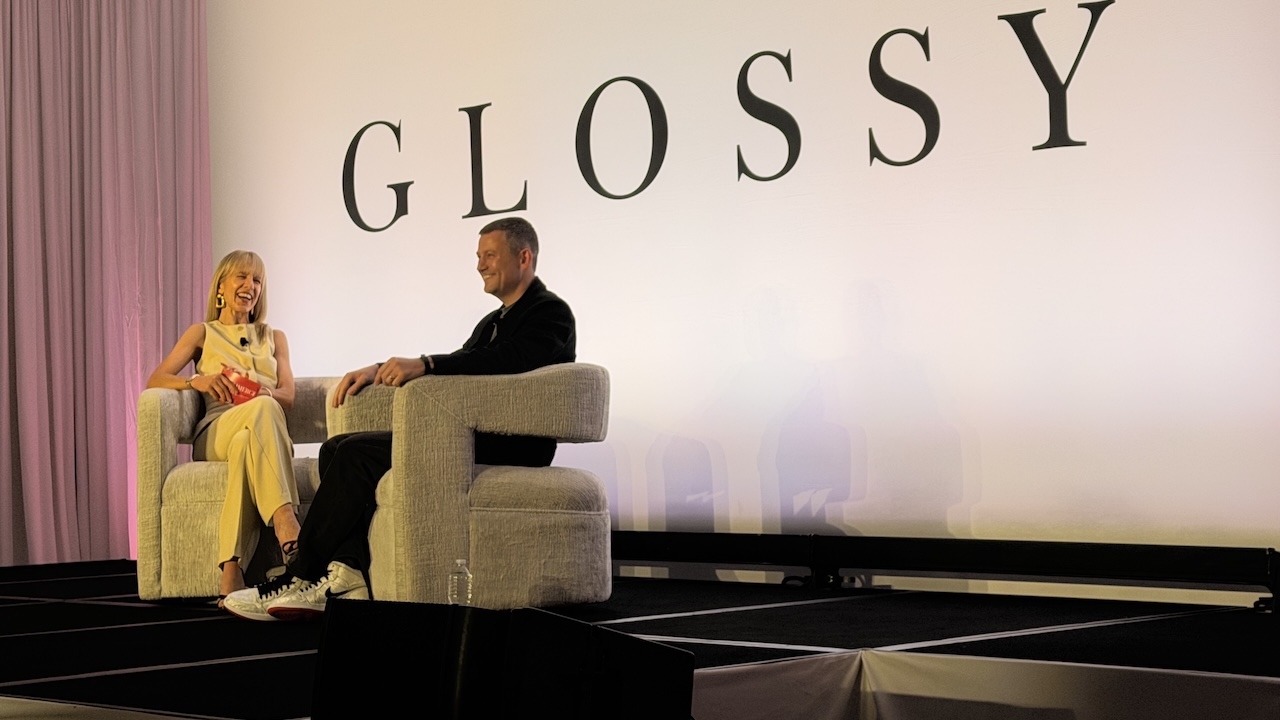
Baer’s public position on AI follows that logic. Speaking at the Glossy E-Commerce Summit in Miami in June 2026, he said, “My hot take about the future of retail is that it will be very much human-led and relationship-driven.” A conference devoted to ecommerce is an entertaining place to insist on the importance of people. For his business, it is also a practical argument: the stylist’s judgment is part of what the customer is buying.
My hot take about the future of retail is that it will be very much human-led and relationship-driven.Matt Baer · Miami, June 2026
A mirror before the parcel arrives
The technology gives that argument something concrete to work with. Stitch Fix introduced Vision in October 2025, generating images of clients in outfits informed by their style profiles. In June 2026, the company expanded it so clients could choose recommended outfits in Freestyle and request an image of themselves wearing the look. The button uses a question almost every clothes shopper recognizes: See it on me.
A client uploads a selfie through the app, and the resulting images are saved in a personal gallery. It is a visualization experience, rather than a promise that a garment will fit exactly as pictured. Its attraction is easy to grasp. A photograph of someone else wearing a jacket leaves a fair amount of translation to the imagination.
Alongside those customer-facing images, Baer has described using AI to help stylists and improve merchandise development. The underlying ambition is to make the service more responsive to the person using it. A useful test of that ambition is wonderfully ordinary: does the customer have an easier time deciding what to wear? Any technology that merely adds another interesting screen still has work to do.
Growth, with an asterisk worth reading
By the end of fiscal 2026, there was progress to point to. Stitch Fix reported annual revenue of $1.348 billion, up 6.4%, and a fourth quarter with 4.2% revenue growth. It generated $19.8 million in free cash flow during the year. Those figures give substance to Baer’s rebuilding story, while leaving room for a less celebratory reading of the same business.
Active clients ended the year at 2.277 million, down 1.4% from a year earlier. Annual net loss was $12.6 million. Revenue per active client reached $592, rising 7.8%. In other words, the company was generating more revenue from each active client while the overall client count was still shrinking. That distinction is central to assessing the turnaround. It also explains why improving the relationship with current shoppers and attracting new ones remain separate jobs.
The September results included a particularly mundane complication: an unintended August change to the checkout offer flow had limited clients’ ability to request another Fix. The company said it had corrected the issue. It expected the effect to be confined to the first quarter of fiscal 2027. For all the discussion of AI, a troublesome step after checkout could still interfere with the business of selling clothes. Retail has a gift for keeping its executives humble.
The shopkeeper, back on the field
There are other ways to see the continuity in Baer’s career. In January 2025, he joined the board of La-Z-Boy, adding a furniture company to his responsibilities after beginning life in a furniture family. Outside work, he has spoken about coaching his children’s recreational sports teams, including flag football and soccer. He sees similarities between getting a team ready to play and leading a business.
The comparison fits his emphasis on practice, communication and follow-through. At Ross, he said his hiring priorities had survived the arrival of AI: curiosity, entrepreneurial energy, communication, grit and passion still mattered. A new tool could be learned. The qualities that made someone worth working with retained their value.
His aspirations for Stitch Fix are correspondingly personal. He wants a shopping experience that reflects the individual at each step, combining the company’s accumulated understanding of clients with its stylists’ expertise. The financial results make clear how much remains to be earned. A customer who feels understood must still choose to come back.
Baer’s grandfather did not need a style profile to be recognized when he opened a shop door. Recreating that feeling for millions of people involves rather more machinery. Baer has spent his career learning different parts of it: the store, the startup, the marketplace, the large retailer. Now the test arrives in a form the family business would recognize. Someone opens the parcel. Do the clothes suggest that somebody was paying attention?
Continue the conversation
- Stitch Fix
- Matt Baer on LinkedIn
- The Michigan Ross conversation
- Baer on service and AI
- The Glossy summit interview
- Fiscal 2026 results
- The leadership conversation · audio
- A Podcast About Leadership · YouTube playlist
- Opening Bid interview · video
- Bezar’s founding team
- La-Z-Boy board profile
- Stitch Fix Vision
- The South Bend tailor story
- Baer on coaching sports