A founder can want two quite reasonable things at once: a way to take some money off the table, and a company that will still feel worth building afterwards. The difficulty is finding an investor whose calendar accommodates both. Mateusz Szeszkowski, known professionally as Mati, has made the calendar part of his offer. At Norland Capital, the firm he founded and leads, the proposition begins with capital intended for a horizon of more than ten years.
That is a useful opening to his story because the businesses around him have histories of their own. Some owners want to retire. Some want to keep going. Sometimes two people who built a company together reach those decisions at different moments. A transaction has to make room for the people as well as the percentages. Otherwise, the neatest spreadsheet in the room may be describing a rather untidy future.
Norland’s stated capital horizon
Room for the next product, team, and chapterThe European chapter
Szeszkowski’s education took him through the University of British Columbia and Harvard Business School. He completed his undergraduate degree in 1995 and his MBA in 2000. His career has included Boston Consulting Group, Orange Ventures, Goldman Sachs, and KKR. It is a route through consulting, venture investing, banking, and private equity, rather than a story confined to a single investment desk.
By September 2010, he was identified as head of KKR’s European technology team when KKR agreed to acquire 76.9 percent of Visma. The Norwegian software business was valued at 11 billion Norwegian kroner. HgCapital would remain a shareholder, and Visma’s management would increase its ownership. The deal also displaced a planned stock-market listing. Different routes to the next stage were already part of the work.
Visma supplied software and services for finance and administration. The attraction, as Szeszkowski described it at the time, included the company’s management and capacity for growth. The subject was technology, but the conversation included the people running the business. That combination would recur in the company partnerships associated with him later.
In 2013, he co-founded Vy Capital with Alexander Tamas, a former Goldman Sachs colleague. The founding vision included owning businesses for decades. It places the long horizon in Szeszkowski’s career before Norland’s present pitch. Through the moves between firms, the idea of giving a technology investment time to develop remained a visible thread.
A business with four owners and a next chapter
Immix makes software for security monitoring centres. Its job includes bringing information from different cameras, sensors, and systems into a usable workflow. To a customer watching many sites, that integration has practical consequences: the technology has to help a team understand what is happening and decide what to do next.
Norland’s relationship with Immix developed over several years before the transaction. The four shareholders were approaching retirement and had already stepped back from daily management. Their question concerned who would take care of a business they had built. The management team had a different task: carrying the company forward.
The sale was announced in February 2021. As part of the transaction, CEO Chris and CTO Craig became owners alongside Norland. That arrangement gave the next chapter a visible management presence. Product investment, recruitment, customer relationships, and international expansion were among the stated priorities. A change in ownership came with work for the people who would remain.
Szeszkowski’s comments at the announcement pointed to a security software market with opportunities extending over a decade. The horizon suited the firm’s position. It also suited a product whose usefulness depends on fitting into customers’ operations, where a new feature has to be more than an attractive item on a release slide.
Twenty thousand road signs
The origins of iWorQ are unusually concrete. Garyn and Jared met while studying engineering at Utah State University. Working for a local engineering firm, they travelled across northern Utah and logged more than 20,000 road signs into a database for local agencies. They saw an opportunity to make asset management easier. Their first software module covered pavement and road signs.
It is an agreeable corrective to the idea that software companies must begin with a revelation in a fashionable café. Sometimes the revelation has a speed limit printed on it. More often, useful software starts when someone knows a job well enough to see where the effort is being wasted.
By the time Norland’s investment was announced in January 2022, iWorQ served nearly 2,000 city and county government departments. Its applications supported the everyday business of local government. For Szeszkowski and Norland managing director Patrick Gwyther, the company’s culture and attention to customers featured in their explanation of the partnership.
The founders’ plans had diverged: Jared wanted to step away, while Garyn wanted support for further growth. Norland’s partnership accommodated those different ambitions, with Garyn continuing as CEO. The story gives a human shape to succession. People can share a company’s beginnings without needing to share precisely the same future.
Norland’s iWorQ partnership accommodated a co-founder’s exit and another’s growth ambitions.
The equity that stayed
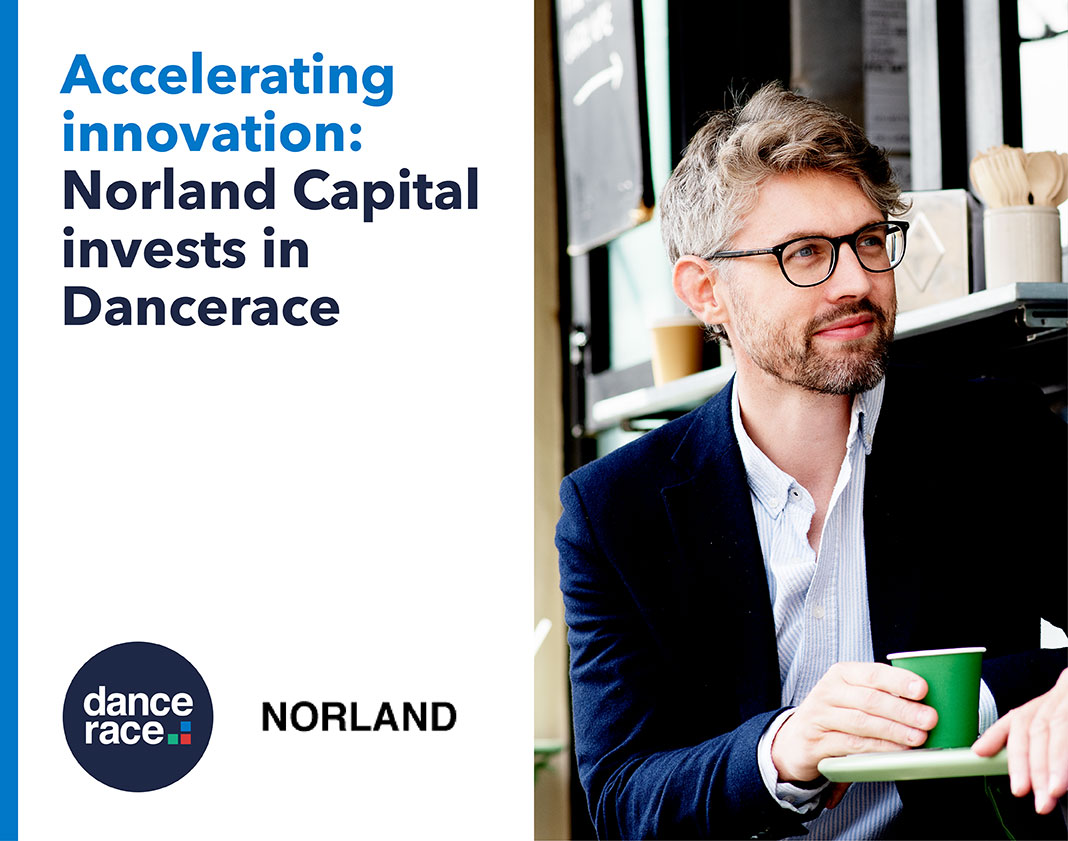
In August 2024, Norland invested in Dancerace, a business supplying cloud software to banks and lenders. Its systems cover connected tasks such as client onboarding, risk management, and back-office control. The products sit inside the work of lending, helping institutions manage financial products and their relationships with borrowers.
The ownership detail is worth slowing down for. Norland acquired all of Newable Capital’s majority stake. CEO Elliot Avison rolled his entire ownership position into the new partnership. The transaction changed the majority investor while preserving Avison’s financial participation in the company’s future.
“Elliot’s passion has been a key ingredient in their success.”
Mati Szeszkowski, on the Dancerace partnership
For Avison, the fit included culture and the investment horizon. For Szeszkowski, the attraction included customer feedback and retention. Those are sensible subjects for a conversation about a software company: whether people like working there, whether clients value the product, and whether the relationship lasts.
The partnership’s plans included growing the team, entering new markets, and advancing the technology roadmap. These were ambitions at the time of the deal. Their inclusion shows what the participants wanted the ownership change to enable, beyond the completion of the transaction itself.
Building the bench
Finova offers another view of the work after an investment. Its founders, Dave and Raj, met as software engineers at a bank and built a core banking platform. They wanted a growth partner while keeping substantial ownership and continuing in the business. Norland acquired a significant stake in what was then DPR.
The account of the subsequent expansion contains some revealing appointments. A chief technology officer, chief financial officer, customer success head, and HR head were added as new positions. The sales and marketing operation had started with one person at the time of investment. The company also broadened its product offering and made selective acquisitions.
The progression is easy to understand without a glamorous metaphor. As a company grows, a founder’s own span of attention can become a constraint. More customers and more products bring more decisions. Building a management team distributes that responsibility. It gives specialist work a named owner and lets the company make more decisions without routing every one through the same desk.
Even patient capital has a next chapter
DTS Software provides tools for mainframe storage management. Its founders, Don and Tom, wanted to retire; Norland acquired the business, and Tara, previously head of sales, became CEO. The investment chapter included strengthening management and product development. Here, succession meant a new leader emerging from inside the company.
On March 31, 2025, Precisely announced that it had acquired DTS. The buyer described the products as complementary to its IBM mainframe offerings. DTS’s customers included large enterprises in banking, financial services, insurance, and retail. Software for established infrastructure had found a further home in a larger software business.
“Joining Precisely opens an exciting new chapter for DTS,” Szeszkowski said. A long investment horizon leaves room for a subsequent owner. The useful distinction is that a horizon describes the room available for decisions; it does not prescribe an identical holding period for every company.
Where the clock meets the working day
Szeszkowski also became a director of Hozah in October 2024. The parking technology company adds another everyday setting to his work. In September 2026, Hozah announced a deployment at Overgate Shopping Centre in Dundee, covering 1,000 spaces across three car parks. The system connects payment and enforcement. Here, software’s working day begins when a car arrives.
Norland’s senior team spans San Francisco, London, and Sydney. Szeszkowski is listed in San Francisco, with Paraag Davé as UK managing partner, Duncan Harvey in Sydney, and Patrick Gwyther in San Francisco. The geography reflects the cross-border character of the company stories around the firm.
The thread through Szeszkowski’s career is a concern with the next stage: management keeping a stake, a founder leaving, a colleague becoming CEO, a product finding new customers. The clock matters because those changes need room. The businesses give that room its purpose. A ten-year proposition becomes meaningful in the smaller decisions that fill it, one working day at a time.
Follow the work
- Norland Capital · The senior team · Mati on LinkedIn
- Visma’s 2010 transaction announcement
- The founding of Vy Capital
- The Immix partnership · The 2021 announcement
- The iWorQ founders’ story
- Dancerace’s investment announcement
- Finova’s growth chapter · DTS under Norland
- Precisely’s acquisition of DTS
- Hozah’s directors · The Overgate deployment
- Education and professional profile · Career milestones