Visitors would admire Mary Ann O’Brien’s Omaha office, then ask whether her father had started the company. When she said no, some tried her husband. The founder was giving the tour. Her name was on the business. Apparently, the evidence required further examination.
O’Brien recalled those encounters as OBI Creative reached its twenty-fifth year in 2026. They make a useful opening to a career spent examining assumptions. A person looks at something, decides what it means, and carries on. A marketer has to work out where that decision came from. An entrepreneur occasionally has to point out who owns the furniture.
The company she founded in 2001 now brings together research, strategy, creative work, digital marketing and media. She describes herself as a business marketer rather than someone who came up through a creative department. That distinction helps explain her recurring interest: the customer’s account of events. Inside a company, a campaign can look beautifully finished. Outside it, someone still has to decide whether the business is worth their time.
For O’Brien, the distance between those two views is a place to work. It has taken her from the computer business to an Omaha agency, through a book about listening, and into conversations about what artificial intelligence should actually accomplish. The tools have changed considerably. The person being asked to buy something remains entitled to an opinion.
An unlikely interest in computers
After college, O’Brien’s father suggested she apply to Gateway, the PC company in North Sioux City, South Dakota. She doubted that computers would suit her. She got the job anyway. Working in integrated marketing programs put her close to a growing technology business, and Gateway co-founder Ted Waitt encouraged her entrepreneurial ambitions.
She was involved in Gateway’s relocation to San Diego. In 1998, she co-founded Hotpaper.com in San Francisco; the software business was subsequently acquired by GoAmerica Communications. Her next role included business development and sales. These were useful changes of perspective for a future agency owner: building a company, selling its services, and explaining why a customer should care are related tasks, with different opportunities for embarrassment.
OBI’s first assignment concerned Gateway’s Digital Home, bringing technology, multimedia content and home life together. O’Brien assembled researchers, strategists and creative talent around the project. Her agency began with a business problem inside an industry she knew. The research had somewhere specific to go, and the creative work had something specific to answer.
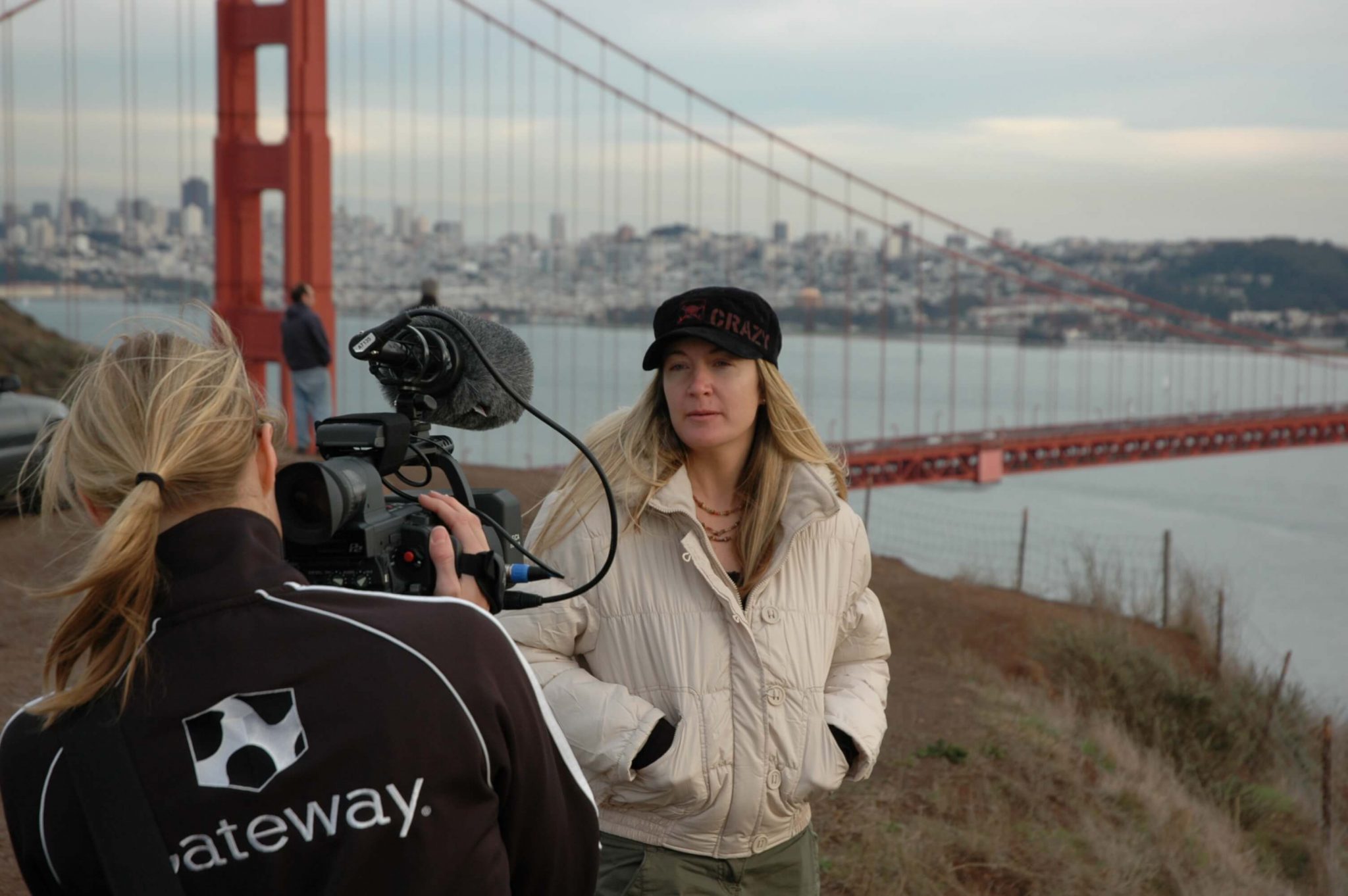
The early career photographs make the technology history feel pleasantly tangible. A Gateway-branded camera operator, an outdoor interview, the Golden Gate Bridge behind the conversation: this was marketing conducted with equipment you could hardly overlook. Today’s tools may fit in a pocket. The challenge of getting a useful answer still takes up much the same amount of room.
The answer has to leave the research department
O’Brien developed the O’Brien Voice of the Customer study to investigate how people experience a business. Its methods include secret shopping, product inquiries, product use, competitor analysis, and qualitative and quantitative research. Those activities look at the company from several directions. What someone says in a survey can sit beside what happens when they actually try to buy.
That combination matters. A marketing team can know its intended message by heart while being less familiar with the experience of a stranger trying to obtain an answer. Research gives the stranger a place in the discussion. It can also make familiar internal explanations sound rather less convincing once they are heard from the other side of the counter.
Her work has included strategic initiatives for Intel, Microsoft, Sony and ViewSonic, as well as Nebraska businesses and institutions. Moving between such organizations requires attention to the particulars. A customer’s reason for choosing a computer will not automatically explain a different purchase. A method can travel; the answers need to be collected again.
The o.VoC approach gives O’Brien a practical sequence: investigate the experience, understand what people value, then let that knowledge influence what the company offers and communicates. It asks a little more of leadership than approving a new campaign. Someone has to be prepared to act on an answer that was inconvenient to hear.
- 01AskInvestigate what people experience.
- 02ListenUnderstand what matters to them.
- 03DeliverPut the answer to work.
Putting her own agency in the chair
In December 2023, Forbes Books published Ask & Deliver: Discover the Heart of Your Business by Listening to the Voice of Your Customers. Across 208 pages, O’Brien follows the development of her approach from Gateway into other client businesses. She also turns the examination toward OBI itself. Advisers are unusually persuasive when they agree to sit for their own test.
A book makes a working method available beyond the room where its author can explain it. Readers can pause over a proposition, disagree with it, and try it against their own experience. For a founder whose business involves asking questions, that is an appropriate arrangement. The audience has plenty of room to talk back.
The book fulfilled a long-held ambition, and getting it written proved harder than O’Brien expected. She had to pitch concepts to the publisher; an existing professional connection did not remove that task. The finished work gave a durable form to ideas developed through years of client assignments.
“We don’t use ‘hope’ as a strategy,” she says. It is a brisk line, and a useful standard for the work that follows research. A finding can be interesting without changing anything. The difficult part arrives when a business has to decide what it will do differently on Monday, who will be responsible, and whether customers will notice.
“We don’t use ‘hope’ as a strategy.”
Mary Ann O’Brien
Employees have a customer’s eye
O’Brien’s interest in experience extends inside the organization. She developed a Voice of the Employee study as well as her customer research. The two belong together: the people answering a client’s question or delivering a project have an unusually close view of what the business can keep promising.
In a recorded conversation with Olsson executive Melissa Newton, O’Brien explored the idea of treating employees as customers. Their discussion covered autonomy, culture and the connection between an employee’s working experience and a client’s impression of a firm. The questions move branding away from the moment a logo appears and toward the many ordinary encounters that give it meaning.
There is a management consequence in that line of inquiry. Asking people about work gives them reason to expect their answers will matter. A company cannot indefinitely celebrate listening while treating every response as an interruption. O’Brien’s research vocabulary brings that obligation into the same conversation as messaging and growth.
Her public interviews with business leaders also cover rebranding and customer focus; a separate video examines OBI’s research work with Lenovo. She is comfortable asking other executives how their businesses function. The conversations give her ideas a setting where decisions have owners and where the next question can be considerably more useful than another polished declaration.

Omaha became home, with a wider view
An Iowa native, O’Brien returned to the Midwest and established the agency in Omaha in 2006. Family business had been part of her upbringing: her father operated businesses, and she spent time learning from him and her grandfather. Entrepreneurship was something she could watch people doing before she had to define it for herself.
Her younger ambitions were quite explicit. As a third-grader in Spencer, Iowa, she was already attaching CEO and a New York address to her signature. Years later, speaking to entrepreneurs in Nebraska, she encouraged them to start with useful problems rather than waiting for an enormous invention. A modest idea could still deserve serious effort. The childhood stationery had ambition; the adult advice supplied a place to begin.
Omaha gave that work a community as well as an address. O’Brien’s service has included the Chamber and the Business Ethics Alliance. In 2021, she joined the First Responders Foundation’s board. These roles put her business experience into local organizations with their own responsibilities and audiences.
In August 2023, she was inducted into the Omaha Business Hall of Fame, joining a class whose achievements became part of a permanent Durham Museum exhibit. She has also identified OBI’s Better Business Bureau Integrity Award as a defining career moment. For someone concerned with how a company behaves after making a promise, that particular award makes sense.
- 2001
- OBI Creative begins with a Gateway assignment.
- 2006
- The agency puts down roots in Omaha.
- 2023
- A Hall of Fame induction and a published book.
A useful future needs a human question
O’Brien’s recent writing considers generative engine optimization: how businesses can make their information useful and discoverable as people ask AI systems questions. Her interest follows a familiar commercial problem into a new interface. Customers are still seeking an answer. Companies are still trying to understand where that search begins.
Her January 2026 conversation with Jeana Goosmann on Law Talk with the Flock linked planning, internal culture and strategic communication with the use of AI. The appeal is practical: technology can reduce repetitive work and leave more time for judgment. The question of what deserves that judgment remains with the people running the business.
Away from agency work, O’Brien’s public posts have included an attempt at surfing with her family in San Diego, complete with unsuccessful efforts to stand up and plenty of laughter. The incident is a welcome detail in a career full of strategy. Competence in one field does not oblige the ocean to cooperate. An afternoon can be worthwhile without producing a new qualification.
She continues to seek difficult business challenges and opportunities to help companies grow. The ambition is recognizable from the child who supplied her own job title, although the work has taught her to leave more room for other people’s answers. A company can spend a great deal of money deciding what to say. O’Brien has made a career of asking what happens when somebody hears it, tries it, and comes back with a different story.
Continue the conversation
Explore Mary Ann O’Brien’s website, her writing and OBI Creative.