The dog had already joined the family. The shopping arrangements were taking longer. In 2002, Marty Grosjean and his family adopted Crinkles, and his search for natural pet products exposed a problem he knew something about solving: finding what you wanted to buy could be an unnecessarily complicated business. He had a background in e-commerce. By 2004, he had founded Only Natural Pet in Boulder, Colorado. Crinkles had acquired a household; the household had acquired a retail venture.
There is a pleasing lack of ceremony in that beginning. A person tries to buy something, finds the experience frustrating, and starts considering the machinery behind it. For Grosjean, that machinery would eventually include an online shop, a physical store, a new brand on Whole Foods shelves, and questions about the packaging left over when the customer had finished. The shopping problem kept getting larger, and more interesting.
A shop with a much longer front door
Only Natural Pet combined an e-commerce business with a Boulder storefront. That combination matters. The store gave the company a local presence; the website allowed a customer elsewhere in the country to reach the same business without becoming acquainted with Colorado’s roads. Geography could remain part of the company’s identity without becoming the limit of its customer list. The arrangement let a small physical shop serve a customer who might never walk through its door.
Grosjean’s retail idea also involved selection. A specialist shop makes decisions before the shopper arrives. It chooses what to stock, what to leave out, and which characteristics deserve explanation. Customers can disagree with those choices, of course. But the choices themselves are part of what the store offers. An apparently simple shelf contains a great deal of prior argument. The retailer puts those decisions in front of customers every day, and each purchase gives the assortment another small test.
By its tenth anniversary in July 2014, Only Natural Pet described a business spanning a website, retail store and catalog, with more than 3,900 product options. It had expanded from selling other companies’ merchandise into developing its own branded products. That progression gave Grosjean experience on both sides of the shelf: selecting goods made by others and taking responsibility for goods carrying his company’s name.
The partner who brought a different toolkit
In September 2011, Revelry Brands acquired a stake in Only Natural Pet. The announced uses for the investment were specific: grow the online customer base, develop a wholesale brand and team, and reach additional retail outlets. Those plans describe the transition from running a specialist retailer to putting a brand into other people’s stores.
Grosjean welcomed the practical experience accompanying the money, pointing to capabilities in product development, branding and distribution. A balance sheet can fund a new direction. Someone still has to work out what the package says and how it gets onto the shelf.
Revelry’s connections placed him alongside entrepreneurs who understood natural consumer products. Brendan Synnott had co-founded Bear Naked. Chris Bentley brought experience from Aspen Pet. Steve Ball had worked on brands at Nestlé, General Mills and Small Planet Foods. With Grosjean, they formed the group behind I and love and you. Their backgrounds made a rather practical collection: pet products, food brands, retail and the work of getting customers to notice them.
“We feel fortunate to have found a partner who can offer more than just capital.”
Marty Grosjean, 2011
Twenty-six places to meet the customer
On August 27, 2012, I and love and you announced its arrival in 26 Whole Foods Market stores across the Rocky Mountain region. Grosjean was identified as co-founder and CEO. The debut covered a line of 55 products, including food, treats and grooming items. The name was conversational enough to sound as though someone had started speaking before deciding how to finish.
The location of the launch expressed the business idea. Whole Foods customers were already making deliberate choices about the food they bought for themselves and their families. Grosjean’s proposition extended that shopping logic to dogs and cats. The animal at home was already included in the household’s affections. Now the household could include its purchases in the same trip.
For a founder with a specialist retail background, this was a change of setting. A dedicated pet website asks the customer to come looking. A grocery shelf introduces the product during an existing routine. Each arrangement has its own demands. Together, they show Grosjean thinking about access in concrete terms: a screen, a store, an aisle, a basket.
founded in Boulder
investment
stores at launch
The dog takes the foreground
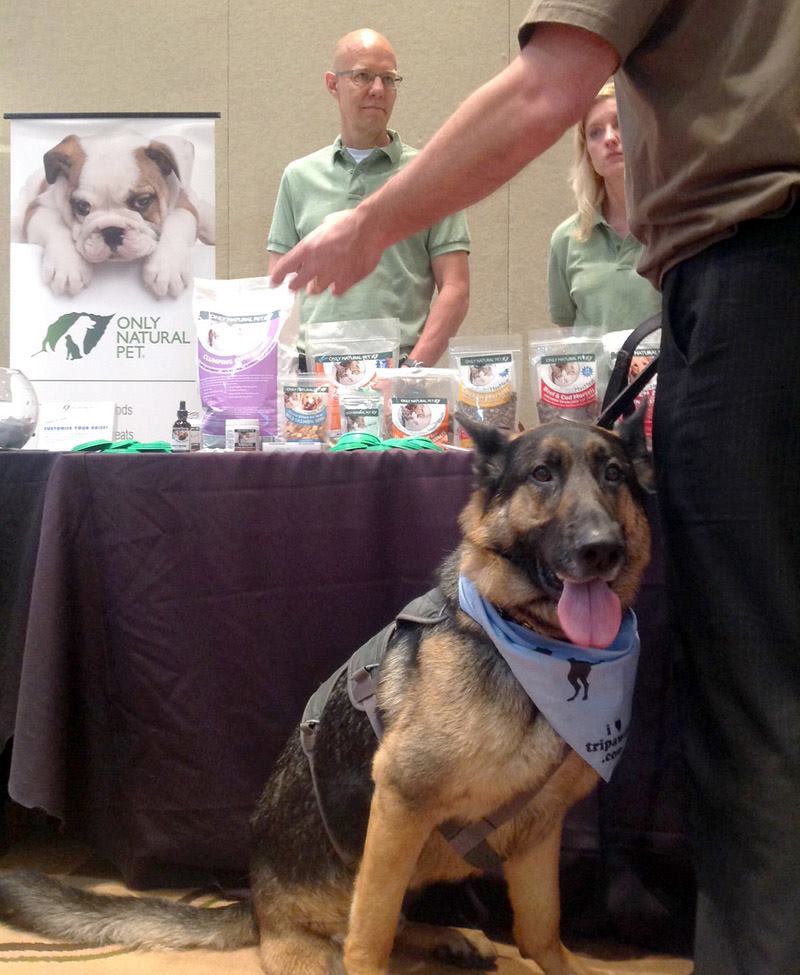
A photograph from the 2014 BlogPaws conference in Las Vegas offers a less orderly view of the work. Grosjean stands behind an Only Natural Pet display. Packages fill the table. A person’s arm cuts across the scene. In front sits Wyatt, the Tripawds spokesdog, looking considerably less troubled by the composition than a magazine art director might be.
The photograph is useful precisely because it is busy. It places the founder among products, people and a dog, with very little room for a heroic pose. This was a business meeting its community in person. At a conference for pet bloggers and animal enthusiasts, the people discussing products could encounter the people selling them, while the animals supplied their own competing attractions.
Another glimpse of the company’s everyday atmosphere came that year from its direct marketing executive, Bob Dodge. He described an office kitchen populated by dog bowls as well as plates, and customer service calls followed by tug-of-war. These are modest details, but they make the workplace imaginable. A pet business has an unusually persuasive way of bringing its subject into the meeting.
Eventually, someone has to deal with the box
Grosjean’s work also followed the order beyond the purchase. Only Natural Pet became a founding member of the Pet Sustainability Coalition. In October 2014, the company joined BlogPaws and the coalition in announcing a waste-reduction initiative for the following year’s Nashville conference. The aim was to get as close to a zero-waste event as possible.
His description of the company’s existing practices was satisfyingly physical: “We reuse shipping boxes, minimize product packaging, use renewable energy”. He also described participation in a zero-waste program across the office, warehouse and store. These are places where a business’s intentions encounter ordinary objects. An unwanted carton does not become more useful because the mission statement is beautifully written.
The conference partnership carried those concerns into a shared setting, with waste collection and participant education part of the plan. It is a revealing extension of a retailer’s work. The sale had already required cooperation among suppliers, staff and customers. Reducing what the sale left behind required another round of cooperation, involving people who might never buy the same products.
A bag becomes an industry question
Packaging supplied a more technical chapter. In 2018, Only Natural Pet worked with Braskem and Peel Plastic Products on bags for its Mindful Meals dry dog food. Each incorporated at least 30 percent bioplastic material, using a sugarcane-based polymer. The precise percentage is worth keeping: it describes a material change without asking a reader to imagine that the whole bag had somehow become a plant.
In June 2019, the company shared research conducted by Eco-Cycle through the Pet Sustainability Coalition. The report examined alternatives to multilaminate pouches, sorting packaging choices into preferred options, acceptable options and those to avoid. Grosjean said the work had helped his team make decisions and could help the wider industry.
Sharing that work creates an interesting relationship with competition. A company may want its products to stand apart while recognizing that other companies are wrestling with the same packaging questions. Giving peers access to research means they can start with some of the investigation already done. The gesture is practical enough to survive without a triumphant slogan. A useful document can simply be useful.
Bioplastic material in each bag. A material-content measure, not a claim that the bag was compostable or fully plant-based.
The calendar gets a vote
Only Natural Pet announced its B Corp certification in February 2019; B Lab lists the company as certified since January of that year. Grosjean described the assessment as an opportunity to examine the business more broadly. The review included its supply chain, daily operations and employees. Certification made the company’s stated commitments answerable to a process beyond its own marketing.
The resulting details were small enough to understand without a glossary. Employees received their birthdays off and eight hours of paid volunteer time. These policies put a business commitment onto the calendar, where somebody would actually have to make room for it. Grosjean also discussed expanding training and encouraging vendors to engage with their own communities.
His later entrepreneurial work includes Life Harmony Energies, where he is publicly identified as founder and president. His public professional profile places him in Lyons, Colorado. The geography keeps him close to the region where Only Natural Pet began, although his businesses have reached customers well beyond a single town.
Look back across these episodes and the scale changes repeatedly. A family searches for products. A website opens. A brand reaches grocery shelves. A company examines a bag, a warehouse and an employee’s day off. Grosjean’s story takes its shape from those decisions. Crinkles supplied the opening complication. The work that followed was finding room for the dog, and then thinking carefully about everything that came with the purchase.