The revealing moment in Mark43’s history came when a customer interrupted the interesting part. The founders had built software to map connections between people. Washington, D.C. police wanted to know how it would handle an arrest report. Somewhere between those two ideas sat a business: before a department could connect its clues, somebody had to enter them.
- Mark43 connects dispatch, police records, investigations and field access in cloud software.
- Its early lesson: useful analysis begins with usable reporting tools.
- The hard part includes migration, training and trust - all well beyond the software subscription.
The question that interrupted the demo
In 2012, Harvard students Scott Crouch, Matthew Polega and Florian Mayr were working on a class assignment involving Massachusetts State Police. The initial problem concerned evaluating policing tactics. Their attention moved toward the machinery underneath: how officers recorded and retrieved information.
The team worked alongside police, including a spell observing the gang unit in Torrance, California. But the Washington demonstration exposed a mismatch. Their network-analysis application interested the department; its routine reporting needs were more urgent. Polega later recalled the question: “How do you write an arrest report?”
They returned with reporting features. Washington became a defining early customer, with deployment in 2015. The useful lesson for another founder is wonderfully practical: watch the task that feeds your clever product. A customer may need help several steps before the screen you are showing.
“How do you write an arrest report?”
Matt Polega, recalling the customer question that redirected the product
Follow the report
Mark43 now sells the connected plumbing of public safety. Its records management system, RMS, supports reports and investigations, links related information, and checks submissions against national and state reporting requirements. An officer can work from the field; a supervisor can review the record; an investigator can follow the case. These are different jobs touching the same information.
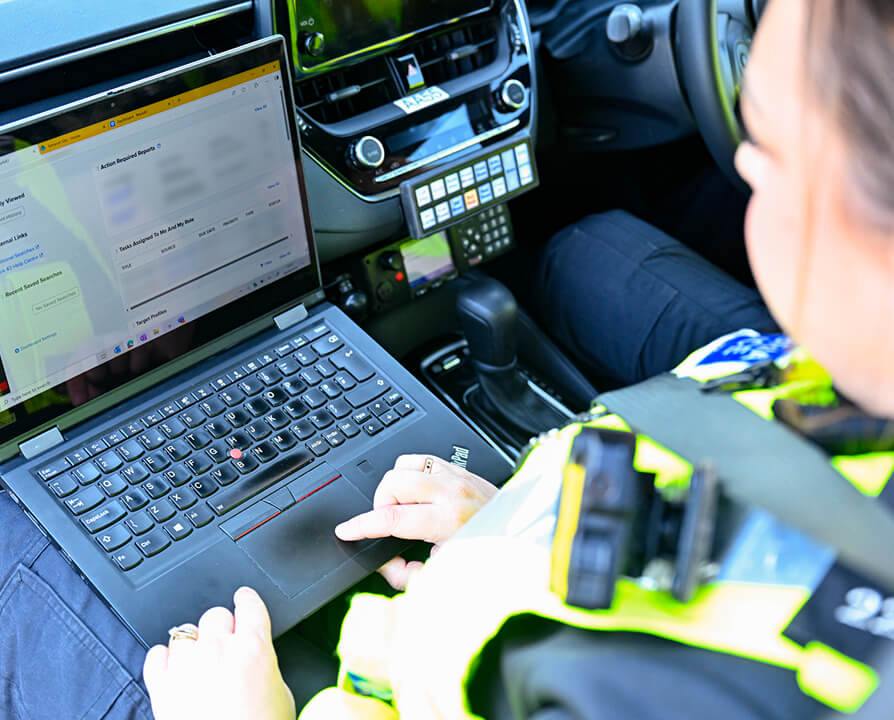
Computer-aided dispatch, CAD, handles another part of the chain: call intake, unit coordination and response information across police, fire and emergency medical services. OnScene supplies mobile access. Insights helps agency staff examine operational data. The buyer is an institution with procurement rules; the person using the interface may be answering an emergency call.
- 01Call +
dispatch - 02Field
response - 03Report +
review - 04Investigate +
analyze
Illustrative workflow, not a measured performance chart.
By 2026, Mark43 reported more than 300 agency customers. Its roster includes Washington, Seattle, Boston and California Highway Patrol, alongside UK customers such as Cumbria Constabulary. This places it in enterprise government software, competing for operational systems rather than selling an app to individual officers.
The alternatives are substantial. CentralSquare also offers dispatch, records and cloud services. Mark43’s case rests on its connected architecture, interface and security credentials. In May 2024, it announced FedRAMP High authorization under U.S. Secret Service sponsorship. That distinction concerns the application: choosing a vendor hosted on an authorized cloud does not automatically authorize its software.
The subscription is one line on the bill
The business model is recurring software subscriptions wrapped in implementation work. Public-sector systems must be configured, integrated and introduced to people who still have daily work to finish. Seattle’s historical project documents make that work visible.
One budget listed $1,055,520 for a year of Mark43 subscription and $1,599,199 for labor. Training added $475,776. Quality assurance, change management, hardware and project management filled other lines. These were planning figures for that project, not today’s prices. They show why comparing subscription quotes alone can miss much of the purchase.
Selected budget lines, rounded. Planned amounts, not final expenditure or current pricing.
The supplier needs patient money, too. Mark43 announced a $101 million Series E in July 2021, led by Spruce House and Tiger Global. In March 2024 it announced another $55 million round led by General Catalyst. Institutional customers are buying continuity as well as features: somebody must still support the system after the procurement team has moved on.
A contract can end before the old system does
There is a less comfortable entry in the company’s history. In August 2022, NSW Police confirmed it had terminated Mark43’s contract for the initial phase of its integrated policing operating system project. The technology contract had a reported value of A$177.8 million. That figure describes the deal, not how much Mark43 received.
The existing COPS system remained in operation. The episode puts a boundary around any neat story about replacing old software: winning the contract and completing the transition are separate achievements. It does demonstrate why buyers need migration plans, integration ownership and workable fallback arrangements before celebrating a new interface.
Seattle’s own risk documentation flagged dependencies around its data analytics platform and the availability of integration resources. For another organization considering a similar move, the practical question is whether it can fund and staff the surrounding change. A subscription cannot supply that institutional capacity by itself.
Thomasville, North Carolina, supplies a current example of the pressure to move. In October 2026, Mark43 announced the department’s adoption of RMS, OnScene and Insights after a cyberattack exposed weaknesses in its aging system. The department also described losing mobile reporting because its old records software could not communicate with county dispatch. Officers had to return to headquarters to write reports. The purchase addressed both a security shock and an everyday detour.
Back to the clues, with a better foundation
The recent products revisit the original ambition. ReportAI drafts reports from dispatch data, officer notes, body-camera transcripts and event context, with controls over generation, review and approval. BriefAI summarizes cases and surfaces outstanding work, linking summaries back to underlying data. Those links matter: an investigator needs to check what supports a claim.
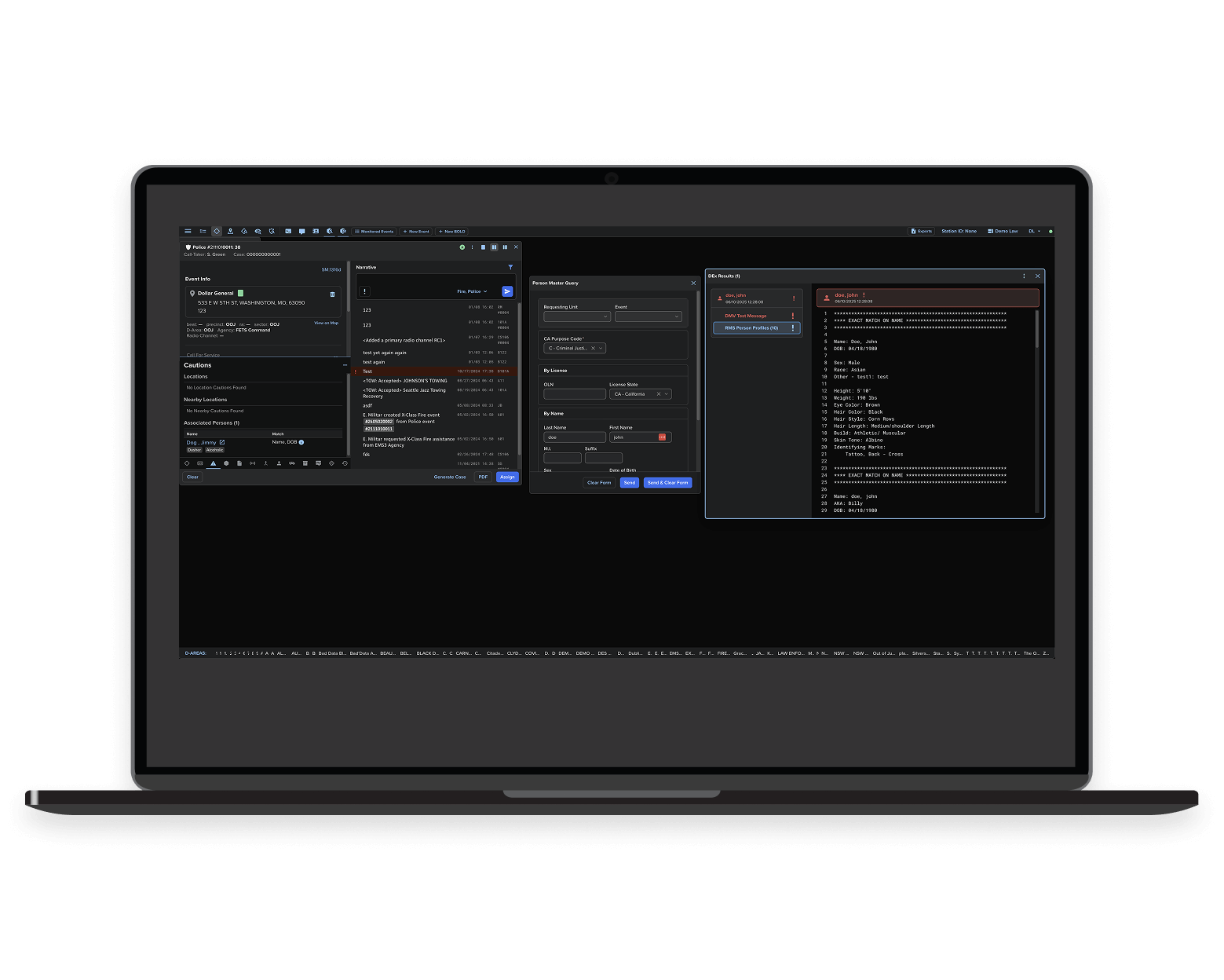
In September 2026, Mark43 acquired ForceMetrics, which connects information across disparate systems and jurisdictions. The acquisition followed a partnership announced in May. ForceMetrics said it would continue supporting customers on other vendors’ systems. This is a bet that agencies need useful connections even when they cannot replace everything.
October brought a similarly concrete Box integration: opening a case in Mark43 automatically creates a corresponding evidence folder in Box, labeled with the case number. The investigator gets a direct route from record to evidence. Fourteen years after the class assignment, the company’s proposition still turns on the space between two tasks. Make that handoff easier, and the information has a better chance of reaching the person who needs it.