In October 2024, the people choosing a new dispatch system for Henry County, Illinois, confronted an unusually sensible question: how much of the past should they bring with them? The committee recommended ProPhoenix. It also planned to leave some records behind. Old, possibly corrupt data, the meeting minutes explained, could clutter the replacement system. A new computer system was an opportunity to stop carrying an old problem.
- ProPhoenix connects dispatch, mobile work, records and corrections.
- Agencies can choose cloud or on-site deployment.
- Licensing is only part of the bill: training, support and interfaces matter.
That small detail is a useful introduction to this New Jersey software company. ProPhoenix works in the space between one public employee knowing something and another employee being able to use it. Its central promise sounds almost comically modest: enter information once, then carry it into the next job. In public safety, the next job might be responding to a call, writing a report or booking someone into jail.
A name that travels
Start with dispatch. Phoenix CAD handles calls for law enforcement, fire and emergency medical services, with mapping, unit availability and recommendations. It supports address and hazardous-material flags. Fire hydrants can appear on maps with their flow rates. These are specific, operational details: the sort of information that becomes valuable when someone needs it immediately.
Move to Phoenix Law RMS, the records management system. Initial information from CAD or mobile can continue into reports and analysis. Supervisors can require fields, approve reports and return them for editing. Evidence can be tracked through its chain of custody. The product also reaches into less cinematic work: fleet inventory, personnel scheduling and K9 training records. A department is an administrative organization even when its work is urgent.
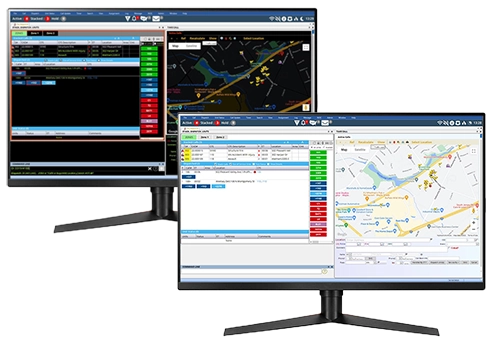
Corrections extends the sequence. Phoenix CMS can receive pre-booking information from RMS and manage intake, housing, inmate movement and release. Its booking workflow includes approval. The point is continuity: information captured upstream should remain usable downstream. Each avoided re-entry removes another opportunity for someone to mistype, omit or misunderstand it. That is the practical logic behind the suite.
The bill behind the promise
Henry County approved a $773,495 purchase, including on-site training, plus annual support of $102,929.10 with a 3% adjustment. The committee preferred on-site deployment because the cloud option cost approximately $200,000 more; its minutes also described a cloud service contract of approximately $200,000 annually. ProPhoenix’s willingness to offer both mattered. The buyer could pursue integration without accepting one prescribed hosting model.
The county expected a substantial implementation, with a planned build beginning in March 2025 and taking twelve to eighteen months. ProPhoenix announced the sheriff’s office live in September 2026. A purchase vote and an operational system are different milestones. Between them sit configuration, training and decisions about which information deserves a place in the new database.
Purchase including on-site training
$102,929.10 / yearAnnual support, with a 3% adjustment
Bars compare the purchase with one year of support. They are separate costs, not a total contract estimate.New Haven supplies another view. In March 2023, its police chief described an aging CAD, records and jail system with limited support options. Following an RFP, the city selected ProPhoenix for a proposed six-year project estimated at $4.8 million. The scope included hardware, software, installation, training and maintenance. The letter also anticipated consultants and equipment costs outside the requested vendor contract.
That distinction matters when reading ProPhoenix’s site-license pitch. Unlimited users and included software releases can make expansion easier to budget. They do not make servers, outside connections or implementation labor disappear. North Port, Florida, approved a comparatively small addition in 2023: a MuniciPAY connection for its police citizen portal, costing $3,250 to implement and $450 a year to support. Even a connected suite has edges.
Connected, with a door that locks
Some edges are deliberate. Phoenix Internal Affairs uses an independent SQL database restricted to authorized IA users. Complaint investigations should not become generally accessible merely because other departmental records share a platform. This is a useful complication in the integration story: successful software must decide where information moves and where access stops.
“Single Point of Entry”
ProPhoenix’s compact description of its approach
Other edges invite outsiders in. PAPR, the ProPhoenix Automated Property Report portal, connects merchants and law enforcement around pawned, scrap-metal and secondhand property. Officers can search records, flag items and place holds. Agencies can use it regardless of their existing records vendor. The customer need crosses product boundaries, so this product does too.
The company’s origins are patient ones. Sam Ramasamy began the business on April 23, 2003. Its first customer, Wauwatosa, Wisconsin, went live on May 31, 2005. By its twentieth-anniversary announcement in July 2023, ProPhoenix reported more than 700 customers across 26 states and described itself as family-owned. Its account emphasized training and continued development alongside the expanding catalog.

Buy the handoff
ProPhoenix occupies the enterprise public safety market, where buyers also evaluate suppliers such as Tyler, Mark43 and Axon. Its position rests on a broad suite built in-house, browser-based records products, site licensing and deployment choice. The sales proposition is organizational: dispatch, field work and administration should cooperate as parts of the same operation.
Its current catalog adds AI transcription, translation, facial similarity searches and non-emergency call routing. Those are advertised capabilities, not proof of improved outcomes. For a buyer, the revealing exercise remains wonderfully ordinary: follow one incident through the actual workflow, using the agency’s own requirements. Watch what travels automatically, what needs an interface and what someone still has to type.
Henry County’s migration decision offers a second exercise worth copying: inspect the information before moving it. Connected software depends on usable data, trained staff and agreed access rules. Without those conditions, integration can simply spread confusion farther. The attractive promise is fewer repeated steps. The work is deciding which steps should survive.