In River Forest, Illinois, the fire chief described running the same report twice in a day and getting two different results. The department had software. It had hydrant records and building plans, too. What it lacked was a dependable way to bring that information together. In First Due’s customer interview, the frustration sounds familiar to anyone who has ever asked a computer a straightforward question and regretted it.
The useful bits / 30 seconds
- First Due connects fire and EMS planning, response and administration.
- Its customers range from volunteer departments to statewide agencies.
- The buying argument is fewer disconnected workflows; savings depend on the work being replaced.
01 The building plan escapes the binder
First Due, founded in 2016, began with pre-incident planning: collecting information about a property before an emergency and making it useful during one. A street address identifies the destination. A pre-plan can show hazards, access points and the location of water. Those are different levels of knowing where you are going.
By December 2020, the company was announcing a wider suite. Co-founder and product leader Rami El-Choufani described a trap: agencies had adopted modern applications to fill gaps in older software, then found themselves managing a collection of disconnected tools. First Due’s answer was to connect more of the operation inside its own cloud platform.
Today that means inspections, permits, incident reports, electronic patient care reporting, staff schedules, equipment, hydrants and training. Mobile Responder takes agency information into the field. Incident Command adds a digital board for assigning and tracking resources. The practical ambition is to let information collected for one job help with the next.
One record, more useful places
Hazards · Hydrants
Resources · Command
Training · Analysis
Community Connect widens the circle. Residents and businesses can contribute details about their properties, contact information and functional needs. There is room for pets and livestock, too. An inspection cannot tell a department everything about the people inside a building. The occupants know things the map does not.
Co-founder and CEO Andreas Huber leads a company whose stated mission centers on preventing responder injury and death. Its expertise sits at the intersection of public safety practice and software development. That combination matters when a product must accommodate a department’s reporting rules, staffing agreements and field routines, all within the same working day.
02 Eight hours at the booth
Crystal Lake Fire Rescue’s account offers a particularly useful buying story. Chief Craig Snyder wanted to replace five platforms. His colleague Bill Whyte went to a conference and spent nearly eight hours at First Due’s booth, examining the modules against the department’s needs. Apparently, enterprise software can hold someone’s attention longer than a transatlantic flight.
The rollout began with scheduling because everyone used it. Staff could recognize the task and judge whether the replacement helped. The department later described payroll exports and equipment records that supported replacement planning. The implication for other buyers is straightforward: let a familiar, frequently repeated job earn confidence in the larger system.
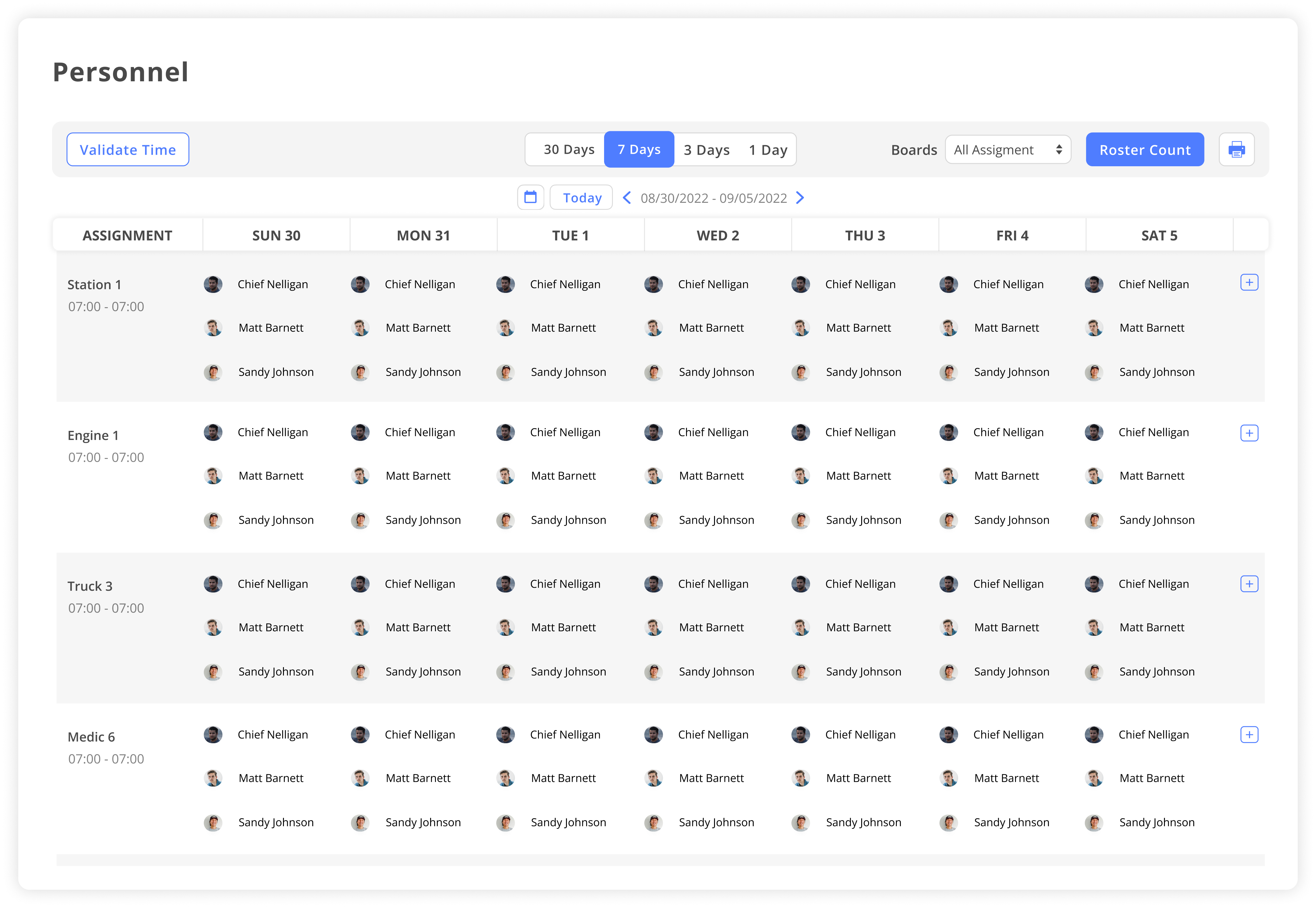
River Forest’s account gets closer to the truck. Pre-plans formerly sat in binders; crews could now retrieve information during response and view shared records from neighboring First Due agencies. That matters because a mutual-aid call crosses a municipal boundary whether the databases are ready or not.
“We used to rely on handwritten forms and desk drop-offs to request trades.”
Thomas Gaertner / River Forest fire chief
The chief also described a jury-duty shift being covered within seven minutes. It is one example from a vendor-published interview, rather than a department-wide performance average. Still, it helps explain the appeal: a routine staffing problem stops becoming everybody’s afternoon.
03 The $6,000 question
Consolidation has a price. Superior, Wisconsin’s December 2024 procurement memo proposed $6,700 for implementation, $15,000 for July through December 2025, then $30,000 annually from 2026. Its existing subscriptions cost $24,000 a year. The proposal therefore required an argument for spending more.
Superior, Wisconsin / proposed annual subscriptions
+$6,000 per year · $6,700 one-time setup
Agency proposal, December 2024. Scope and timing matter.
The memo identified repeated manual entry caused by inadequate connections between dispatch, reporting and scheduling. The meaningful comparison includes staff time and data quality alongside invoices. These figures describe one agency’s proposed purchase, with its own scope and timing. Buyers need a quote for their particular combination of modules and services.
04 A bigger platform, bought one job at a time
In August 2025, First Due announced a $355 million strategic minority growth investment led by JMI Equity, with TCV participating and Serent Capital continuing its support. At that point, it reported serving more than 3,000 agencies across the United States and Canada. The capital backed a business selling operational infrastructure to public safety organizations.
Its market includes alternatives such as ESO, ImageTrend and ZOLL emsCharts, depending on the job. First Due competes on the breadth and connections of its suite. It also works with other vendors: CentralSquare is a documented partner, and Air Methods brings clinical education into its learning system. Consolidation still requires connections beyond the platform.
Federal customers bring another set of requirements. In 2024, First Due announced FedRAMP authorization in partnership with E-9 Corporation, opening its offering to federal agencies. Security authorization is part of the purchasing machinery here. A convincing demonstration alone does not satisfy an agency’s obligations for handling sensitive operational information.
FDNY’s January 2026 announcement makes the sales proposition concrete. The department went live on First Due for fire incident documentation during its transition to the National Emergency Response Information System, or NERIS. That initial deployment was a defined reporting job. On October 22, 2026, First Due announced support for NERIS V1.5 from its first day.
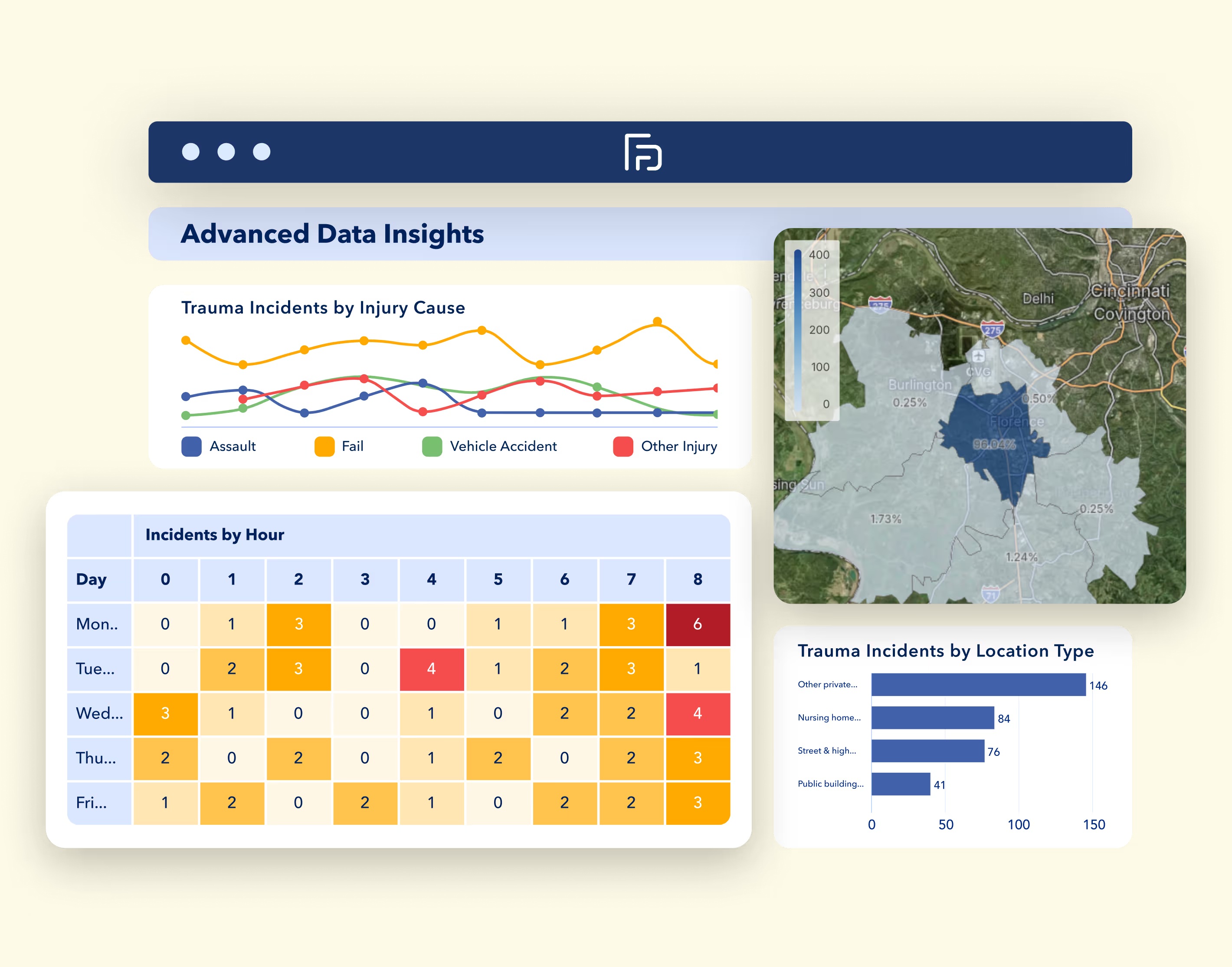
AI adds documentation assistance and quality review to the same environment. The company describes summarizing notes and identifying inconsistencies in patient reports. That is a useful place to examine AI: buyers can inspect the proposed output against their own protocols and the actual record of care.
05 Start with the work people repeat
The lesson travels beyond a firehouse. Trace one piece of information through the organization. Count the times somebody types it again. Test the full route, including dispatch and payroll connections, permissions and field access. Assign responsibility for keeping records current. A connected system depends on those details, and a smaller agency may need only part of the suite. River Forest already possessed its building plans. The improvement came when the crew could reach them.