On Mark Swan’s first day at Revolut, the office was empty. It was the summer of 2021, and he had turned up eager for the peculiar education that only a company moving at unreasonable speed can provide. His assigned manager was nowhere to be found. Swan worked alone for several hours until a stranger crossed the floor, asked his name and delivered two pieces of news: the manager had left, and the stranger was now his boss.
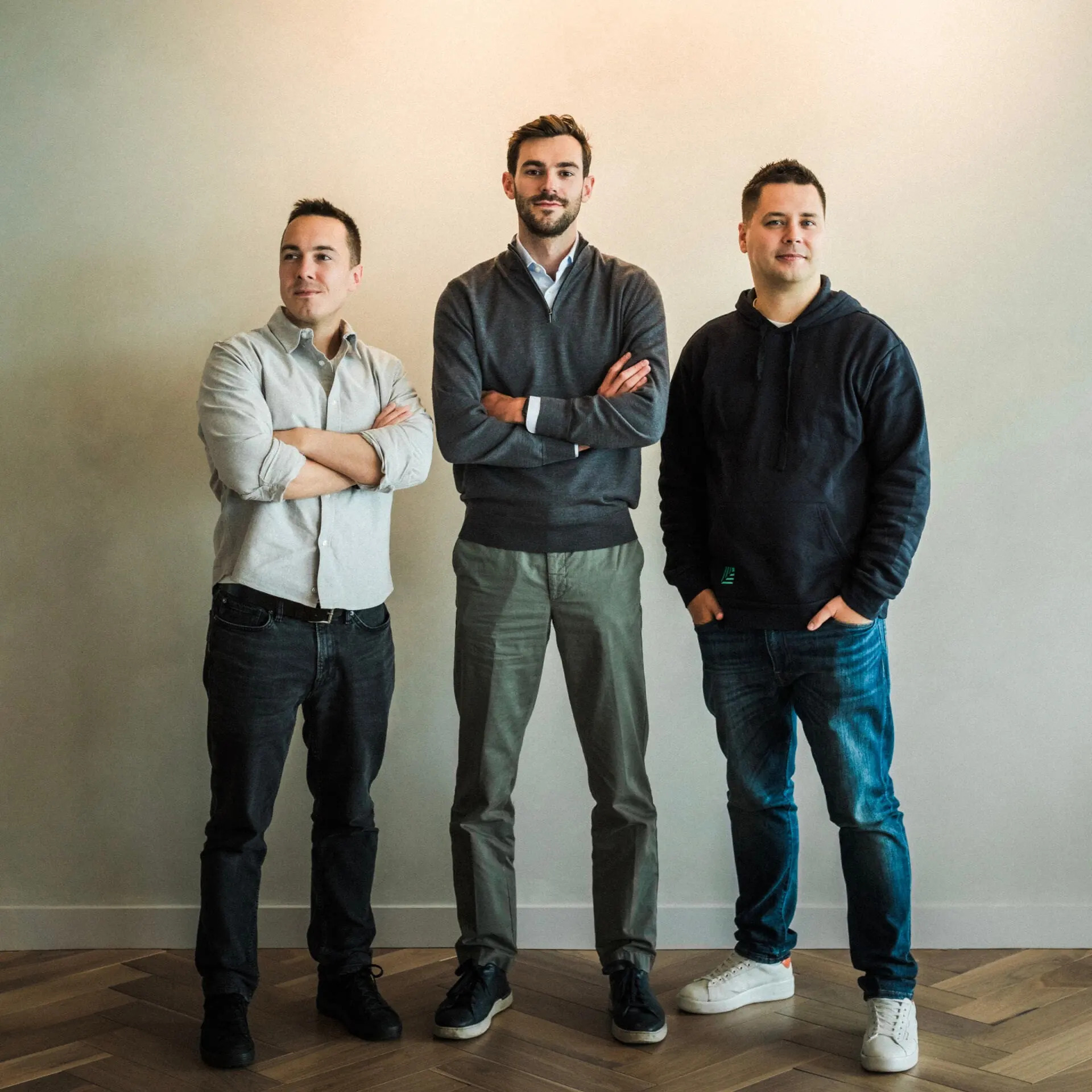
The stranger was Ivan Chalov. Three years later, Chalov would leave Revolut to build a company with Swan and Philipp Burda, another colleague from the digital bank. Their startup, Nevis, now makes AI software for wealth-management firms. A muddled induction had quietly become a founding-team origin story.
Swan’s explanation for joining Revolut was less polished than most career advice and more useful: he wanted to “drink from the fire hose.” He expected the work to be intense and the learning to be faster than anywhere else. From 2021 to 2024, he led product strategy, operations and data teams focused on user growth, engagement and retention. The experience gave him an operator’s view of regulated technology: the interesting idea is merely the admission ticket; the harder act is making it dependable at scale.
A career built from useful things
Long before Nevis had a New York address, Swan was a schoolboy in Aberdeen who imagined a career in politics. He wanted to work on consequential problems and, at the time, government seemed the obvious stage. He read voraciously, attended three state schools in his final year and accumulated a striking run of exam results. He was elected head boy, representing more than a thousand pupils.
Then business and technology complicated the plan. After school, he moved to London for an internship at Generation Investment Management, the sustainability-focused firm co-founded by Al Gore. The experience showed him another route to impact: build or finance tools that change how people live. He took that thought north to the University of Edinburgh and enrolled in computer science despite never having written a line of code.
By graduation, he had acquired not only the lines of code but a small cabinet of practical experiments. A machine-learning model used satellite imagery to monitor forest restoration in northern Fiji. A co-authored paper applied LSTMs and Transformers to forecasting drought conditions and won the university’s IBM Award for Machine Learning. BetterReads searched 69 million book reviews. CovidMaps made regional Scottish data easier to compare. Scratch from Scratch introduced children to programming. RemindDoor, a student smart-lock prototype, won a system-design competition.
The subjects varied, but the instinct stayed put: organise a messy body of information, then make it useful to someone facing a decision. Nevis is that instinct in a grey suit.
The expensive pile of paperwork
In the summer of 2024, after leaving Revolut, Swan began looking at service businesses. AI companies were multiplying, but many products stopped at a clever demonstration. Regulated industries had the additional inconvenience of needing software to be secure, accurate and integrated with systems that were not designed for a glamorous future.
Wealth management presented a particularly inelegant knot. Advisers were in demand, yet their days were crowded with preparation, follow-ups, data entry, account forms and searches across disconnected systems. Swan framed this as the 80/20 problem: as much as 80 percent of an adviser’s time could go to administration, leaving the smaller portion for the conversations clients actually valued.
His conclusion ran against the loudest version of the AI story. Clients were not waiting for a machine to tell them what to do with their life savings. They valued an adviser who could understand a retirement, an inheritance or a college plan in human terms. The machine belonged behind that relationship, moving information and completing routine work.
People don’t want robots telling them how to manage their life savings.Mark Swan
There was a personal edge to the theory. Swan has said his parents managed most of their investing themselves because an adviser was too expensive. If software lowered the cost of serving each household, he reasoned, professional advice might reach families who were previously priced out. The ambition was therefore both operational and distributive: more hours for each adviser, and potentially more people able to receive advice.
A note, a flight, a company
Swan describes himself as a closet manifestor. His method is pleasingly low-tech: write the desired outcome on paper and will it into existence. When he left Revolut, he wrote that he would have seed funding before his parents’ wedding anniversary that autumn. He kept the note.
The outcome still required meetings, research and arithmetic. Sequoia partners George Robson and Luciana Lixandru met Swan after former talent lead Edward O’Carroll put his name forward. The investment moved quickly. Swan was boarding a flight to Aberdeen when he found himself doing the deal maths in his head near the jet bridge. The $5 million seed round was formalised in September 2024. Burda and Chalov soon joined him.
The trio had shared three years at Revolut, enough time to learn one another’s pace and habits. Swan brought strategy and operations; Burda had led financial-crime, data-science and generative-AI work; Chalov had moved from data scientist to general manager. Their directness with one another became part of Nevis’s operating character.
The early plan pointed toward Britain. Their investors pressed them to consider a larger and more AI-receptive market. The founders concluded that American wealth firms had the same fragmented systems, greater commercial urgency and an appetite for deployment. Nevis turned toward the United States.
Trust earns the air miles
Enterprise software is frequently sold through tidy rectangles on a calendar. Swan preferred the untidy physical world. For United Capital, he flew to Newport Beach, learned that company president Jim Rivers liked surfing and allowed one coffee to stretch across several days. For Apollon Wealth Management, he flew to Tampa, drove four hours to Miami and arrived for a 30-minute meeting with chief operating officer Brad Goodman. It became a multi-hour strategy session and another customer.
The travel was not mere founder theatre. In wealth management, a product touches records, communications and decisions surrounded by regulation and trust. Sitting with the people doing the work exposes the awkward transitions that a remote demo makes invisible. Those transitions became the product brief.
Nevis connects with a firm’s customer records, email, messaging and document systems. It can prepare meeting briefs, create summaries, generate follow-up tasks, draft client-ready messages and help move operational jobs such as account opening from start to finish. Swan and his co-founders call it a system of action. The phrase matters because another isolated AI widget would merely join the pile it promised to simplify.
Financial advisers don’t want more tools or more clicks. They want to get work done.Mark Swan
Forty million dollars and a voice
Nevis emerged from stealth in December 2025 with a nearly $35 million Series A from Sequoia, ICONIQ and Ribbit Capital, bringing total funding to $40 million. At launch, the company said its customers collectively managed more than $50 billion in client assets. The funding was less an ending than a louder opening sentence.
Later that month, Nevis acquired Ledra AI, bringing co-founders Maria Lovin and Adamos Hadjivasiliou into the team. The acquisition sharpened another of Swan’s bets: voice may become a natural interface for professional software. An adviser should be able to express an intention conversationally, while software handles the reasoning, context and execution required to complete it. Fewer menus, fewer handoffs, fewer crumbs left on the desk.
By 2026, Nevis was publishing customer results and expanding enterprise work. AlTi Tiedemann Global selected the platform for adviser workflows across its global business. Swan also appeared on the WealthStack podcast to discuss why capacity, rather than demand, is the constraint in advice, and why vertical AI platforms can do more than a collection of narrow tools.
Watch: AI, capacity and the future of adviceMark Swan on the WealthStack Podcast · Opens on YouTubeThe stubbornly human thesis
There is an attractive modesty to the central Nevis proposition. It does not ask an adviser’s client to form an emotional attachment to an algorithm. It asks software to remember, search, prepare and execute with less fuss. The glamorous frontier turns out to contain a great deal of follow-up email.
Swan’s own career makes the position credible. The politician he once imagined becoming wanted broad impact. The student engineer learned to turn data into tools. The Revolut operator learned how regulated products survive contact with millions of users. The founder is combining those lessons in an industry where trust is both the raw material and the finished good.
The company still has the difficult work ahead: earning durable confidence, integrating with imperfect systems and proving that saved minutes become better relationships rather than simply more tasks. Swan appears to understand the bargain. He keeps meeting customers in person. He speaks about velocity but returns to trust. Even his preferred future interface, the human voice, begins with listening.
His most telling ambition is not to make the adviser disappear. It is to make the cost of good advice smaller and its reach wider. In a technology cycle fond of grand replacements, Swan has chosen a more exacting target: clear the paperwork, preserve the judgment, and give people enough time to talk.
Continue exploring