A car wash is an unexpected place to begin a story about the future of transport. It has brushes, hoses, a queue and customers who would probably prefer to be somewhere else. Mark Avery looked at that familiar business and proposed adding another reason to visit: charging an electric car. The founder of Bell Resources brought a career in combining businesses to a problem that involves combining services. In his version of the roadside stop, cleaning the vehicle, supplying its energy and buying a coffee belong to the same commercial picture.
It is a revealing choice of starting point. Avery’s professional background spans property, childcare and legal services. He has worked on acquisitions, restructures and the integration of smaller businesses across multiple sites. Bell, founded in 2017, gives those skills a new setting. The ingredients include chargers, solar generation and batteries, but the question underneath them is familiar to someone who has assembled a business from separate parts: how do you get the pieces to work together?
A family conversation that kept going
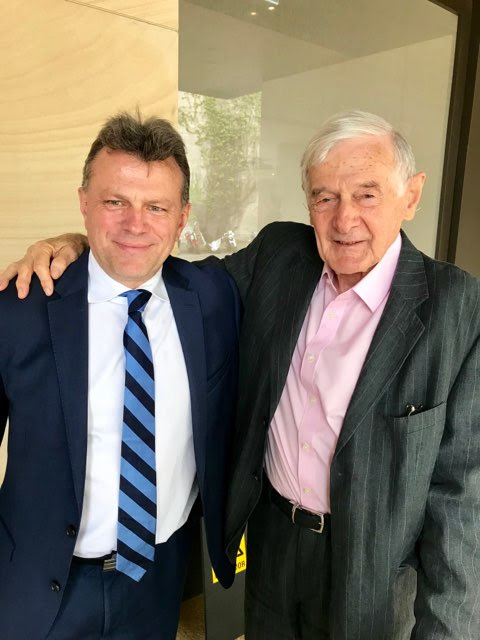
Avery grew up around business proposals and arguments about the future. His father, Langer Avery, was UNSW’s first Business School graduate, completing his commerce degree in 1959. Mark remembers a household where education continued beyond qualifications. His father would bring proposals home, ask for views on technology unavailable in Australia, and recommend reading that ranged from Shakespeare to the news.
There was room to disagree. The point was to develop a view and discuss it. Langer’s own enthusiasm for technology included early investment in computers and accounting software. Mark also recalls a car phone acquired before its network had been switched on. Few objects express faith in the future quite as neatly as a telephone waiting for the rest of civilisation to catch up.
Mark has described that environment as an indirect influence on his own career. Business and finance surrounded the family without a prescribed career path. His account of his father returns repeatedly to learning, better tools and thinking ahead. It offers a personal way into the founder’s later interest in bringing new technology to ordinary commercial premises.
The lawyer’s route to the charging bay
Avery’s own formal education took him to Bond University, where he earned a Bachelor of Laws and a Master of Business Administration. He received a law scholarship in 1997. His professional biography describes him as a non-practising solicitor and a former corporate adviser, as well as an entrepreneur with experience in due diligence, acquisitions and public listings.
Before Bell, he also served as an executive director of an ASX-listed company he co-founded. The combination matters because a charging business involves more than selecting equipment. Sites and businesses have to be assessed; transactions have to be completed; a collection of locations has to become an operation people can manage. His earlier work gives the Bell proposal a recognisable commercial ancestry.
There is a useful distinction between buying a business and making it fit into a larger one. An acquisition produces a transaction. Integration asks what happens afterwards. Avery’s biography specifically includes that second discipline: bringing small businesses together across multiple sites. For a roadside network, the local premises and the wider organisation both matter. The work extends well beyond the ribbon-cutting photograph.
Why the brushes stayed
In June 2021, Avery outlined a plan to put ultra-fast EV charging at car washes under a common Bell Hub brand. The proposed equipment included chargers rated between 175 and 350 kilowatts, solar panels and battery storage. Coffee facilities and roadside pricing boards were part of the picture. The self-service washing business would remain; Avery explained that washing and charging would happen separately.
That last detail is pleasingly practical. A roadside concept can look wonderfully tidy in a diagram. A driver still has to park, move the car and use the services in a workable order. Keeping the wash operation while adding charging gives Bell’s plan two distinct activities at one location, rather than asking the entire business to depend on one new habit.
Avery also described using batteries to give the sites flexibility in supplying electricity and setting prices. Solar, stored energy and grid supply would have different roles. His proposed pricing approach borrowed a familiar cue from petrol stations: customers notice when the price changes. Here, the unit on the board would change, while the invitation to stop would remain recognisable.
Different jobs, one destination. The washing and charging activities were described as separate steps.
The proposal puts Avery’s experience with business aggregation into a physical setting. A network has to offer something repeatable, yet every stop is a place where an individual customer makes a small decision. Will this be convenient? Can I get what I came for? The commercial argument is strongest when it can answer those questions without requiring the customer to admire the strategy first.
The less glamorous ingredient: policy
Avery’s public comments about electric vehicles have often moved quickly from technology to the conditions needed to finance it. In 2021, he welcomed the arrival of a federal EV policy while saying he had wanted more, including tax exemptions. He linked hesitation in capital markets to the absence of policy frameworks and regarded the announcement as a step towards further investment.
By his 2022 Startup Stories interview, inconsistent policy and institutional reluctance were still central concerns. He argued that clearer settings could reduce perceived risk for investors. That emphasis is consistent with a founder whose background includes corporate advisory work: the technology may create an opportunity, but someone must decide to commit money to the businesses and facilities around it.
There is a temptation to tell an electric-vehicle story entirely through the car. Avery’s comments widen the frame to include the investor deciding whether a network is financeable. The buyer and the backer face different questions. A driver wants a useful place to charge. An investor wants a reason to believe a business can support that service over time. His strategy addresses both audiences.
A name borrowed from sunlight
Bell Resources takes its name from the Bell Solar Battery of 1954. Avery has described the name as a tribute to the solar-cell inventors and connected the company’s origin to Australia’s adoption of rooftop solar. His stated ambition was to help more Australians move to electric transport by making charging accessible and straightforward.
In that account, solar generation and electric mobility belong to a continuing story. Bell’s business proposal brings them into the same setting, alongside storage. The name is a reminder that the infrastructure being proposed depends on several kinds of technology, developed across different eras, finding a useful arrangement together. The electricity has a history before it arrives at the car.
Avery’s description of culture follows a similar theme. He uses the word unity and talks about people working towards a shared objective. It is a compact answer for a business proposal containing a considerable number of parts. A charger, a wash operation and an energy system each do a different job. A team has to make their combination legible to customers.
“Culture to me means unity”
Mark Avery, 2022
The next layer is software
The present BellX description expands the roadside idea into a connected infrastructure platform. Bell Resources Limited is its Australian subsidiary. BellX describes a system in development that brings physical assets, energy, mobility and digital technology together, with BellX OS intended to connect, monitor and optimise the infrastructure.
This is a broader proposal than simply placing a charger beside an existing business. Automated car washing, roadside hubs, clean energy systems and customer amenities sit within the platform’s stated scope. The company presents software and artificial intelligence as ways to coordinate those activities. Its website also identifies its facility illustration as conceptual, a vision of future infrastructure rather than a photograph of an operating site.
For Avery, the continuity is the interest in combining things. Earlier in his career, the separate parts were businesses. At Bell, they include businesses, equipment and services. BellX adds a proposed common software layer. The vocabulary has changed from corporate integration to connected infrastructure, but the organisational question remains: what makes a collection work as a whole?
The appeal of the roadside idea ultimately rests on an ordinary visit. A customer might arrive for a clean car, electricity or a drink and find more of that visit’s errands accommodated in one place. That is the experience Avery’s companies are proposing. It gives the infrastructure ambition a small, concrete test: whether a stop feels worth making.
His family story provides an apt companion to that test. Learning about a new tool was part of everyday conversation; using it well was the next question. Avery’s move into electric transport carries that conversation onto the roadside, where the equipment, the business and the customer must all meet. Somewhere in the plan, amid batteries and software, there is still a car that needs washing.