Mariano Sorgente’s latest company began with a familiar indignity: being an adult beginner. He had spent years learning Japanese, rotating through teachers and apps, accumulating the grammar and vocabulary that make a student feel industrious. Yet the useful part kept returning to the same unnerving act. He had to speak. It is one thing to recognize a sentence on a screen. It is another to assemble it while somebody waits. The pause feels longer. The mistakes acquire witnesses. Fluency, with its elegant reputation, is built from many inelegant minutes.
Sorgente eventually reduced those years to a product thesis: “Talking and immersion is the best way to learn.” The grammar may wobble, but the conviction is clear. A learner needs a conversation partner who is available before confidence arrives, patient through repetition, and able to meet the learner at precisely the level where effort remains productive. ISSEN is his attempt to put that partner in a phone.
The New York company, part of Y Combinator’s Fall 2024 batch, offers a real-time AI voice tutor that adapts to goals, interests, level, and learning style. Learners can move between more than 50 languages, choose accents and complexity, follow personalized curricula, study grammar, save vocabulary, and use translation, shadowing, and flashcard drills. The feature list is broad. The daily proposition is intimate: open the app and talk before your courage finds an excuse.
The student who studied the network
Long before he asked software to hold a conversation, Sorgente asked it to make sense of a crowd. At Stanford in 2014, he and Cristian Cibils treated Bitcoin as a transaction network. Every address became a node; every transaction, an edge. Their Java program walked through more than 300,000 blocks and produced an edge file of roughly 29 gigabytes. The analysis pressed against a 16-gigabyte memory limit. A useful academic curiosity had become a wrestling match with the machine.
They optimized, compressed, stored address mappings on disk, and rationed expensive calculations. The results identified correlations between Bitcoin’s price and measures such as the number of nodes and edges. The paper also kept the important caveat in view: a correlation could not tell them whether network growth moved price or rising prices attracted users. Even as a student, Sorgente was working in the seam between a clean model and the behavior of untidy humans.
His Stanford record points to a wide technical appetite: machine learning, artificial intelligence, security, cryptography, networking, databases, and the systems courses that teach computers to behave under pressure. He worked as a software development engineering intern at Amazon in 2014 and as a research assistant in Stanford’s Virtual Reality Lab in 2015. Then came Token, where he moved from software engineering into an engineering lead role.
Start with the repeated behavior, not the fashionable capability. ISSEN’s center is daily speaking practice. The model is valuable because it makes that practice available, adaptive, and private.
Five years in the consensus business
In 2018, Sorgente joined Chia Network near the beginning. Chia was trying to design a blockchain around proof of space and proof of time, replacing the energy-intensive competition of proof of work with a system that used storage and verifiable delay functions. The problem required more than a white paper. A decentralized protocol must keep working when participants disagree, fail, reconnect, or behave strategically. Its edge cases are not decorative.
Sorgente spent almost five years helping build the protocol, team, and ecosystem. In 2019, he stood at MIT’s VDF Day and explained proof-of-space Nakamoto consensus using class-group verifiable delay functions. In 2021, Chia materials listed him as lead programmer on the pool-server reference code. His name also appears on patents covering consensus architecture, proof-of-space-time blockchains, and pooling through singletons.
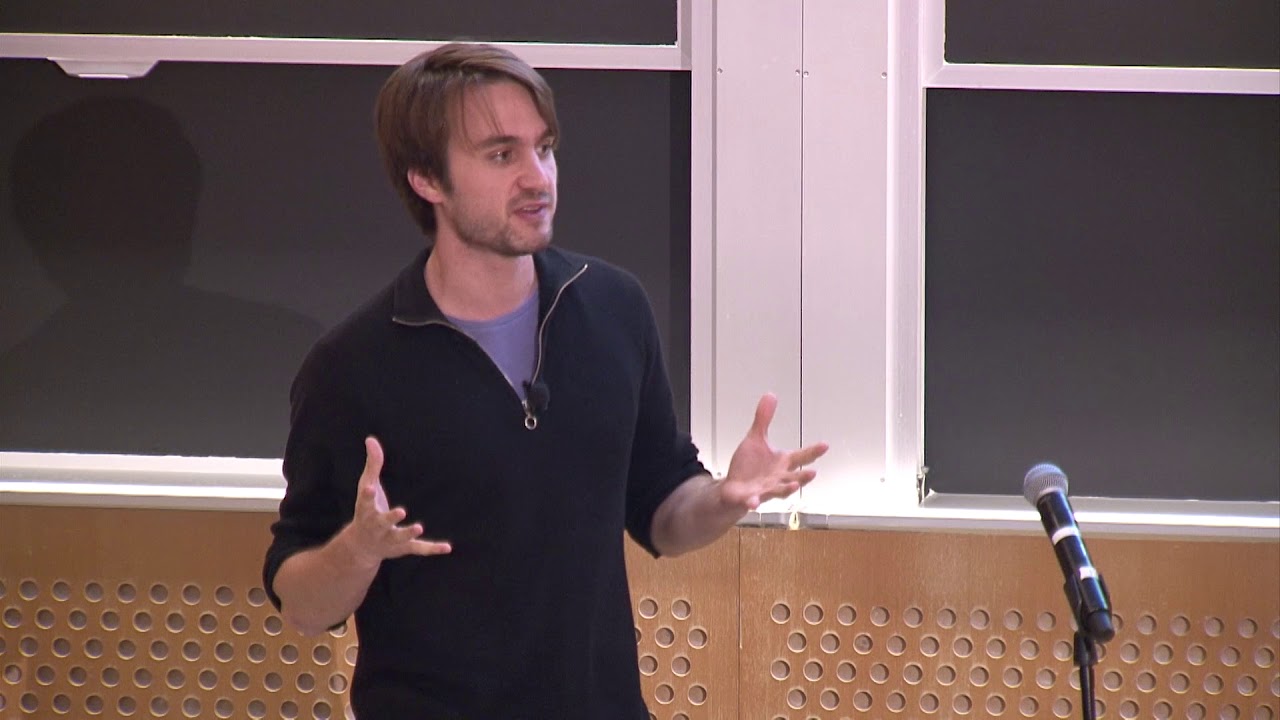
The public talk captures an engineer translating abstract machinery without treating abstraction as a performance. Consensus protocols can invite cathedral language. Sorgente’s job was practical: explain how challenges, proofs, timing, and security assumptions fit together well enough that another technical person could test the design. The same instinct would later appear in a very different interface. A language learner also needs a system that reacts to imperfect input, maintains context, and keeps the exchange moving.
“Focusing on building useful and secure apps and systems will help the industry move forward.”Mariano Sorgente, announcing his move to a16z crypto
A seat on the other side of the table
Late in 2022, after the crypto industry had entered one of its periodic reckonings, Sorgente joined a16z crypto as a deal partner. He described the move in the language of systems and access. Decentralized networks, in his view, could let people participate in global markets without their birthplace or opinions becoming a gate. He thanked Chia founders Bram Cohen and Gene Hoffman, credited the team that had built alongside him, and said he hoped to remain involved.
Investing gave him a new angle on builders. Instead of deciding how to implement one protocol, he could evaluate many teams, markets, and technical claims. He also wrote. His 2023 introduction to light clients examined how users might verify blockchain information from ordinary devices without carrying the time and hardware burden of a full node. It was another access problem disguised as infrastructure: how much machinery must a person operate before they can participate with confidence?
The investor chapter did not erase the engineer. His public biography compresses the impulse into six words: “Passionate about advancing humanity through technology.” The sentence is grand enough to look suspicious on a coffee mug. His work makes it more specific. Again and again, he gravitates toward systems that are powerful but inconvenient, then looks for a lighter way into them.
Back to the small, revealing loop
ISSEN brought Sorgente back to a consumer feedback loop. A consensus failure may demand traces, test networks, and careful reconstruction. A language app can fail in half a second. The tutor interrupts. The pause feels synthetic. A correction arrives too early. The accent sounds wrong. The learner reaches for another app. Consumer software is a voting system in which the user can veto with a thumb.
Sorgente launched the company with co-founder Anton Apostolatos. In his announcement, he connected the timing to rapid improvements in AI models, which had made a responsive voice-tutor experience possible. The ambition was not a talking encyclopedia. ISSEN would remember interests, adapt to learning style and goals, and become a companion a person could use daily. Soon after the web release, the team brought the tutor to iOS and Android.
The mobile app now includes hundreds of grammar lessons, vocabulary review, spaced-repetition flashcards, translation practice, and shadowing exercises. Tutors can remember prior conversations and preferences. Learners can change accents, slang, and complexity. Recent updates have concentrated on quieter forms of craft: audio behavior, Bluetooth recovery, session reliability, speech recognition, navigation, and clearer controls. These details rarely earn a launch post. They determine whether a voice product feels like a companion or a conference call with bad Wi-Fi.
The patience layer
Language education contains an awkward scarcity. The student most in need of conversation is often the least comfortable asking for it. Human tutors are valuable and finite. Friends may be encouraging, then drift toward the language everyone shares. A voice agent offers a peculiar resource: patience without social debt. Ask for the sentence again. Slow it down. Switch briefly to English. Try the Japanese once more. Nobody glances at the clock with theatrical restraint.
This does not make the machine a substitute for every teacher, friendship, journey, or cultural encounter. It makes one ingredient abundant: attempts. That distinction keeps ISSEN’s idea grounded. The app is useful when it helps a learner do more of the activity that learning requires. Its intelligence matters at the moment it notices enough to respond appropriately, then gets out of the way of the next sentence.
Sorgente’s route to this point looks like a collection of sharp turns: from Stanford research to fintech engineering, from blockchain protocols to venture capital, from decentralized consensus to language education. Seen from closer range, the line is steadier. He studies participation. Who can enter a system? What must they understand or operate first? Where does complexity become a locked door?
At Chia, the participants were machines and their operators, trying to agree without wasteful computation. In his light-client writing, they were ordinary users who could not run a full node. At ISSEN, the participant is a learner with five spare minutes, a half-remembered verb, and the private fear of sounding foolish. The technical challenge has become more personal. The system succeeds when the person keeps talking.
Fluency arrives dressed as confidence. Most days, it is simply another imperfect sentence attempted before breakfast.The ISSEN product lesson
There is a modest joke inside the career arc. An engineer who spent years on consensus now makes software for people who cannot agree with themselves about whether they are ready to speak. ISSEN’s answer is pleasantly impolite: readiness is overrated. Open the microphone. Begin badly. Let the system meet you there, and return tomorrow with one fewer reason to hesitate.