The first plan was perfectly sensible, which is why it failed. Maria Davidson and her future co-founder wanted to understand why American construction was so slow and expensive. They made lists of people in the trade. They scraped addresses, sent messages and offered polite requests for 20 minutes. Almost nobody answered. Silicon Valley had supplied the spreadsheet and the confidence; construction supplied the silence.
So Davidson and her co-founder changed the method. They appeared at San Francisco job sites with boxes of doughnuts or pizza. They kept appearing for six months. Hundreds of workers eventually described the same daily nuisance in different accents: materials were ordered by phone, recorded on paper, chased through email and retyped in an office. The wrong thing arrived. The right thing went missing. A crew waited while someone searched for a delivery that existed everywhere except where it was needed.
This was not the theatrical sort of problem that wears a futuristic helmet. It was procurement. Materials could represent roughly 40 percent of a commercial project's cost, yet much of the work connecting foreman, office, warehouse, vendor and accountant relied on memory and manual entry. Davidson had found a business in the administrative cracks.
“Embrace being an outsider, come in with genuine intellectual curiosity, ask a lot of questions, and solve problems that haven't been solved yet.”Maria Davidson on choosing a problem
A childhood in translation
The outsider role was familiar. Davidson was born in Moscow when it was still part of the Soviet Union. After its collapse, her Jewish parents left for Israel. Her father was an economist, her mother a mathematician, and both treated education as practical equipment. Davidson has recalled learning simultaneous equations from her mother at about five. At 13, she moved to England without speaking English.
There is a useful distinction between being curious about an unfamiliar world and being frightened of one. Davidson had rehearsed the former through geography. Russia became Israel; Israel became England. At Oxford, where she studied philosophy, politics and economics, she ran the Oxford Union. The job gave a 21-year-old responsibility for a seven-figure budget and a parade of visiting politicians, activists and entrepreneurs. It also offered an early lesson in getting serious people to say yes to an improbable invitation.
She briefly left university to work for AirAsia around Malaysia, Indonesia and the Philippines. Her mother persuaded her to return and finish. Then came Goldman Sachs in London, where Davidson worked on mergers and acquisitions in real estate, healthcare and consumer businesses. The path looked orderly, lucrative and only slightly airless.
A trip to Burning Man disturbed the order. With a few days in San Francisco before her return flight, she met Joe Lonsdale, the Palantir co-founder then starting the venture firm 8VC. After an hour at his home in Woodside, he suggested she move to America and become his chief of staff. Davidson was 23, had no Bay Area network and had barely encountered the city. She called her mother to explain that her American vacation might become permanent.
The unglamorous wedge
At 8VC, Davidson was drawn to the industries technology investors found too old, too physical or too unfashionable: trucking, freight, logistics and construction. She met Ryan Gibson there. They lived on the same San Francisco street and kept asking why a city dense with software talent could not build enough housing or fix ordinary infrastructure quickly. Eventually, the question became annoying enough to require an answer.
Davidson quit venture capital. Gibson left Microsoft. Their investigation found plenty that software could not repair, from regulation to land use, but it also found a workflow begging for a common record. The company they began in 2018 was called Agora Systems. It would connect requests from the field to quotes, purchase orders, deliveries, inventory and invoices. Its initial customers were electrical contractors, a deliberate constraint in a market roomy enough to seduce a young company into incoherence.
Ten contractors agreed to an early-access program before the product properly existed. Their willingness was evidence: the irritation exceeded the risk of trusting newcomers. Davidson's preferred test has remained usage. Compliments are cheap; training a team, paying for software and returning to it on a wet Wednesday are behavior. “You can't improve what you can't measure,” she has said, urging leaders to create empirical feedback loops where none naturally exist.
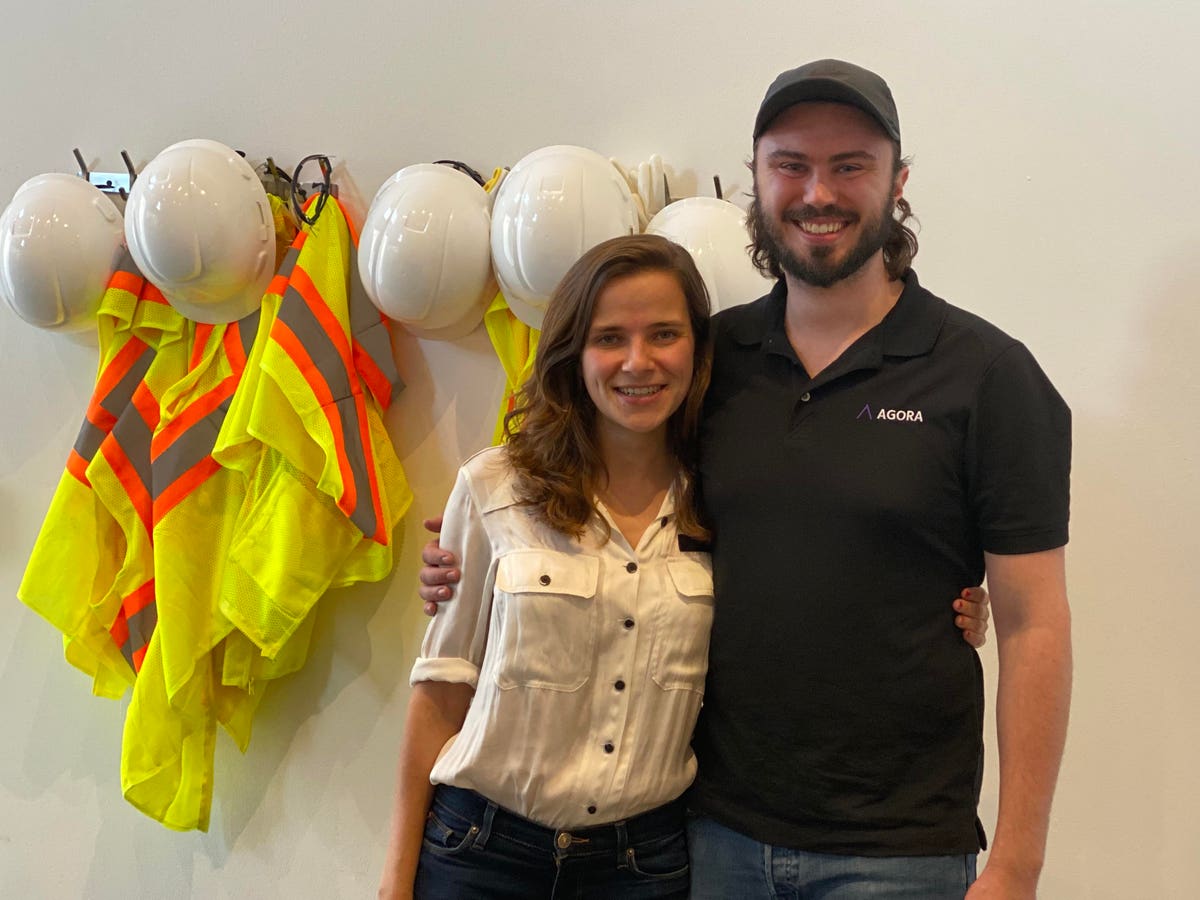
The product reached the market in March 2020, a piquant moment to sell change to businesses already coping with a pandemic. Yet the first hundred customers arrived within roughly a year and a half. Electrical contractors referred contractors in adjacent trades. Agora raised $7 million in a 2020 Series A, $33 million in a 2021 Series B and $39 million in a 2022 Series C. That year it became Kojo, a name chosen for its echo of continuous improvement in Japanese manufacturing and its relative freedom from a crowd of other Agoras.
There were less numerical battles too. As a young woman entering a male-dominated industry, Davidson sometimes walked into a meeting and was asked whether she was the CEO's assistant or there to take notes. She chose to use the insult as fuel. The company reported that its tools could reduce office data entry, cut the time foremen spent managing materials and help contractors compare pricing. More interesting than any single saving was the change in status: procurement moved from a back-office nuisance to something a contractor could manage deliberately.
The baton and the wider map
In September 2025, electrical distributor Wesco invested another $10 million. Kojo's total reported funding reached $94 million. By the following January, Davidson said the platform was handling $5 billion in orders a year and had touched hundreds of thousands of projects. Then she published her last message as CEO.
After eight years, she moved into the executive-chair role and handed day-to-day leadership to co-founder Micah Rodman. Founder successions are often dressed as either coronations or crises. This one was presented as continuity: a colleague who had helped build the company was taking the baton while the founder stayed close. Davidson's title changed; the subject of her curiosity widened.
Her personal portfolio now includes investments across artificial intelligence, construction and business software, among them Anthropic, Wispr Flow, PermitFlow, Bedrock Robotics and Culdesac. She sits on the board of Orascom Development Holding, linking her long interest in cities to an enterprise that develops them. Her site reduces the agenda to three brisk lines: building and founders; cities and construction; California.
The California line acquired institutional form in 2026. Davidson began leading California Renewal, a group designed to be a lasting pro-growth and centrist presence in state politics. Its stated concerns include affordability, education, government spending and the difficulty of building. Prominent technology investors pledged support, and the organization discussed raising $100 million in its first year, with a much larger long-term ambition. Davidson describes it as permanent rather than election-season machinery.
Politics does not offer the clean feedback of a purchase order. Its customers disagree about the product; its measurements become arguments; its job site is 39 million people large. Davidson is entering as an outsider again, this time into a field where everyone claims to know the real bottleneck. Her politics will be contested, as politics ought to be. The revealing continuity is methodological. Define the failure. Ask who lives with it. Build an institution instead of a slogan. Measure what survives contact with Tuesday.
“Tikkun Olam. Literally, it means ‘fixing the world.’ That's always been the guiding philosophy for me.”Maria Davidson on the advice she carries
What the doughnuts knew
Davidson traces her governing idea to Tikkun Olam, the Jewish concept she translates as fixing the world and leaving it better than one found it. Grand language can embarrass practical people. Her career makes it smaller and therefore more demanding. Fixing the world begins with admitting that the email campaign failed. It asks for six months on sites where one knows no one. It narrows the enormous problem of cities into the exact moment a foreman cannot find a pallet.
The childhood astronaut did not leave Earth. She developed a taste for unexplored terrain anyway. Each border crossing taught her how much of authority is costume; each institution taught her some machinery worth keeping. Oxford supplied argument, Goldman supplied finance, 8VC supplied a builder's license, and construction supplied the corrective of reality.
There is wit in the result. A philosopher went looking for the future and found it buried under duplicate invoices. An investor discovered that the decisive meeting sometimes requires pepperoni. The outsider earned a home in construction by listening long enough to stop being one.
Now Davidson has a broader map on her desk. The risks are broader too. But the durable part of her story is not a number, a funding round or even a title. It is the willingness to look faintly ridiculous while asking an obvious question: why, exactly, are we still doing it this way?