The watches went first. Before automotiveMastermind became a business that an international information company wanted to buy, Marco Schnabl sold his watch collection. He sold his bicycle, too. He cooked at home and took in housemates so he could keep paying for life in Manhattan. The future had a promising idea attached to it; the landlord required something more immediately negotiable.
Schnabl’s telling of the episode includes a dismissal from his dealership job at 30 and a choice between finding another position and starting a company. His colleague Johannes Gnauck encouraged the leap. To keep themselves going, they sold cars online during the day. Entrepreneurship, in this version, involved making enough money to remain available for entrepreneurship.
He is careful to include luck in the happy ending. There is humor, too. Explaining the name automotiveMastermind, he jokes: “We love long names in Germany, so we took an extra long name for our business.” The name required endurance. So did the beginning.
An education in the showroom
Cars had occupied a place in Schnabl’s life long before they became the means of paying his rent. His father worked in the industry for more than 40 years. At five, Schnabl went with him to his first car show. He grew up near Cologne, completed a dual study program with Daimler, and pursued a career in an industry that was already familiar territory.
He joined Mercedes-Benz in 2003, working in Germany and later at its flagship New York location. He holds a business administration degree from the Berlin School of Economics. His route through automotive work included the factory, service and dealership sales. By his own account, he arrived in America in 2005. He had crossed an ocean to work in the business he knew.
Manhattan offered a particular education. Selling there brought encounters with people from widely different backgrounds. Schnabl’s Mercedes-Benz career included sales consultant, sales manager and strategic retail development responsibilities. Those jobs put him close to the daily mechanics of a transaction: understanding a customer, finding relevant information, preparing an offer and following through.
The paperwork was less appealing. As a sales consultant, he spent time working through customer information, including vehicle history, discounts and credit details. The knowledge needed for a useful conversation existed, but gathering it took effort. Schnabl and Gnauck began thinking about how software might make that preparation easier. Their business opportunity lay inside a task they had already performed.
Six dealers and a diagram
In 2012, the pair took their idea to software engineer Mohammed Jaleel, known as MJ. He remembered the starting material as “a PDF with a diagram drawn on it.” The two salesmen had experience of the problem; someone still had to build a product. It was a small beginning for a company with such an expansive name.
Jaleel worked from India while the founders were in New York. They collaborated over Skype, dealing with the time difference and incorporating feedback from dealers. Engineering, planning and design overlapped. In 2013, the platform launched with six dealer partners. By 2016, the company had brought on more than 800 dealers nationwide.
The product’s purpose was practical. It used information about customers to help dealerships judge who might be approaching a purchase, then support a more relevant approach. In a showroom, a name in a database is only the beginning. The useful questions concern timing, circumstances and what somebody might actually want.
Schnabl later described a preference for seeing the customer as a person across the entire market, rather than only through a sales category such as loyalty, service or conquest. His account of the technology kept returning to identification, understanding and personalized communication. The machinery could be complicated. The desired encounter was recognizably human.
When the question became a business
By November 2016, the company was ready for its first institutional investment. JMI Equity supplied growth capital. The founders remained in control, with distinct responsibilities: Schnabl concentrated on sales, service and operations; Gnauck handled product development, technology and the product roadmap. Their partnership had a division of labor that gave each side of the business an owner.
The announcement described plans for product expansion and more customer support. Schnabl said the company had tripled its dealer partners over the previous year while maintaining 99 percent retention. Those were company-reported figures, but they explain the commercial pitch at that moment: dealers were signing up, and existing customers were staying.
Then the growth became visible outside the dealership trade. In August 2017, automotiveMastermind placed seventh on the Inc. 5000 list. Its Behavior Prediction Score ranked customers from zero to 100 to indicate how close they were to purchasing. The company was selling a way to prioritize attention, one of the few things a busy sales team cannot simply order more of.
automotiveMastermind’s position on the annual ranking of fast-growing private companies.
In September 2017, IHS Markit acquired approximately 78 percent of the business for about $392 million. Additional consideration depended on operating performance, and the remaining stake was to be acquired over the following five years. At the time, the software served more than 1,000 dealers across 15 automotive brands. The customer question had acquired a substantial corporate price.
The fit was understandable. IHS Markit already owned automotive information assets, including CARFAX. automotiveMastermind brought a way to apply information closer to the sale. Schnabl’s early frustration with assembling customer details had led to software that could sit within a much larger information business. The transaction changed its resources and ownership; its work remained rooted in dealership decisions.
Schnabl also argued that the product had to fit the different people inside a dealership. A sales consultant and a general manager needed different views of the work. Customer outreach had to be relevant; management needed to see whether the investment produced results. He spoke about dealer support as a continuing relationship, including consultation about what a particular store might need to change.
That insistence matters to the story that followed. Even while selling software, Schnabl was describing an obligation to help a dealership put it to work. A subscription alone could hardly answer every question from the sales floor.
The next lesson takes two minutes
Schnabl stayed through the growth and integration that followed. In February 2022, automotiveMastermind announced that chief operating officer Matt Leone would succeed him as CEO on April 1. Leone had joined in 2020 and had been preparing for the role. Schnabl’s next remit involved leadership counsel and strategic partnerships. He left the business in September 2022.
His next venture, RockED, turned toward employee development. As founder and executive chairman, he joined a team led operationally by co-founder and CEO Matthias Stoever. The setting was familiar: dealerships, their staff, and the distance between having information available and knowing how to use it.
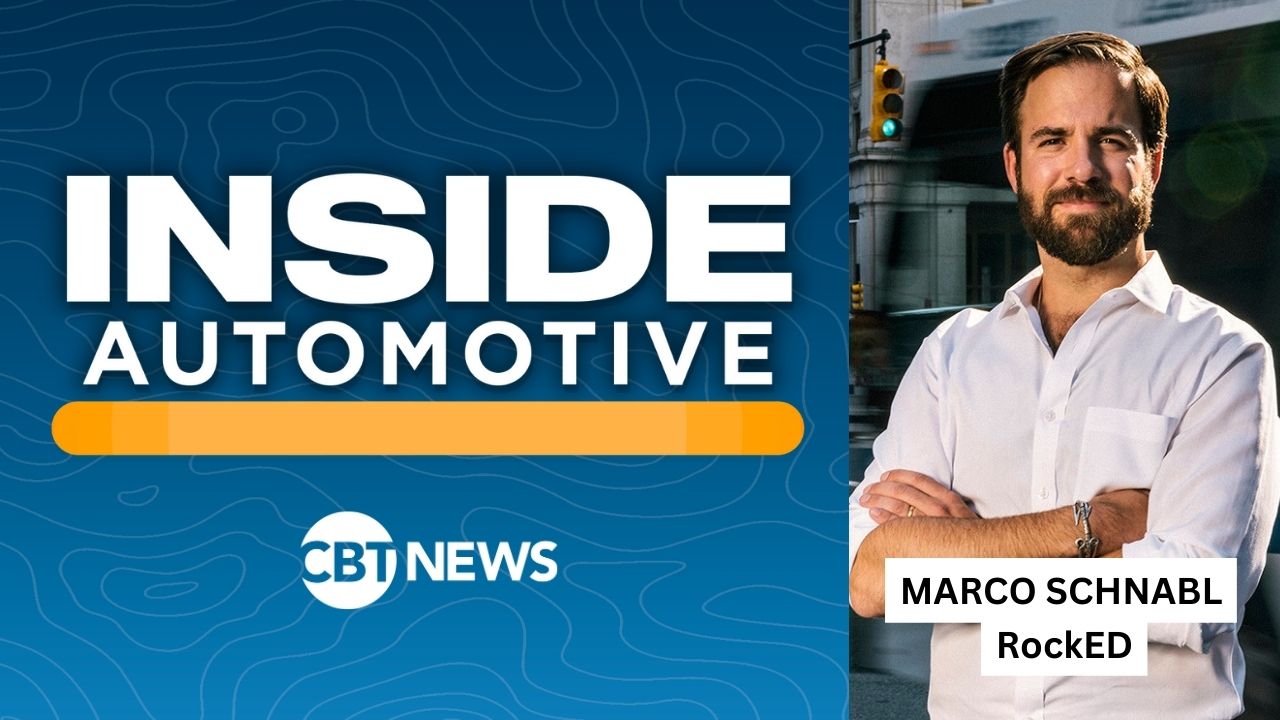
In a 2023 interview, Schnabl discussed short lessons that employees could fit around their work. RockED covered sales, service, leadership and core knowledge, with attention to differences between automotive brands. Two-minute learning offered a deliberately small unit. It could meet an employee in a workday already occupied by customers, vehicles and colleagues.
“they can now learn on the fly.”
Marco Schnabl, discussing RockED, 2023
That idea gives his career an intelligible continuity. automotiveMastermind sought to make a salesperson better informed about the customer. RockED seeks to develop the salesperson, service employee or manager. Both approaches confront the same practical difficulty: useful knowledge must reach a person who has something to do with it. An unread training course has limited conversational skills.
In December 2023, JM Family Enterprises announced an investment and partnership. The plan included combining RockED’s learning tools with JM&A Group’s performance data and industry expertise to create personalized learning paths. In June 2025, RockED announced backing from FM Capital, with expansion, product development and content among the intended uses. The employee’s brief lesson required a growing network behind it.
Back to the person across the desk
The subject matter has continued to change. In August 2025, RockED and Impel publicly launched an automotive AI certification program. It included more than 70 microlearning modules covering concepts, applications and practices for using AI in retail work. Product training for Impel customers had preceded the wider certification. New tools were arriving; employees needed a way to understand them.
automotiveMastermind: buying signals and relevant outreach.
RockED: short lessons, practice and certification.
The shared purpose: make knowledge useful at work.
An editorial reading of Schnabl’s two ventures.
At the June 2026 Automotive Leadership Summit in Washington, Schnabl returned to frontline training while discussing pricing transparency. His emphasis was on the people speaking to customers. Senior leaders might understand an issue, but that understanding still had to reach employees. Software could automate parts of a process; the conversation required preparation of its own.
RockED’s July 2026 announcements took that work into specific operations. A partnership with DriveCentric aimed to connect performance information with relevant training and certification, including visibility for managers. Another named RockED the official industry certification partner for the National Loan Payoff Clearinghouse, powered by EPIC, with education planned around payoff and lien release workflows.
These are revealing places for a former car salesman to spend his attention. A performance gap, a learning path, a customer conversation: each brings the technology back to someone’s working day. Schnabl’s story began with cars and eventually cost him his watches. It has kept returning to the person across the desk, and to the preparation that might make the next exchange go better.