An accounting degree offers many possible destinations. A shift making chicken fingers at Sesame Place is among the less advertised ones. Marc Swanson remembers helping wherever the Pennsylvania park needed him, including lifeguarding and working the entrance. He was its finance executive. On a short-staffed day, the distinction had limited practical value. Someone still had to help run the park.
“You would find me making chicken fingers,” he recalled. It is a small detail, with more explanatory power than a polished corporate biography. Long before Swanson became chief executive of the company behind SeaWorld and Busch Gardens, he had encountered the business at the point where a financial plan becomes somebody’s working day.
That encounter gives his career its shape. Swanson is a certified public accountant who reached the top through a succession of internal jobs. His story involves a balance sheet, a children’s television neighborhood and a company that eventually needed a broader name. The chicken fingers make a useful opening credit.
A finance job with an unusual view
Early in his career, Swanson worked as a financial analyst in Chicago’s insurance industry. He took evening classes at DePaul University’s Kellstadt Graduate School of Business, completing his MBA in 1999. He already had an accounting degree from Purdue. The next move took that preparation into Anheuser-Busch, whose businesses then included theme parks.
The attraction was straightforward: he thought beer and theme parks sounded more exciting than insurance. There is something pleasantly unceremonious about that explanation. A career decision can involve qualifications, opportunity and a simple preference about where one would like to spend the working week.
His advice to others is similarly practical: “be willing to try different things throughout your career.” He has said he did not necessarily know he would become a CEO. The early move reads as curiosity about another business, rather than the first installment of a carefully announced destiny.
By 2004 he was vice president of finance at Sesame Place, a position he held through 2008. This was a business organized around families and characters familiar from television. Its financial officer could also find himself at the entrance. In that setting, an executive’s understanding of operations had a chance to become quite literal.
A budget becomes real when someone has to staff the gate.
An observation on Swanson’s park-floor experience
The years inside the numbers
In 2008 Swanson moved to Orlando as the theme park division relocated its headquarters. He became corporate controller of Busch Entertainment Corporation, then held the performance management and corporate controller position at SeaWorld Parks & Entertainment. Chief accounting officer followed in 2012. The sequence sounds orderly on paper; each step widened the part of the company he was responsible for understanding.
Accounting work requires a particular kind of attention. A company may sell an experience, but it must still account for what it earns and spends. In a park business, those decisions eventually reach things visitors can see: an attraction, an operating schedule, a meal. Financial knowledge is useful precisely because the consequences extend beyond the finance office.
Swanson also took temporary assignments with larger responsibilities. He served as interim CFO in 2015 and became permanent CFO and treasurer in August 2017. An interim CEO assignment followed from September to November 2019. In April 2020, he returned to the interim chief executive role.
On May 6, 2021, the board appointed him permanent CEO. Elizabeth Castro Gulacsy, who had been interim CFO and treasurer, received those positions permanently alongside him. Chairman Scott Ross’s announcement emphasized the board’s experience working with the pair in their temporary roles. The appointment followed a period of doing the work under provisional titles.
His first full calendar year as permanent CEO produced a clear financial marker. In 2022, the company reported $1.7312 billion in revenue and $291.2 million in net income, both company records at the time. Attendance reached 21.9 million visits. Revenue exceeded 2019’s level even though attendance remained below it.
That combination matters more than a celebratory adjective. A park company’s results depend on how many guests arrive and how much revenue each visit produces. More people through the entrance is one route to growth. The 2022 figures showed why management also paid attention to what happened after admission.
Bar lengths show the size of each change on a 0-25% scale; labels show direction. Company-wide figures.
Back on Sesame Street
One of the more personal connections in Swanson’s expansion plans came with Sesame Place San Diego. Ahead of its March 26, 2022 opening, he specifically recalled having worked at the original Pennsylvania park. A brand that had occupied an earlier chapter of his career was acquiring another address while he led the parent company.
The new park was the second Sesame Place in the United States and the first on the West Coast. Its offering combined character encounters, rides, water attractions, shows and a parade. A child’s first coaster and a parent’s afternoon itinerary belonged to the same operating plan.
For Swanson, the connection was more substantial than an executive appearing at an opening. He had worked within the original park’s finances and helped with its day-to-day tasks. The California opening returned him to a familiar product at a different level of responsibility. This time, he was speaking for the company bringing it to another coast.
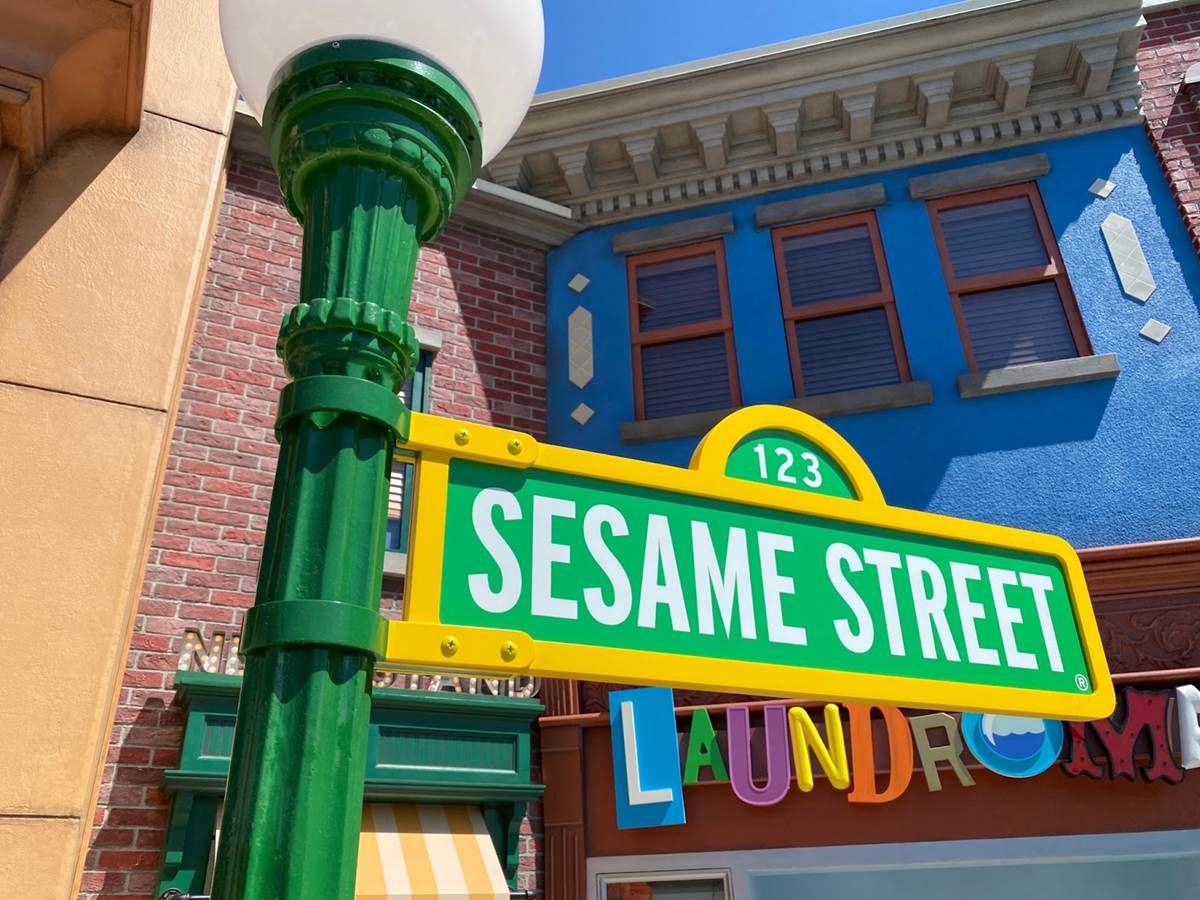
The opening remarks put Swanson alongside SeaWorld San Diego president Jim Lake and Sesame Workshop executive Ed Wells, with Grover and Abby Cadabby in attendance. Executive appearances in this industry come with an unusually cheerful supporting cast. The occasion also showed the partnership required to translate a television world into a place families can walk through.
A larger map, a different name
The next geographic step reached farther. SeaWorld Abu Dhabi opened to the public on May 23, 2023, following a collaboration with Miral on Yas Island. It was the first SeaWorld outside the United States. The company’s reach now included a licensed international park as well as its American properties.
The distinction is useful. An international brand can grow through a partner’s development rather than owning every park itself. The Abu Dhabi project brought SeaWorld into a destination already being developed around major visitor attractions. It expanded the map of the business Swanson led without making every location an identical corporate undertaking.
The physical format differed, too. Miral described eight themed realms across five indoor levels, covering approximately 183,000 square meters. The design brought different ocean environments into one building. For a company associated with outdoor American parks, an indoor destination on Yas Island supplied a different setting for a familiar name.
In February 2024, the parent company became United Parks & Resorts. Its stock symbol changed from SEAS to PRKS. SeaWorld remained a park brand alongside Busch Gardens, Discovery Cove, Sesame Place, Aquatica, Adventure Island and Water Country USA. The corporate name now described the collection more broadly.
Swanson’s explanation centered on that variety. His career had already crossed several parts of it: children’s entertainment in Pennsylvania, corporate finance in Orlando and responsibility for a portfolio extending overseas. The new name made that range more visible to anyone whose knowledge of the business stopped at SeaWorld.
The return visit is the test
A longer career also supplies less comfortable numbers. Fiscal 2025 revenue fell 3.6% from the previous year, and attendance declined 1.8% to 21.2 million guests. Net income was $168.4 million. Swanson acknowledged the shortfall and said cost management should have been better. He pointed to spending on attractions, events, food, retail and marketing as part of the response.
The first half of 2026 remained difficult. United Parks reported about 9.3 million guests and revenue of $761.6 million, with attendance down roughly 350,000 visits. The company attributed the attendance decline principally to weather, reduced international visitation and the timing of Easter. Higher revenue per guest partly offset the decline in visitors.
These results put a practical test in front of a leader trained in finance. Spending inside the park can help. It still leaves the work of persuading people to come through the entrance. Weather and travel patterns complicate that effort; the operating choices remain management’s responsibility.
In September 2026, Kyle Miller became president and Scott Maupin became chief parks operating officer, with Swanson continuing as CEO. Miller had begun his company career in 1995. In welcoming his promotion, Swanson emphasized the operating knowledge built over those decades. It was a recognizable theme from his own route to leadership: experience inside the parks has value at the top.
Swanson has said he enjoys seeing employees who began at a park while in high school progress into leadership. He is also a father who likes seeing families enjoy their vacations. Those observations bring the job back to human scale. A company can report millions of visits; each visiting family experiences one day at a time.
The accountant’s work and the park employee’s work meet there. A plan has to make financial sense, and somebody has to deliver it at the entrance, the attraction and the food counter. Swanson has worked close enough to those places to remember the tasks. A career that reached the CEO’s office still contains a shift making lunch.