Phil Green had 161 pages of employee comments to read. Frost had conducted its first employee survey, and the open-ended responses had produced more than 1,200 remarks. They went to the chief executive. He read every word. For a banker accustomed to pages of figures, this was a different sort of accounting: the institution’s employees describing what it felt like to work there.
The exercise had consequences. Frost increased wages, added vacation days and extended parental leave. It is a useful place to begin with Green, because “culture” can be an exceptionally comfortable word in an executive’s vocabulary. It becomes less comfortable when somebody hands over 161 pages describing where the experience falls short.
Green had also created a senior role for culture and people development, appointing longtime colleague Candace Wolfshohl. The point was to give the subject an owner and a place in management. Reading the comments himself supplied something else: a chief executive with fewer excuses for being surprised.
Employee comments read by Green after Frost’s first employee survey, described in 2018.
The long way to the corner office
Green’s banking career began in July 1980. He had graduated with honors from the University of Texas at Austin in 1977 with a degree in accounting, then spent three years at Ernst & Ernst. He entered Frost through the financial division. Fifteen years later, he became chief financial officer.
The CFO job lasted twenty years. In 2015 he became president of Cullen/Frost; in 2016 he succeeded Dick Evans as chairman and CEO. The distance between joining the company and leading it was thirty-six years. That is a considerable apprenticeship, even by the standards of a profession that appreciates a long maturity.
It also changes the meaning of an executive’s promise to preserve a company’s character. Green had worked inside this one through multiple chapters of Texas banking. He knew its people and its operating habits before he acquired the authority to change them. His first earnings call as CEO emphasized continuity with the bank’s existing culture.
Continuity is often presented as a temperament. Here it was also a decision made in public, at a difficult moment. The oil industry was weak when Green took over, and energy lending was an immediate concern. His opening message offered analysts something more durable than a promise to remodel the place.
The price of a square deal
In 2017, Frost increased the interest it paid depositors. Investors worried about the cost, and its shares fell 5% on the day the decision became public. Green described the purpose as “providing a square deal” to existing customers. The bank was paying more for money even though its balance sheet did not seem to demand it.
That decision makes his accountancy background particularly interesting. A former CFO would hardly need reminding that a higher deposit rate carries an expense. The argument concerned which period, and which relationship, should count when judging the expense. Keeping customers’ confidence has a value that does not announce itself neatly in a single quarter.
“Our culture is our value proposition.”
Phil Green
There is a temptation to make this sound sentimental. A bank, however, has commercial reasons to care whether people trust it. Customers can move their money. Businesses can take their next loan elsewhere. A relationship becomes useful to an institution when it survives the moment at which somebody has an incentive to leave.
Green’s public language makes room for that longer horizon. It also invites scrutiny. Once culture is offered as a reason for a decision, employees and customers can reasonably ask whether the next decision fits. The phrase becomes an obligation, with a larger audience than the people attending an earnings call.
A branch within reach
Frost’s expansion program put that obligation into new buildings. Announced in 2018, it brought additional locations to Houston and Dallas, with Austin joining the expansion plan in 2023. The strategy required the bank to recruit people and establish relationships in places where its presence was still growing.
Green had been explaining the appeal of proximity for years. In Houston, he pointed out that people using digital banking still wanted a branch nearby when they needed help. That distinction is easy to recognize. A customer can enjoy doing routine banking on a phone and still prefer a conversation when the problem becomes complicated.
In a 2023 interview about why people stay with banks, Green suggested another obstacle to switching: customers may simply not know what another institution offers. His opportunity therefore involves introducing Frost, explaining its service and making the experience tangible. A financial center gives that introduction an address.
so far in 2026
June 2025 to June 2026
Household growth covers the bank as a whole; it is not a measure of new-branch performance alone.
By February 2026, Green was defending this approach amid renewed Texas bank dealmaking. Frost planned roughly fifteen openings for the year. He said it had “zero interest” in an acquisition. Consolidation could nevertheless help it: change at another bank gives customers a reason to consider leaving.
His comment about rivals contained a little competitive steel: “I just want to make sure they’re not successful with my customers.” The banker who talks about grace also intends to keep the business. Courtesy evidently leaves room for a firmly closed gate.
A guitar in the family business
There is another Green biography running alongside the banking one. He grew up in Victoria, Texas, and made music with family. His daughter Laura Srp remembered hearing him sing with two of his brothers at Christmas. In 2011, he released a contemporary Christian album recorded in Nashville, Let Me Be Faithful. Laura contributed backing vocals.
Father and daughter later took their music into local venues, with Green on guitar. Their repertoire drew inspiration from the Civil Wars. Music had already been part of their life at First Baptist Church in Boerne, where another of Green’s children, Cody, played drums.
At the San Antonio Chamber’s December 2022 gala, Laura performed the national anthem accompanied by her father. The evening’s business program thus included a rather literal family appearance. Green, the Chamber’s 2022 board chair, was participating in the civic occasion as both executive and musician.
It is an appealing complication in a life that could otherwise disappear into titles. Accounting, executive management and musical accompaniment ask different things of a person. The guitar deserves its place in the portrait without being pressed into service as a management theory. Sometimes a banker also likes to play.
San Antonio beyond the bank
Green’s civic commitments reach into education, research and the performing arts. He has served on the Tobin Center’s board and as its chair. He is also vice chairman of Southwest Research Institute’s board. Those responsibilities locate him within the institutions through which San Antonio teaches, investigates and entertains.
His university ties run in two directions. At the University of Texas, he serves on the McCombs advisory council and the UT System Chancellor’s Council executive committee. In San Antonio, he has participated in UTSA’s campaign leadership. Frost committed $1 million to UTSA’s School of Data Science in 2021, supporting an endowment for research-related activities.
That gift continued a relationship between bank and university extending back to 1969. Green’s part belongs within that longer history. Institutions accumulate obligations as well as assets; a successor inherits relationships that began before his own appointment. Continuing them is a form of work, even when it lacks the drama of a new announcement.
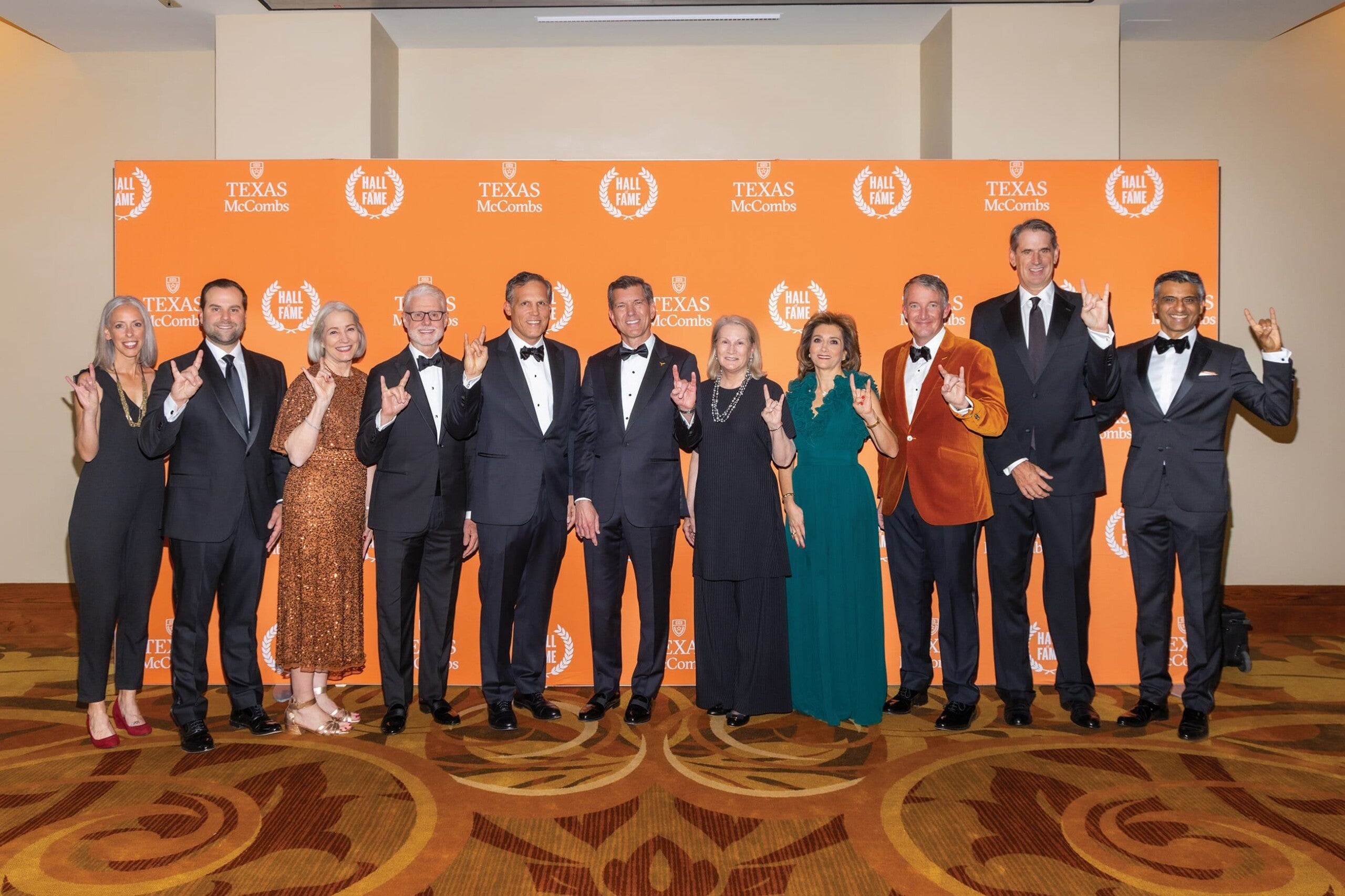
In November 2023, McCombs inducted Green into its Hall of Fame. His fellow honorees included Connie Duckworth, Bill Gurley, Kyle Hranicky and Paul Knopp. For the accounting graduate of 1977, the recognition connected the early credential with a career spent largely at one Texas institution.
He also chaired the 2024 United Way campaign in San Antonio and Bexar County. In April 2025, he reported that it had raised more than $46 million. His explanation returned to service, describing it as a defining strength of the city. The amount belonged to a community effort; his role was to help lead it.
The book on the shelf, the next report
Asked which book had helped him most as CEO, Green has described choosing Philip Yancey’s What’s So Amazing About Grace? He has given copies to employees, friends and business associates. He also keeps it visible on the bookshelf behind him during television interviews. The placement, he has said, is deliberate.
That detail gives a specific meaning to a word he uses often. Grace belongs to his stated understanding of how people should treat one another. It does not settle every practical banking question. It does explain something about the standard he wants associated with his name and with Frost.
The practical questions keep arriving. Frost returned to mortgage lending in 2023 after more than two decades away, including products designed for people with low to moderate incomes. Green presented the return as an effort to make homeownership more accessible through a lending experience consistent with the bank’s service approach.
On July 30, 2026, the company reported $170.4 million in second-quarter net income available to common shareholders. Green described continued growth in deposits and loans. The next earnings conversation is scheduled for October 29, with CFO Dan Geddes and investor relations director A.B. Mendez joining him.
After forty-six years at Frost, Green is still explaining how the choices add up. New branches need customers. Employees need reasons to stay. A promise about service needs somebody willing to answer for it. His career has given him a long time to learn the institution. Leading it means continuing to listen.