A flash drive is an unpromising villain. It has no accent, no underground headquarters, and usually no ambition beyond being found at the bottom of a desk drawer. Yet when Manmeet Singh explained the problem behind Dataguise, he pointed to exactly this modest object: a way for someone already inside a company to leave with an extraordinary amount of its information.
That was the uncomfortable territory he chose for his business. Companies could spend considerable effort watching the perimeter while remaining uncertain about the contents of their own systems. Singh co-founded Dataguise with Adrian Booth in 2007. Finding sensitive data, then deciding how to protect it, became the company’s work.
Today he leads WMC Global under the name Manmeet Bhasin. The setting has shifted toward mobile threats, malicious messages and the infrastructure behind them. Across the two chapters runs a recognizable concern: useful action depends on seeing how information fits together. The interesting part of his career is how many different kinds of work that concern has required.
First, find the people
Singh’s earlier career took him through Oracle, HCL, Zeneb and Miri. These were useful vantage points for someone interested in the machinery beneath enterprise software. His later professional biography also describes work consolidating data at Nine West during its acquisitions, and using WebMethods to bring information together across the business.
Consider what that kind of assignment involves. An acquisition may be announced with one company name beside another, but the information underneath those names does not obligingly arrange itself. Different systems contain different histories. Making them usable together requires attention to the details that a celebratory announcement can comfortably omit.
At Dataguise, a similarly practical difficulty arrived in human form. Singh needed specialists who understood both databases and security. He searched through existing contacts, business cards and Rolodexes, then persuaded experienced people to leave established employers. The founders initially financed the business themselves.
“We put our own money into it”
Manmeet Singh, recalling Dataguise’s beginnings, 2011
A Rolodex is an amusing prop in a story about data technology. It is also a reminder that a technical company begins with conversations. Someone has to decide that the problem is worth several years of work. Someone else must believe that the person making the call can turn the idea into a business.
Singh was learning to assemble an organization around expertise that crossed familiar boundaries. That experience would become relevant again when his career moved beyond running the company he had founded.
The data gets a bigger house
By September 2013, Dataguise had announced a $13 million Series B led by Toba Capital, with additional investment from an unnamed electronics conglomerate’s investment arm. The intended spending covered global sales, marketing, channels, support and continued development of the DgSecure product suite. Distribution occupied a substantial place beside engineering.
The company was following enterprise information into Hadoop, the technology businesses used to store and process large collections of data. Dataguise’s offering included contextual discovery, selective encryption and masking that remained consistent across clusters. Those details mattered because information still needed to be useful after protective measures were applied.
Capital for DgSecure development, global sales, marketing, channels and support.
In a 2013 discussion of the business, Singh put the change succinctly: “The security philosophy is changing”. His focus included helping organizations take Hadoop work from experimentation into production. A sandbox can tolerate a degree of improvisation; a system carrying a business’s daily responsibilities demands rather more manners.
By 2015, Dataguise had introduced DgSecure for NoSQL at the Strata + Hadoop conference. Its software combined discovery, masking, encryption and risk assessment across big data environments. The product’s expanding vocabulary reflected the variety of places customers were choosing to put their information.
Singh’s ambition was explicit in 2014: he wanted Dataguise to become closely identified with protecting big data. The roadmap included both on-premises and cloud systems, along with mobile data security. That last interest looks particularly relevant from the vantage point of his current job.
- 01FindLocate sensitive information
- 02UnderstandClassify what needs attention
- 03ProtectApply masking or encryption
Thirteen years, then a different name
On November 10, 2020, PKWARE announced that it had acquired Dataguise. Singh had taken the company through thirteen years of development. In his statement about the sale, he emphasized the team, the products and the customers built along the way.
The combination had a straightforward technical logic. Dataguise brought the ability to discover sensitive information across varied systems. PKWARE brought automated protection and remediation capabilities. Together, the businesses served more than 1,000 customers worldwide. The announcement also said Dataguise’s offices in the United States, India, Europe and Canada would continue operating.
There is a useful distinction between starting a company and giving its work a continuing home. An acquisition changes who owns the business and how decisions are made. It can also put a specialist capability inside a broader set of tools, where customers can use it alongside functions they already need.
For Singh, the sale closed the founding chapter without ending his involvement in enterprise technology. His subsequent biography describes advising Thompson Street Partners on security strategy and potential acquisitions. Experience accumulated on one side of a transaction could now inform judgments on the other.
A seat on the other side of the table
Singh’s venture work includes founding and managing PGV Fund, which focuses on enterprise technologies including artificial intelligence and machine learning. PGV’s stated approach combines capital with technical and market knowledge, helping founders move toward customer deployment.
Across Dataguise’s development, Singh raised more than $50 million in capital. The $13 million Series B was one part of that longer financing history. Running the business gave him experience asking investors to support a company, explaining its technical proposition and planning its growth. Investing offered a chance to apply that experience while evaluating someone else’s plans.
That approach makes sense in the context of his operating history. Enterprise products need buyers, distribution and implementation as well as a technical argument. The spending priorities in Dataguise’s 2013 round had already made those needs visible. A useful product still needs a route into the organizations it is intended to help.
PGV’s team brings another familiar name into view: Herb Madan, whose investment history includes Dataguise. Paul Sethi is also listed, with experience as both an investor and a company operator. These connections give the investing chapter continuity with the business-building chapter rather than the appearance of a sudden change of subject.
Singh’s professional history also includes an advisory-board role at Trajectory Alpha Acquisition Corporation. Founding, advising and investing involve different responsibilities, but all ask for a judgment about what a company can become and what it will take to get there.
The old colleague and the new threat
WMC Global’s April 2026 announcement introduced Singh as CEO alongside Subra Ramesh as CTO. They had worked together at Dataguise. The reunion is a telling detail: the next company brought a new technical setting and a colleague with shared experience of building the previous product.
The announcement accompanied WMC Insight+, a platform designed to connect intelligence about phishing URLs, phishing kits, malicious phone numbers and compromised identities. It also described workflows for taking down or disrupting malicious resources. Trajectory Capital supplied investment alongside the leadership additions.
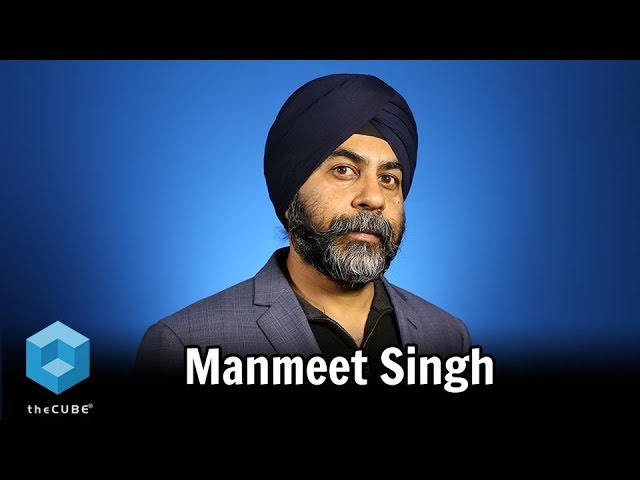
Singh has described moving WMC Global from a business centered on services toward a product platform using AI. His priorities include automating analysis, connecting signals across campaigns and making it easier for customers to investigate and act. These are his stated plans for the business, with execution still the relevant test.
The connection with Dataguise is worth drawing carefully. The products address different problems. One searched enterprise repositories for sensitive information; the other connects evidence about mobile threats. In both, the value Singh describes comes from organizing scattered information so that a customer can do something useful with it.
A suspicious URL, considered alone, is one clue. Its relationship with a phone number, a kit or another campaign can give an investigator a different picture. The business challenge is to make that picture usable without requiring every customer to reconstruct it by hand.
A different kind of delivery
There is another organization in Singh’s biography with a much more tangible distribution system: a food truck. He is a co-founder of 5SikhSeva, a Fremont nonprofit providing free meals. Public nonprofit filings list him as president, alongside Herbert Madan as vice president and Simone Madan as secretary.
By February 2023, the organization had served more than 20,000 meals across communities. Its name refers to the five rivers of Punjab and the Sikh principle of selfless service. Chef Rajinder Singh was selected to drive the truck and prepare fresh meals as the organization developed its work.
The charity’s 2025 filing records $98,964 in revenue and $111,214 in expenses, with no compensation reported for Singh’s role as president. Those figures describe a continuing operation with bills to meet and resources to organize. The food truck is a recurring commitment, supported by an organization whose work extends beyond its founders’ first decision to help.
The detail belongs in the story because it changes its scale. Enterprise security concerns systems, organizations and information distributed across countries. A meal reaches one person. Both require arrangements that continue working after the initial idea has attracted attention.
Singh’s career now contains a company sold, an investing chapter, a new executive role and an ongoing place in a local charity. The thread is clearest when the abstractions come down to an action: locate the information, connect the clues, prepare the meal. An idea earns its keep when somebody can use it.