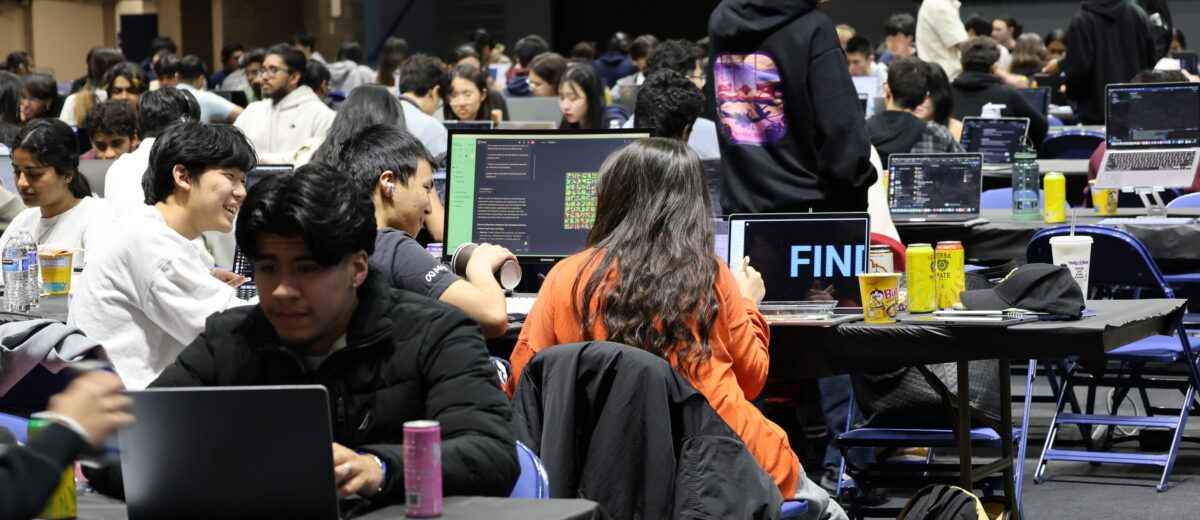
At 2:17 on a Sunday morning, a student in a borrowed hoodie is trying to make a talking houseplant. The soil sensor is sulking. The API is returning something rude. Pizza has become a food group. Somewhere nearby, a volunteer in a Major League Hacking shirt knows where the spare cable is, how judging works and which sponsor might help. This is not chaos exactly. It is chaos with an operating system.
Major League Hacking, or MLH, did not invent the student hackathon. Its sharper insight was that hundreds of locally run “invention marathons” had the same unglamorous problems: finding sponsors, setting rules, managing registration, feeding a surprise crowd, keeping beginners welcome and landing the whole sleep-deprived airplane at demo time. The company built shared rails around those problems while leaving each campus community in charge of the atmosphere.
That arrangement now connects three groups with conveniently different needs. Students want experience they cannot get from another lecture. Organizers want their event to survive contact with reality. Technology companies want young developers to try their products and remember them later. MLH sits in the middle, translating free domains, cloud credits, prizes, coaches and community rituals into something each group values.
A league built from the boring parts
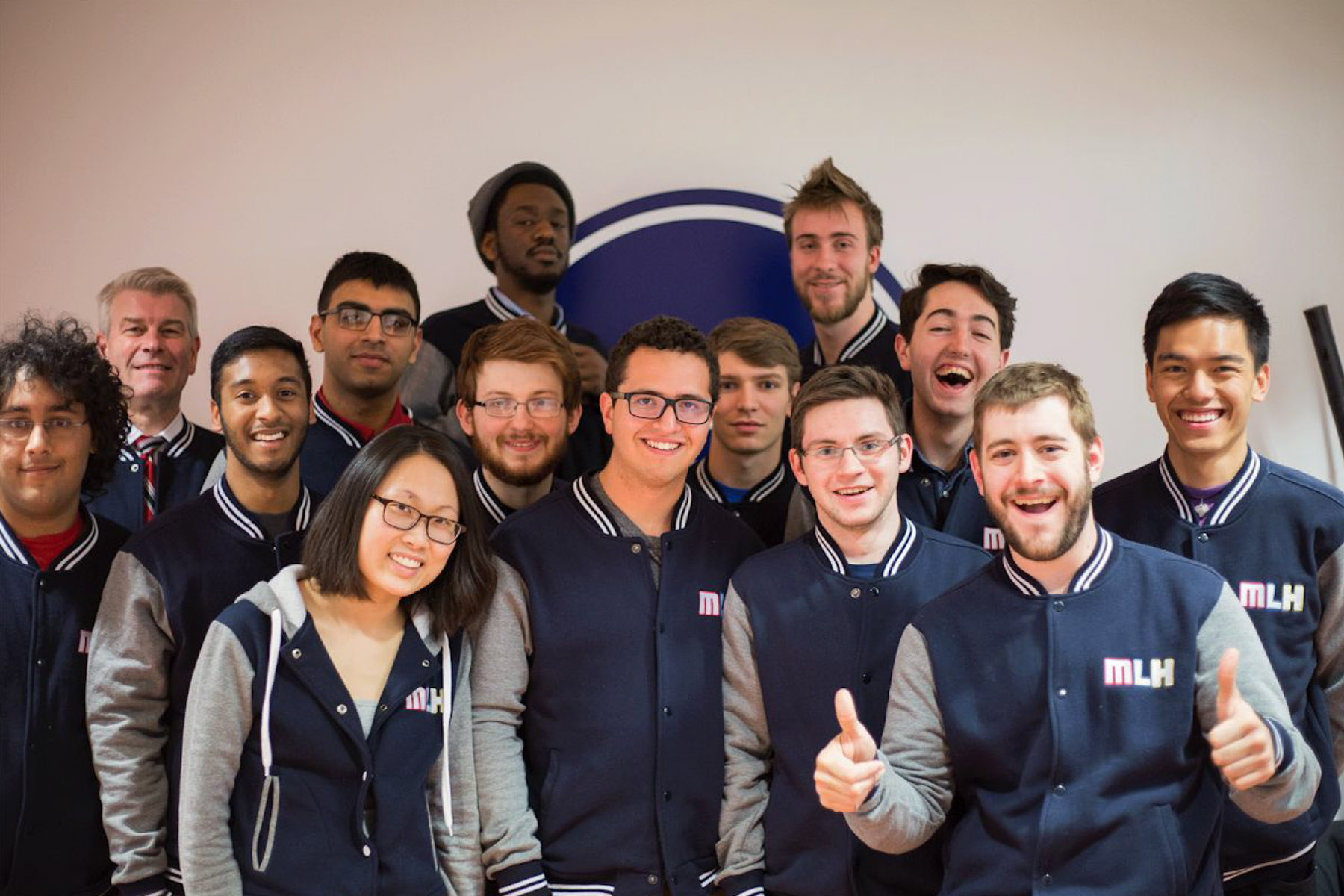
Mike “Swift” Swift came to his first hackathon in 2010 while imagining a future in law. The experience pulled him toward computer science and community. Jonathan Gottfried had worked at Twilio and StartupBus; he registered the MajorLeagueHacking.com domain in 2011 after a bus ride full of builders. The name sat around until 2013, when the pair saw student hackathons multiplying without common infrastructure.
The origin story contains the right amount of duct tape. Swift started visiting organizers full time while Gottfried was still employed. Sometimes Swift slept on the couch in Gottfried’s hotel room. The first product sold to companies was a standardized sponsorship bundle across several events. Instead of negotiating separately with five campuses, a sponsor could buy one package from MLH.
It failed first in a revealing place: not demand, but delivery. Sponsors could pay for five or ten events, yet their developer advocates ran out of travel days before the sponsorship budget ran dry. A package that required a human team at every table was not truly scalable. MLH began turning the activation itself into repeatable infrastructure - challenge categories, software benefits, trained coaches, common messaging and measurement that could work across campuses.
“We had no idea of what the business model would be.”Jonathan Gottfried, recalling MLH’s early days
The customer pays. The community decides if it works.
MLH’s business model is developer marketing with an educational conscience. Partner companies pay for programs that generate awareness, product use, feedback and a credible relationship with early-career developers. Public prices are not posted. In the beginning, Gottfried says the founders asked their network what a package might cost, compared it with individual event sponsorships and proposed the largest number they thought a flagship partner would accept. Pricing science came later.
The deliverable is more concrete than a logo on a lanyard. A database company can offer a challenge that requires teams to build with its service. A cloud provider can supply credits. Developer advocates can teach a workshop; MLH coaches can keep the challenge visible even when the sponsor is not physically present. At the end, the partner can count projects, users and feedback.
One partnership, measured over time
Domain.com is MLH’s neatest public example. Across a five-year partnership, the company says it reached more than 428,000 developers. In the 2023 season, a prize category appeared at 215 events and produced 1,362 submissions, with more than 5,000 developers using Domain.com products. Twilio’s 2023 program followed the same logic: promotion at 170 events, 585 submissions and more than 2,000 developers building with its products.
The company’s alternatives each cover part of this territory. Devpost hosts hackathons and project galleries. HackerEarth, Devfolio and DoraHacks run challenges and event platforms. GitHub Education, Replit and universities compete for learning time. MLH’s difference is the bundle: league standards, trained people on the ground, sponsor distribution, recurring digital programs, fellowships and now a large publishing community.
When the room disappeared
The model faced its clearest threat in 2020. Physical events vanished, and Swift estimated that roughly 40,000 people in the MLH community lost a job or internship that summer. This was the company’s changed-mind moment. If MLH thought of itself as a hackathon operator, the obvious move was to wait for venues to reopen. If its job was to launch developers’ careers, it needed a different format immediately.
With GitHub, it launched the MLH Fellowship: a paid, fully remote, 12-week internship alternative. Small pods of eight to ten fellows worked with mentors on real open source projects. GitHub Education supported 100 people in the first cohort; Meta, DEV and Royal Bank of Canada also joined the coalition. Later tracks expanded toward production engineering, Web3 and work on GitHub’s own codebases.
“We’re not a hackathon company. Our job is to empower new developers and launch their careers.”Mike Swift
That sentence is the strategic center of MLH. A format can disappear. The need underneath it - proof of work, peers, mentors and a first credible line on a résumé - remains. The fellowship also made geography less decisive. A student who could not spend a summer in Silicon Valley could contribute to a production codebase from home and leave with work that a hiring manager could inspect.
What the reader can steal
The copyable part is not “run a hackathon.” It is the architecture. MLH centralizes tasks that improve with repetition and distributes tasks that depend on local trust. The company writes rules, trains coaches, negotiates national partnerships and builds templates. Student organizers recruit their own communities, choose the flavor and create the memory. That keeps a small central organization from pretending it understands every campus better than the people who live there.
Find a behavior people already love. MLH organized an existing movement; it did not manufacture enthusiasm with an ad campaign.
Turn recurring pain into shared infrastructure: rules, budgets, safety, judging, sponsor kits and a person to call.
Partners get more value when users touch the product. Design the campaign around building, not passive impressions.
A participant can return as an organizer, coach or mentor. Users who teach the next cohort become the distribution network.
One tiny detail captures the organizer-first instinct: qualifying member events can access up to $1,000 in emergency help when attendance overshoots the plan and food costs blow through the reserve. It is not glamorous capital. It is the difference between a room full of hungry students remembering the sponsor challenge and remembering that dinner never arrived.
The new campus is always open
MLH acquired the gender-focused hackathon initiative TechTogether in 2022. In February 2026 it made a much larger conceptual move by acquiring DEV, the publishing and discussion network built on the open source Forem platform. MLH now describes the combined organization as the world’s largest developer community: 5 million creators, more than 1,000 annual events and activity across 100 countries.
The fit is surprisingly tidy. A hackathon produces intense, perishable learning. DEV turns an explanation into a persistent, searchable object. A student builds something over a weekend, writes about the mistakes on Monday and gives the next developer a starting point on Tuesday. MLH gains an always-on layer between events; DEV gains a physical and programmatic path from reading to doing.
The league begins
Shared support and sponsor access arrive for a growing circuit of student hackathons.
Seed round and B Corp
MLH announces $1 million in funding and Certified B Corporation status.
Fellowship goes remote
GitHub backs the first 100 fellows as internships and physical events collapse.
TechTogether joins
The gender-focused hackathon organization becomes part of MLH.
DEV joins
The weekend invention marathon gets an always-on publishing companion.
Where the model breaks
This only works under specific conditions. Local organizers must have genuine authority and stamina. Participants need psychological safety, enough time and tools worth trying. Sponsors must tolerate experiments that are weird, unfinished or unrelated to their quarterly message. The center must enforce standards without flattening every event into the same branded conference.
Remove those conditions and the flywheel reverses. Too much sponsor pressure makes students feel like inventory. Weak local leadership turns a weekend into expensive confusion. No path after demo day leaves projects stranded. MLH’s advantage is therefore also its permanent risk: it sells access to a community whose trust cannot be purchased directly.
The founders’ most useful decision was to define the company by the outcome rather than the format. Hackathons were the first classroom. The fellowship became another. DEV is the newest. The product underneath all three is a person crossing the small, consequential distance between “I am learning to code” and “look what I made.” The houseplant may never talk. The developer probably will.