Mike Swift had a practical problem when he left for Rutgers: his teenage landscaping business did not travel well. A lawnmower is useful in Morris Plains, New Jersey. It is less charming as dorm-room furniture. So he opened the university job board and applied to everything, without being precious about the category.
One reply came from a programming job. There was a complication. Swift had never programmed. He said so in the interview, then offered the next best credentials: he worked hard and he would learn. Someone took the chance. For the next two years, he wrote accounting software in PHP.
He kept this technical life strangely quiet. His friends were not programmers, and software had not yet acquired its present cultural wardrobe of hoodies, venture rounds, and breathless launch posts. Then a roommate disclosed the secret. A housemate burst in with an invitation to something called a hackathon. Swift imagined a gathering for elite programmers. His friend insisted beginners would be welcome.
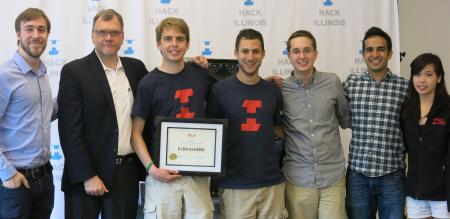
At hackNY in the fall of 2010, Swift spent 24 hours trying to combine the Facebook and Dropbox APIs. The artifact has been overtaken by history. The sensation has not. He found a room of people willing to learn in public, share what they knew, and build before anyone had granted them permission.
“For the first time in my life, I felt challenged, inspired, and found my place of belonging.”Mike Swift, writing about the hacker community
The useful accident
Swift had planned to become a lawyer. The campus job and hackNY redirected him toward computer science, but the deeper change was social. Programming stopped being the solitary thing he hid from friends. It became a reason to make new ones.
He went to every hackathon weekend he could and made a new project at each. Around 2011 and 2012, he also answered questions on Stack Overflow daily. The method was delightfully plain: do visible work, often enough that strangers can see a pattern. His later advice to early-career developers would retain that bias. Build projects that mean something to you. Contribute to open source. Join a community. Give a hiring manager evidence richer than another classroom exercise.
At Rutgers, he helped develop the school's hacking culture. With fellow Rutgers graduates Abe Stanway and Ian Jennings, he co-founded Hacker League, a service for organizing hackathons and displaying what participants made. More than 400 events used it. Intel's Mashery acquired the company in 2013. Swift had also worked as a software engineer and developer advocate, including at SendGrid, learning how technology companies met developers in the wild.
A league with no home team
Major League Hacking began in 2013 with five campus events. Swift called himself the commissioner, a title with just enough theatrical brass to fit an all-night competition fueled by pizza and improbable demos. The first season ranked university teams, but the durable product was not a scoreboard. It was connective tissue.
Campus hackathons were intensely local. They had their own names, rituals, leaders, and occasional chaos. MLH did not arrive with a rename button. HackRU remained HackRU. MLH worked behind the scenes with organizers, helped supply current hardware, brought activities, and created continuity in quality. It introduced shared expectations around conduct, safety, transparent judging, free attendance, and inclusion.
Early on, Swift attended every event MLH supported and sometimes slept at the venue to make sure it went smoothly. This is romantic only from a safe distance and after a shower. It also revealed the scaling problem. A founder could know every organizer when the community was small. A global network required the people already doing good work to receive better tools, training, and responsibility.
The structure became a house of brands. The center offered support while local groups preserved their identities. In Swift's telling, that looseness is both strength and weakness. A vast network can claim impressive reach, yet the member's felt experience remains a small circle of familiar people. He compares MLH to connective tissue rather than a single giant club.
“Events are a catalyst for bringing community together.”Swift on the difference between attendance and belonging
The distinction matters. An event begins at 9 a.m. and ends when someone folds the last table. A community asks people to return, contribute, remember each other's names, and take responsibility for the next gathering. The event is the excuse. Belonging is the compounding asset.
The internship disappears
In 2020, the pandemic erased a summer's worth of internships and first jobs with brutal efficiency. Swift said nearly 20,000 people in MLH's orbit lost jobs or internships, while another 25,000 could not find one because of the disruption. MLH moved its hackathons online, ran technical workshops through the week, and launched the MLH Fellowship as an internship alternative.
The response clarified what the organization had been doing all along. Hackathons were never merely weekend sport. They were compressed rehearsals for professional life: choose a problem, divide the work, learn an unfamiliar tool, make a deadline, explain the result. The Fellowship stretched that rehearsal into a 12-week program and placed more weight on open-source collaboration and production engineering.
Swift also joined The Community Fund as an investment partner that year, looking for community-driven companies in developer tools, impact, education, and the future of work. The move followed his own biography closely. Community, for him, was not a customer-acquisition ornament. It had changed his career. Investing was another attempt to back founders treating it as infrastructure.
When the founders changed chairs
By 2024, longevity brought a less glamorous problem. Swift and co-founder Jonathan Gottfried remained committed to MLH, but each felt worn down by his daily responsibilities. Swift had spent a decade leading engineering, product, and community. Gottfried had handled sales and partnerships. Advisers, time off, reorganizations, and adjusted duties had failed to restore momentum.
During a long walk, Gottfried suggested they switch jobs. They announced the experiment to a team of 75 full-time, part-time, and contract workers. Gottfried took the technical side and helped a delayed data platform ship within two months. Swift entered sales, but fashioned himself as chief seller rather than chief sales manager.
By the following year, MLH said its five largest accounts were each growing at least 25 percent annually. Swift closed a seven-figure, multiyear partnership, the largest agreement in the company's history at the time. Overall bookings rose 115 percent year over year, and the company said it was profitable.
Three ideas worth borrowing
- Before replacing a person, inspect the chair. A different responsibility can recover energy that rest cannot.
- Give local communities tools and standards without confiscating their names.
- Treat participation as a ladder: attend, return, contribute, then lead.
The swap carries a pleasing refusal to worship the founder's original job description. Companies often confuse endurance with holding the same pose. Swift and Gottfried treated their roles as another system that could be tested. The mission stayed put. The operators moved.
The lab buys the library
In February 2026, MLH acquired DEV Community, the online home where millions of software creators publish tutorials, trade experience, and learn in public. Swift's metaphor for the combination is neat: MLH is the lab, the place where people get their hands dirty and build. DEV is the library, where the knowledge is cataloged and shared.
The timing is deliberate. AI tools are lowering the cost of producing software and changing what it means to be a developer. Swift separates writing code from building software. As machines absorb more keystrokes, the scarce abilities move toward choosing a useful problem, communicating clearly, applying taste, specifying the work, and verifying what comes back.
He borrows the language of craftspeople and builders. Some people will still love shaping every joint by hand. Others will use power tools to make the table. Neither identity needs apology. Both need judgment. At the 2026 AI Engineer World's Fair, he pointed toward the “harness” around an agent - the tools, context, and systems governing what it can do - as the consequential layer.
This technological abundance makes his oldest idea more relevant. Cheap output does not manufacture trust. A feed cannot promise that someone will notice when you fail to show up. Swift expects smaller communities, overlapping at their edges, to remain where people find practical help and a durable sense of place.
“Find your tribe, find your people, and then go from there.”Swift's advice for navigating a changing developer world
There is a tidy symmetry to it. Swift entered technology because a friend opened a door to a peculiar room. His career has been an effort to build more doors, then persuade beginners that the room is also theirs. The tools inside keep changing. Facebook and Dropbox APIs gave way to cloud platforms, open-source stacks, and agent harnesses. The invitation remains recognizable: come for the weekend, make something, return if you found your people.