In 1996, engineer Gary Rayner was driving through gridlock in San Bernardino, California, when two men in a pickup rammed his car. A passenger threw a brick. It bounced off the hood and hit the windshield. The truck vanished before Rayner caught its plate. His thought afterward was blunt: if only the car had a video camera. He began building one.
The first ten circuit boards were populated by hand. The prototypes went through ambulances, fire trucks, passenger cars and commercial vehicles; a software bug surfaced during road testing and was fixed. DriveCam was founded in 1998, and its original event recorder arrived the next year. It was pitched as a black box for the road - a witness that could reconstruct the seconds around a crash.
That origin explains Lytx, the company DriveCam became in 2013. It also explains the limitation Lytx had to outgrow. A camera can settle an argument after bent metal. It cannot, by itself, stop a driver from tailgating tomorrow. The valuable move was turning footage into a feedback system.
“The camera creates the evidence. The company was built by deciding what should happen next.”The Lytx thesis, in one sentence
The first product looked backward
DriveCam added desktop review and event scoring in 2002. In 2006 came a driver-coaching model and an online program-management platform. Those changes moved the product from forensic hardware toward enterprise workflow. A sensor triggered an event. Video supplied context. Review separated noise from real risk. A manager could then coach a specific behavior and track whether it changed.
Today, DriveCam units can pair road- and driver-facing video with machine vision and artificial intelligence. The system looks for signals such as phone use, drowsiness, missing seat belts and following too closely. Depending on configuration, an in-cab alert can prompt self-correction; selected events can flow into review and coaching. Lytx also sells on-demand video, fleet tracking, asset trackers, electronic logging, digital vehicle inspections, maintenance and fuel tools.
The company says its database has reached 311 billion miles. That is the defensible asset hiding behind the plastic on the windshield: a long history of commercial-driving events labeled with context. Cameras are increasingly ordinary. Knowing which few seconds deserve a manager's attention - without burying the manager under false alarms - is harder.
The sale begins with suspicion
There is an obvious problem with putting a lens inside somebody's workplace: the worker may reasonably wonder who is watching. Lytx's most revealing customer stories do not skip this discomfort. Paper Transport said drivers were hesitant at first. Acceptance improved when footage exonerated drivers after collisions, and some drivers later initiated coaching themselves.
Orange County, Florida, offers a sharper example. Its 2,200-vehicle government fleet began with a 90-day trial while a driver union objected loudly. The county focused coaching on observable behaviors, including seat belts, following distance and rolling stops. It reported a 90 percent reduction in coachable incidents during the trial, followed by 35 to 40 percent fewer collisions and a 74 percent reduction in total collision costs. The union stopped objecting after seeing the results.
That is what changed minds: not a prettier dashboard, but proof that the footage could protect the person behind the wheel as well as the employer. The model works when the camera is treated as an impartial witness and a teaching tool. It corrodes quickly when managers use it as an always-on disciplinary shortcut.
What did it cost? Lytx makes you ask
Lytx does not publish a standard price card. Buyers request a quote based on vehicles, cameras, service mix and contract terms. The honest cost is larger than a monthly subscription: hardware, installation, cellular connectivity, manager training, driver communication and recurring coaching time all belong in the calculation. A small operator looking for a simple dash cam may find that machinery excessive.
The payoff is also fleet-specific. Waste Connections said its rollout reduced driver and vehicle incidents by 65 percent and returned its investment within six months. Crucially, the company did more than mount devices. It educated managers, trained coaches and communicated the program openly. That labor is part of the product, even when it does not appear on the invoice.
Lytx makes money like a modern industrial software company: deploy connected hardware, then sell recurring services around the data it produces. Direct subscriptions are joined by resellers, insurers, software integrations and hardware partners. The customer base spans trucking, waste, distribution, construction, transit, utilities, government and field services - operations where a collision can injure someone, interrupt service, raise premiums and create a contested claim at once.
Now the dash-cam specialist wants the whole fleet
The competitive map has shifted. Samsara and Motive sell broad operational systems. Netradyne competes in AI video. Geotab has deep telematics and a large marketplace. Verizon Connect, Omnitracs and others crowd the buyer's shortlist. In February 2026, ABI Research ranked Lytx, Samsara, Geotab and Motive as the leading group in commercial video telematics, with Lytx first overall.
Lytx's response is choice. Lytx+ with Geotab combines its video-safety workflow with Geotab's engine data, routing, diagnostics and marketplace through one onboarding, billing and support experience. LytxOne, launched in 2026, is the native all-in-one bet: video safety, vehicle and asset visibility, maintenance, ELD, inspections, fuel-tax reporting and analytics in one platform.
By June, LytxOne had added a natural-language fleet assistant, searches for nearby vehicles, side-by-side trip views and configurable privacy tools. Fleets can disable cameras by schedule or geofence, disable the road camera, or use Risk ID without Recording. Coach Assist, introduced separately, uses generative AI to assemble event context and talking points before a coaching session. The human still owns the conversation, which is where the accountability belongs.
“Safety is core. Data informs. Video transforms.”Lytx's stated company belief
The playbook worth stealing
A fleet manager cannot copy 311 billion miles, but can copy the rollout logic. Start with a defined pilot. Explain what triggers recording, who sees the footage, how long it is kept and what earns discipline. Train managers before judging drivers. Coach a named behavior, not a personality. Share clips of good decisions. Track claims, collisions, exonerations and coaching completion. Expand only if the evidence wins the room.
The conditions for failure are just as concrete. Weak cellular coverage can limit connected features. Inconsistent coaching turns the camera into an expensive archive. Poorly explained inward-facing video can destroy trust. A fleet with little collision exposure may never justify the deployment. And quote-based contracts are a mismatch for buyers who need low-friction, transparent purchasing.
Lytx's history is ultimately a lesson in moving upstream. The original device answered, “What happened?” Review and coaching asked, “What keeps happening?” Machine vision asks, “What is happening now?” The newest platform asks whether safety, maintenance and compliance can share the same operating picture. Each question is more valuable - and more intrusive - than the one before it.
That tension is the business. Fleets do not buy cameras because video is interesting. They buy fewer collisions, cleaner claims and a chance to send drivers home safely. Lytx has spent nearly three decades learning that the lens only opens the door. What happens in the manager's office after the clip arrives decides whether it becomes safety or merely surveillance.
The edge is repetition, not a magic alert
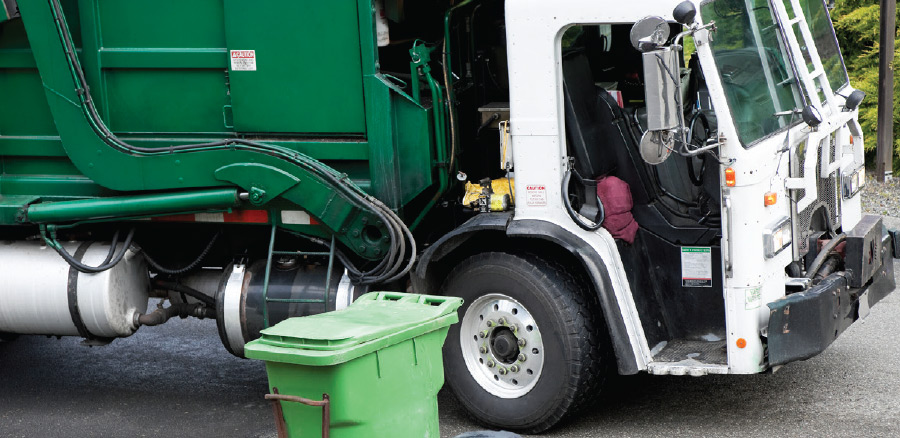
Lytx is strongest when a fleet has the same risky moments again and again: a refuse truck reversing in tight streets, a delivery van rolling through familiar stops, a bus operator fighting fatigue, or a utility crew changing vehicles between shifts. One clip is an anecdote. Thousands of consistently classified events become a pattern. A manager can see whether a problem belongs to one driver, one depot, one route or the whole operation, then aim training accordingly.
That sounds obvious, but it separates a safety program from a camera purchase. The flashy feature is real-time detection. The compounding value is the dull weekly rhythm: review the queue, coach the right events, record completion, watch the rate move, repeat. Lytx's annual driver and coach awards make sense in this light. Recognition is not decorative. It gives managers something positive to do with the system besides catching mistakes, and gives drivers evidence that safe work is visible too.
The same logic explains the push into maintenance and compliance. A safety manager should not have to reconcile one identity in a camera portal, another in an electronic log and a third in a maintenance system. LytxOne promises a shared record across those jobs; Lytx+ reaches a similar destination through Geotab. The open question is execution. A unified login is useful only if the data agrees, alerts arrive on time and the combined workflow is simpler than the tools it replaces.