The first market Lucy Guo understood was a school playground. Pokémon cards moved from hand to hand. Colored pencils had buyers. Money, unlike praise, kept score. When adults objected and confiscated her cash, she did not conclude that commerce was vulgar. She concluded that cash was inconvenient. The internet offered better hiding places.
That childhood workaround became a career-long method. Find a system. Notice where value gets stuck. Build a shortcut. As a girl in California, Guo taught herself to code around the online worlds she loved, including Neopets and RuneScape. She made bots, sold digital goods and built websites. The morality of a virtual pet economy may not appear on a computer-science syllabus, but the lessons were durable: software could manufacture abundance, attention could be routed, and an audience could become a market before adults noticed.
The usual founder biography treats childhood enterprise as prophecy. Guo's story is messier and therefore more useful. She made things because she was bored. She chased money because it was legible. She learned product because strangers either clicked or did not. Her parents, Chinese immigrants and electrical engineers, supplied discipline, skepticism and a frugality so strict that wasting food was unthinkable. Their daughter absorbed the thrift while ignoring their preferred script.
The education of an impatient builder
At Carnegie Mellon, Guo studied computer science and human-computer interaction. The more important campus may have been the hackathon circuit. Her teams built a wearable version of Dance Dance Revolution, a crowdsourced food-delivery app, educational games and a coding-translation game. The prototypes were cheerful acts of compression: imagine a problem on Friday, produce a working answer by Sunday, accept the judges' verdict and start again.
In 2014, the Thiel Fellowship offered her $100,000 and a reason to leave college. Her parents did not celebrate. To them, dropping out threatened a carefully constructed path. To Guo, it opened a faster one. She later worked around product at Facebook, Snapchat and Quora. At Snap, she has said she was the first woman on the design team and helped work on the product that became Snap Map. At Quora she met Alexandr Wang, another young builder with an appetite for speed.
Their first shared idea was memorably poor: ClassPass for clubbing. It attracted venture capitalists, which was not the same as attracting clubgoers. They kept looking. The useful problem arrived with self-driving cars. Autonomous-vehicle teams had cameras producing oceans of images and algorithms that needed those images labeled. The work was painstaking, human and essential. In 2016, Guo and Wang entered Y Combinator with what became Scale AI.
Scale sat in an unglamorous but privileged position. Every grand machine-learning ambition required orderly training data. Guo worked across product and operations; Wang led the company. The partnership ended in 2018 after disagreements about direction. Guo has also described herself as burned out and uninterested in the data-labeling work itself. She left. Crucially, she did not leave empty-handed.
A fortune that kept working after she stopped
Equity is the startup world's most elegant promise and its most mischievous fiction. It can sit still for years while its owner appears to have moved on. Guo did move on. She founded Backend Capital and invested in engineering-heavy startups including Ramp, Pave and Fabric. She co-founded the HF0 residency for founders. Scale, meanwhile, became infrastructure for the AI boom, and the stake she kept became the source of most of her fortune.
In 2025, rising private-market valuations briefly gave Guo a peculiar cultural title: the world's youngest self-made woman billionaire. The adjective pile was more fragile than the cap table. “Self-made,” she observed, is complicated because nobody succeeds alone. Family, geography, education, collaborators and luck belong in the ledger too. The wealth itself was largely on paper, subject to what investors believed Scale was worth on a given day.
Scale AI private valuation milestones
Private valuations are snapshots, not cash in a bank account. The bars show reported financing and transaction marks.
Her relationship with money retains the logic of her childhood. Before her wealth reached eight figures, she described arranging her life to spend nearly nothing: standby flights, a cheap place near the Las Vegas airport, even airport-lounge meals reached with a cancellable ticket. The details are funny because they push optimization past dignity and arrive somewhere near performance art. She later bought expensive homes, but continued to describe them as investments. Pleasure apparently requires a spreadsheet.
Creators are companies, even when the office is a phone
During the pandemic, Guo became friends with online creators and saw a different bottleneck. Their audiences could be enormous while their businesses remained precarious. Brand deals arrived irregularly and vanished without warning. Platforms controlled reach. Fans supplied attention but had few ways to support a creator directly. Guo's thesis was blunt: creators are small businesses, and some could become large ones.
Passes, founded in 2022, sells the machinery around that thesis. Subscriptions, direct messages, livestreams, merchandise, one-to-one calls and paid experiences turn a following into several lines of revenue. The company paired software with unusually hands-on service, including creator-success managers and physical studios in Los Angeles. It raised roughly $50 million by 2026 and recruited athletes, entertainers and internet personalities.
The attempt has also carried serious responsibility. In 2025, a federal lawsuit alleged that illicit images involving a minor had been distributed through Passes. Guo and the company denied the allegations. Passes barred under-18 creators and removed their content around the time the complaint was filed. For a company built on intimacy between fans and creators, trust and safety are not decorative policy pages. They are part of the product, and a test of whether speed can coexist with judgment.
Guo's public life makes her an unusually visible advertisement for the business. Her feeds contain parties, workouts, red carpets, travel and the founder's day job. The handle “guoforit” is both pun and operating system. She wakes early, exercises on schedule and packs her calendar. In one 2026 interview, she said autonomous AI agents had not shortened the workday; staying awake to supervise them had helped produce a 26-hour stretch. Efficiency, in this universe, creates more room for work.
The founder steps behind the decks
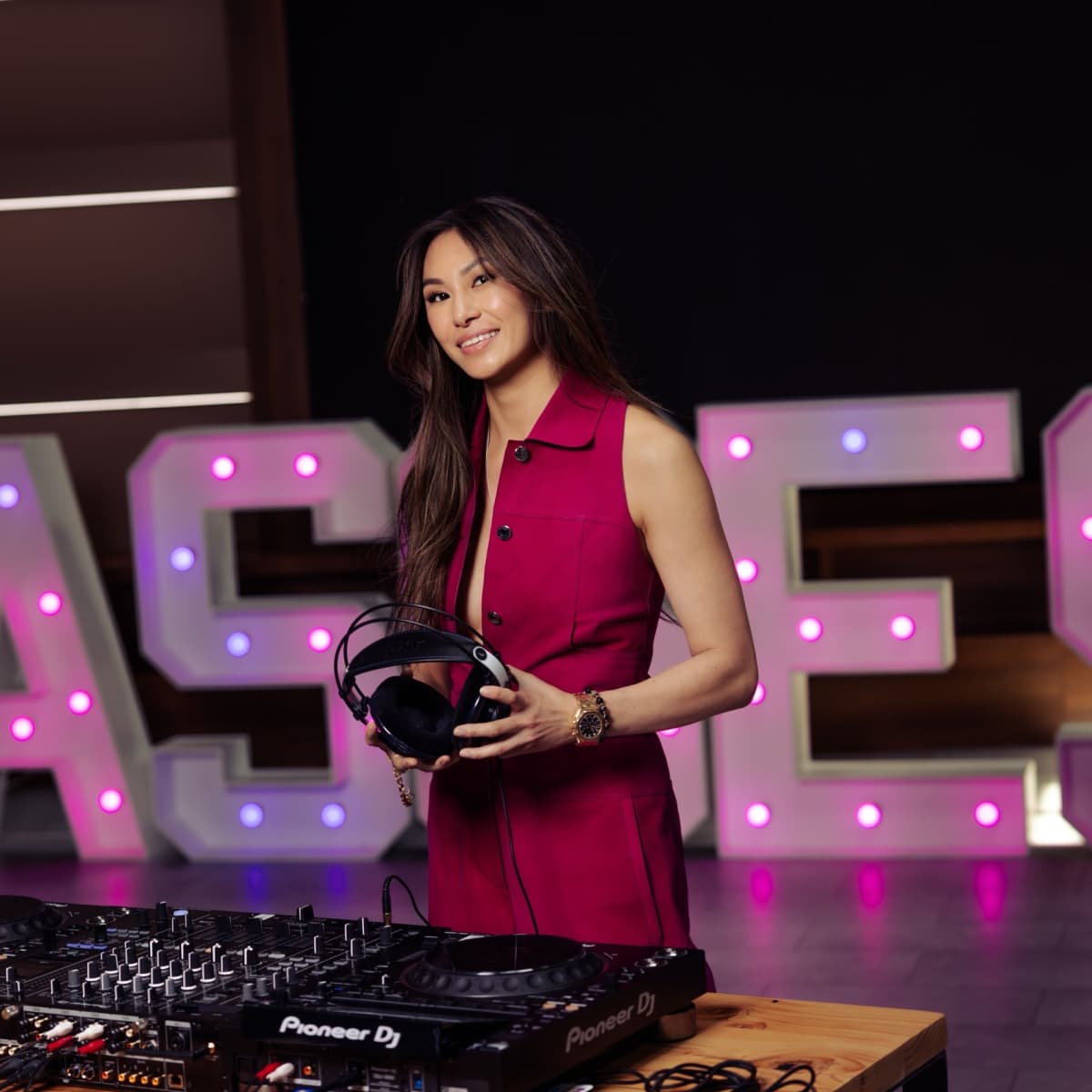
Then came the move that sounds least corporate and most consistent. Years earlier, a stranger had sent Guo a direct message offering artist passes to Ultra Korea. She went, loved the communal charge of electronic music and followed the festivals. In 2026, she released “Champagne on Me,” began taking DJ bookings and said she intended to spend more time in Los Angeles making songs.
The music is not a retirement hobby. Guo has said DJ work now pays her more than she once earned as a software engineer or product designer. More revealingly, she says it makes her happy. That admission softens a biography usually told in valuations. She remains Passes' chief executive, an investor and an incubator of new companies. Yet she is also learning, in public, the uncertainty her customers inhabit: the anxious wait for an audience to react.
There is a temptation to make Guo's departures sound like perfect foresight. They were not. Leaving college hurt her relationship with her parents. Leaving Scale followed conflict and exhaustion. Early investments went to zero. Lost Bitcoin stayed lost. Passes entered a crowded business and then faced a painful legal challenge. The polished version of entrepreneurship is a sequence of doors chosen correctly. The lived version is a corridor full of guesses.
What distinguishes Guo is not that every guess worked. It is that she kept the useful artifacts from each one: the hackathon habit of shipping, the product eye from Snap and Quora, equity from Scale, a portfolio from Backend, and an audience from the social world surrounding Passes. Leaving early can look disloyal to an institution. It can also be a form of loyalty to curiosity.
At 31, Guo has already worn enough professional identities for a much longer career. Engineer. Designer. Founder. Investor. Chief executive. Creator. DJ. None appears final. The child who moved her business online because cash could be confiscated is still there, searching for the part of the system nobody has secured. She just has better lighting now, and the soundtrack is her own.