Kaushik Tiwari keeps two résumés. One contains the familiar bright nouns: Columbia, Thiel, Y Combinator, founder, investor. The other, published by Tiwari himself, is composed of verbs that rarely survive the polishing process: rejected, dropped out, shut down, burned out. The second document is more revealing. It explains why Attack Capital looks less like a conventional fund and more like a founder trying to engineer around his own history.
The public version of that history begins at Columbia University in 2012. Tiwari studied operations research, engineering management systems and computer science on a full undergraduate scholarship. He also worked as a network analyst on campus. Two years later, he left to join the 2014 class of Thiel Fellows and co-founded GlucoIQ. The company was his first serious attempt at turning software into an institution. It also ended quickly.
Tiwari later described the cause with unusual economy: co-founder conflict. Prestige had opened the door, but the logo on the door could not settle who should build what, or why. He returned to Columbia and completed his degree in 2017. By then, he had already acquired the habit that would define the next decade: finish one experiment, retain the scar tissue, change the category and begin again.
A founder learns where the floorboards creak
TrueDime came next. Tiwari and his brother Saumik built it while sharing a crowded Brooklyn group house, an arrangement closer to the garage mythology of startups than the tidy conference rooms that appear after funding. The company found customers and expanded to ten universities, according to Tiwari's account. Then a policy change from a key partner wiped out its revenue. The lesson was painfully specific: a company can own its product and still rent the ground beneath its distribution.
He carried the shared-stack idea into Better Financial Corporation, co-founded with Saumik. By 2021, the brothers were presenting a consumer-finance business designed to support several brands on common infrastructure. Better entered Y Combinator's Winter 2022 batch. At Demo Day, Tiwari described it as “Thrasio for fintech,” a family of brands that could launch quickly, cross-sell and lower acquisition costs.
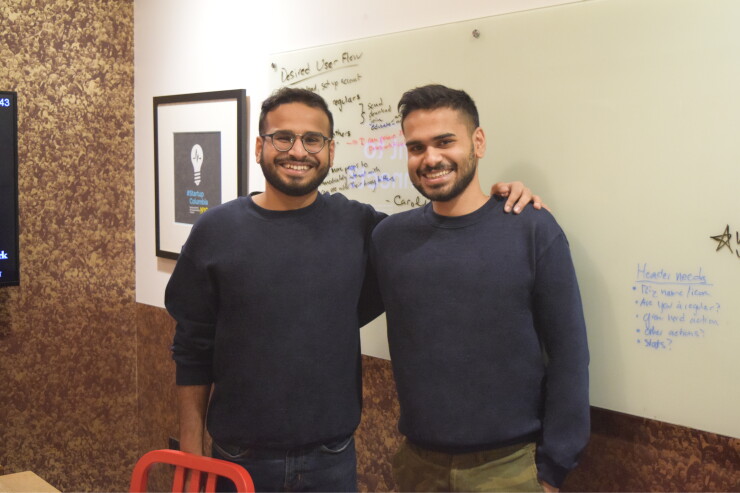
The pitch attracted attention. Axios reported that Better sought a $5 million round at a $50 million valuation. Tiwari says the company ultimately raised $1.6 million. Then Better closed. In his failure résumé, he wrote that the model was broken, the funding only let it burn faster, and the team returned more than $1 million that remained. A founder can spend years learning to raise money and discover, abruptly, that the more valuable skill is knowing when to stop spending it.
Profitability is freedom. VC money is a tool, not the goal.Kaushik Tiwari, reflecting on Better Financial
The portfolio moves inside the company
Attack Capital, founded in 2023, reorganized those lessons. It began as a vehicle investing in Y Combinator startups. That gave Tiwari what he calls a bird's-eye view of how founders were applying AI. Then the organization moved into build mode. The investment portfolio remained, but a studio appeared beside it: permanent teams creating vertical AI products across sales infrastructure, finance, legal work, logistics and other operational niches.
The interesting choice is where Tiwari located diversification. Venture firms normally make many bets while asking each founder to make only one. Attack Capital brings a version of portfolio logic into the operating company. Shared engineers, go-to-market people and managers rotate through products. Infrastructure and distribution can travel from one experiment to another. The studio has called this an “organic roll-up,” because each product is intended to strengthen the machinery around the rest.
That sounds dangerously close to organized distraction, a condition founders rarely need help creating. Tiwari's counterweight is a tight operating cadence. Every idea faces three questions: Is there market demand? Does the studio need it itself? Can the team reach customers? A yes on all three triggers a four-person “attack pod”: a full-stack engineer, an outbound specialist, a content lead and a general manager who can run demonstrations.
The studio gives that pod 30 days. Week one is for the minimum viable product. Week two begins customer outreach. Week three brings market feedback. Week four ends in a decision: scale it or scrap it. The compressed clock is partly an AI story, since contemporary tools let a small team produce software quickly. It is also an emotional technology. A deadline makes it harder to turn one indifferent market response into a six-month argument with reality.
Dogfood, then put it on the menu
Some Attack Capital products started with the studio as the customer. PowerDialer grew out of its cold-calling operation. MailKarma emerged from its need for outbound email infrastructure. The team used the tools internally, then offered them to other businesses. This is the most portable part of Tiwari's playbook. Internal pain supplies a demanding first customer; daily use supplies feedback; an existing operation supplies early distribution.
The team shape matters as much as the product list. Attack Capital's public hiring material asks leaders to work across several products, reuse components and standardize APIs, while giving each experiment measurable commercial goals. Product managers are expected to move between discovery, pricing and profit-and-loss questions. Sales leaders are asked to allocate attention across distinct customer profiles. Even the job descriptions read like specifications for a small conglomerate. The system depends on generalists who can switch contexts without losing the thread, and on enough shared infrastructure to make each switch cheaper than the last.
It also connects the venture studio to Tiwari's writing. In a 2025 essay, he argued that automated copy and stricter spam controls were making email outreach less effective, reviving the ordinary telephone as a B2B channel. PowerDialer is the commercial version of that observation. The studio does not merely publish a thesis about distribution. It builds the tool it expects to need.
Attack Capital's website now describes a dual model: build AI-native SaaS companies and invest in early-stage businesses, particularly companies emerging from Y Combinator. Its named studio products and investments have changed as the portfolio evolves. The durable claim is structural. Tiwari wants the flexibility of a fund and the ownership of an operator. He is trying to keep both the view from above and the grease beneath the fingernails.
The useful candor of the second résumé
There is a playful contradiction in Tiwari's public persona. His career carries nearly every credential the startup world is trained to notice, yet his best material arrives when he treats those credentials as scenery. In one account, he recalled reaching Columbia after growing up in India and discovering that he was no longer the smartest person in the room. The surrounding prodigies and young founders made him wonder whether he belonged. Years later, investor meetings triggered the same question.
His response has not been to abandon ambition. Attack Capital's mission is broad, and its pace is unapologetic. The change is subtler: ambition has been transferred from a single precious idea to a repeatable way of testing ideas. Tiwari says concentrating on one company repeatedly led him toward burnout. The studio is built to make attachment lighter, feedback faster and survival less dependent on any lone product.
Diversifying isn't just for investing, it's for entrepreneurs too.Kaushik Tiwari
Whether that system produces durable companies will be decided by customers, not cadence diagrams. Thirty days is enough to expose a weak signal, but rarely enough to understand an industry. Shared distribution can compound; it can also blur. A portfolio protects the institution from one failed bet, while every product still needs someone willing to care about it beyond the clock.
There is also a difference between validating a product and building a company. The first can happen in a month. The second requires years of hiring, support, reliability and tedious choices that refuse to fit inside a launch video. Tiwari knows this tension because his own timeline is longer than any sprint. Attack Capital's real test will be whether its fast starts can graduate into slow commitments without surrendering the advantage of the shared studio.
Those tensions make Tiwari's experiment worth watching. Attack Capital is the fourth major act in a career that keeps revising the same questions: How much should a founder own? How quickly can a team learn? What deserves another month? The failure résumé does not supply comforting answers. It supplies constraints. Do not depend on one gatekeeper. Do not confuse capital with proof. Do not let credentials do the thinking. Build close enough to the customer that reality can interrupt.
A conventional biography would sand those edges into a tidy ascent. Tiwari's version is more useful and, frankly, more fun. The founder went to Columbia, left Columbia, returned to Columbia, joined celebrated networks, closed companies and built another machine. Attack Capital is what happens when the footnotes take control of the plot.