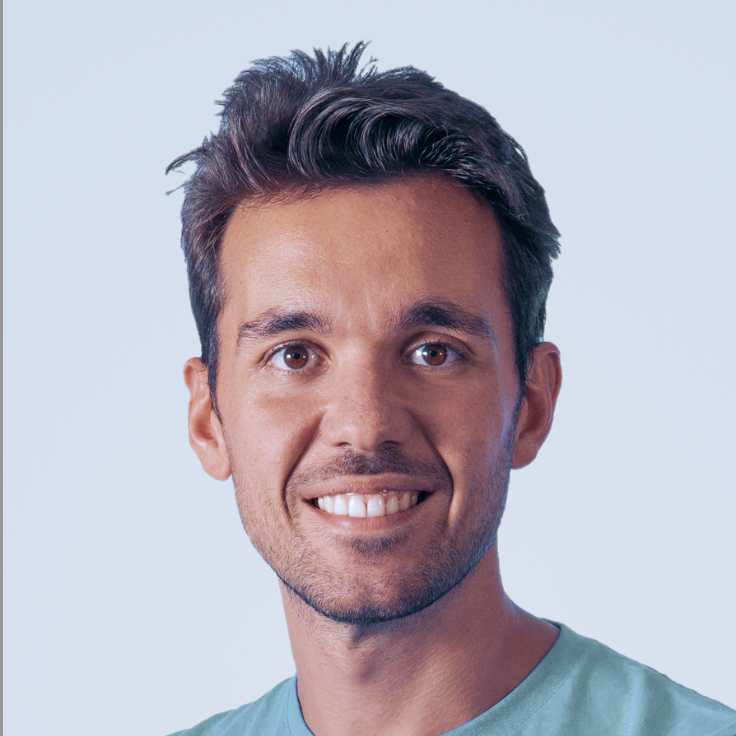
Profile
The Engineer Who Made Everyone Else Better
Every software team has that person who ships faster than everyone else. Luca Rossi spent years being that person - then realized the job wasn't worth doing. The real game isn't writing the best code. It's building the team that does.
Today, Luca Rossi is the founder of Refactoring, a newsletter and media brand read by over 172,000 engineering leaders, CTOs, and tech managers across 83 countries. He runs it alone. No co-founder. No editorial team. No ads in the traditional sense. Just one engineer from Rome who figured out that the people building software products were desperately hungry for something the industry rarely offers: practical, honest, experience-backed wisdom about what actually makes engineering teams work.
The numbers are worth sitting with for a moment. One person. $300,000 per year in revenue. 172,000+ subscribers. A podcast ranked in the top 10% of all video podcasts globally. A private community of 1,500+ members. And a 5-year streak of publishing more than 300 original articles without running out of useful things to say.
"The true multiplier in software development is not who writes the most code, but who makes everyone else better."
- Luca Rossi
Before all that, Luca spent eight years as co-founder and CTO of Wanderio, an Italian multimodal travel booking platform that grew to 25 million customers, raised over $4 million in funding, and became one of Italy's better-known travel tech products. When he exited in 2020, he didn't immediately know what came next. He just knew he had things to say about building engineering teams - and that he was going to say them.
He started Refactoring as a side project in September 2020, spending roughly one hour a day on it while working as Head of Engineering at Translated, one of the world's largest translation companies. Within 14 months, the newsletter had grown enough that he left his day job to run it full-time. He has not looked back.
172K+
Free Subscribers
Up from zero in 2020, doubling nearly every year
~$300K
Annual Revenue
From subscriptions ($15/mo or $150/yr) and sponsorships
Top 10
Substack Business
Globally ranked, beating most funded media companies
1,500+
Community Members
Private paid community with masterminds, book clubs, job board
Origin Story
Rome Wasn't Built in a Day. Wanderio Took Eight Years.
Luca Rossi grew up in Rome and studied Computer Engineering at Universita degli Studi Roma Tre, finishing his master's degree in 2011. He was also, somewhat improbably, playing guitar on the side - a habit he maintains to this day, describing it as "the most serious thing I do outside of tech."
In 2011, through Innovaction Lab, a startup accelerator program, Luca met Matteo Colo and Disheng Qiu. The three of them had a shared frustration with how fragmented European travel booking had become - you needed three separate apps just to get from Rome to Paris by train, bus, and metro. They decided to fix it.
Wanderio launched in 2012 as a multimodal travel booking platform: one click to compare and book flights, trains, buses, and airport transfers together. It was a genuinely hard technical problem, and Luca was the one solving it. The company grew, moved into Pi Campus accelerator in Rome, opened an office at Talent Garden Milan, raised seed funding, and attracted investment from Europcar's innovation arm in 2015.
Luca left a PhD program to co-found Wanderio. That's a recurring pattern with him - when he spots something worth building, the safety of the current track stops feeling like safety. It just feels like staying in the wrong lane.
By the time Luca exited Wanderio in August 2020, the platform had served 25 million customers. He had spent eight years making technical decisions, hiring engineers, running product strategy, and - crucially - learning what separates engineering teams that ship from ones that stall. That accumulated knowledge was about to find a very different kind of audience.
The Pivot That Wasn't Really a Pivot
Joining Translated as Head of Engineering in September 2020 was a deliberate choice: a new environment with new problems, managing ten direct reports, restructuring product teams. He rebuilt an internal account management tool that boosted department revenue by 20%. But the newsletter he started the same month was quietly doing something unusual. It was growing without being pushed.
By November 2021, Luca quit Translated. Not because it wasn't going well - but because Refactoring was going better. The newsletter had crossed a threshold where it made more sense to bet on his own platform than to keep dividing his attention.
Refactoring Newsletter — Subscriber Growth
The Product
Three Emails a Week. One Point of View. No Fluff.
Refactoring is not a content aggregator or a curated-links roundup. It's original thinking, applied to the problems engineering managers actually face: hiring, code reviews, on-call processes, technical debt, team structure, engineering velocity, product engineering culture. Every piece is written by Luca. Every podcast guest is hand-picked.
Monday
Monday Ideas
Three short, actionable ideas for engineering leaders. Fast to read. Built for the week ahead.
Free
Wednesday
Wednesday Essays
Deep, research-backed articles on management, software processes, and tech leadership. The flagship content.
Paid
Bi-weekly Friday
The Podcast
Long-form interviews with world-class engineering leaders. Full transcripts and Q&A access for paid subscribers.
Paid + Free clips
The topics read like the real problems behind closed engineering doors: "How Engineering Management is Changing in 2024," "How to Become a Product Engineer," "Unconventional Team Structures," "How to Win at Hiring Against Big Companies," "Monoliths vs Microservices," "Thoughts on Code Reviews." These are not think-pieces for the algorithm. These are the things engineers talk about with candor only in private - until Luca published them.
"While I think there is a lot of value in curating ideas and frameworks, it is healthy to complement them with real-life stories and different perspectives from those of my own."
- Luca Rossi, on the podcast's origin
The Podcast Guests
The Refactoring Podcast is not a name-dropping operation - but the names do tell a story. In 2024 alone, Luca recorded 30 interviews with some of the industry's most respected practitioners. The range spans opinion leaders, framework creators, management authors, and working engineers.
DHH
Kent Beck
Guillermo Rauch
Camille Fournier
Rands (Michael Lopp)
30+ in 2024
Top 10% All Video Podcasts
83 Countries
5-Star Rating
The podcast is available on YouTube, Spotify, Apple Podcasts, and Overcast. It has a 5-star rating, published in 83 countries, and ranks in the top 10% of all video podcasts. Paid subscribers get full transcripts, written commentary, and live Q&A sessions.
Pricing: $15/month or $150/year. The free tier gives you Monday Ideas. The paid tier gives you everything else - the Wednesday essays, full podcast transcripts, community access, and Q&A sessions. No dark patterns. No free-trial bait-and-switch. Just a clean bet on the value of the content.
Philosophy
90% of Performance Is Systemic. Stop Blaming the Engineers.
The central idea running through everything Luca writes is deceptively simple: most software teams fail for systemic reasons, not individual ones. The 10x engineer is a myth worth retiring. The 10x team structure is real, and it's achievable, and it mostly depends on decisions made by the people in charge of the room.
This isn't a motivational poster. It's a framework built from years of actually running engineering teams, measuring them, watching them fail and succeed. Luca is explicit about where this comes from: his own mistakes at Wanderio, his observations at Translated, and the pattern-matching that comes from interviewing hundreds of engineering leaders over five years of the podcast.
Some of his most consistently-cited positions:
On Hiring
"Job posts with salary ranges get 3-4x more applications"
On Code Reviews
PR cycle time is the #1 engineering velocity metric to optimize
On Performance
90% of team performance is systemic, not individual talent
On Data
Approach metrics with curiosity, not judgment
On Velocity
Fast, frequent production releases are a habit, not a talent
On Collaboration
Engineers should be in product decisions from day one
What sets Luca apart from the usual stream of hot management takes is that he's not selling a framework he invented at a consulting firm. He built a travel startup from scratch, scaled it to 25 million users, survived the full arc from zero to exit, and then spent years documenting what he learned in enough detail to be actually useful to the next person in that seat.
He is also direct about what he doesn't know. He qualifies positions when the data is thin. He interviews people he disagrees with. He holds opinions firmly but updates them in public. In an era of newsletter writers who package received wisdom in confident packaging, that kind of epistemic honesty is not common.
Side Project 2025
The App Built by No One
Tolaria
A free, open-source macOS desktop app for managing Markdown knowledge bases. Luca describes it as "a second brain for the AI era."
He spent three months building it. He wrote exactly zero lines of code. The app has 100,000+ lines of code, 2,000 commits, and 3,000+ tests at 85% coverage. Every line was generated using AI coding tools.
Built with Tauri, React, and TypeScript, Tolaria features a block-based Notion-like editor, wikilinks, an integrated Git client, plain Markdown storage, and an MCP server for Claude Code compatibility. Luca uses it to manage his own 10,000+ note knowledge base accumulated over six years of researching and writing Refactoring.
When Luca announced Tolaria on Hacker News in 2025, the Show HN thread lit up - partly because the app was genuinely useful, partly because the story of building it was genuinely surprising. A senior engineer with 15+ years of experience, building a substantial open-source application, writing zero lines of code himself. It's not a gimmick. It's a deliberate experiment in what solo operators can build when AI tools do the heavy lifting.
It also reveals something about how Luca thinks: he is not threatened by the idea that AI writes code. He's excited about what that means for what one person can build.
The Person
Chess, Guitars, and Going Fast in Circles
Luca Rossi is Roman in the way that really means something - he has lived in Rome his entire life, his career happened in Rome, his company was headquartered in Rome. The city's pace, its density of history, its stubborn refusal to optimize for speed: perhaps some of that is in the work. Refactoring does not rush its arguments.
🎸
Plays guitar and calls it "the most serious thing I do outside of tech." Has been playing since university.
♟
Competitive chess player on chess.com. Strategy games and engineering leadership: same muscle, different board.
🏎
Has a dedicated home iRacing sim racing setup. Goes fast - just without leaving the office.
📝
Manages a personal knowledge base of 10,000+ notes, all in Markdown, in Tolaria - the app he built for himself.
💰
Charges $150 for 15-minute consulting calls via Intro.co. That's $600/hour. Engineers are underpriced.
🌍
His podcast is listened to in 83 countries. He runs the whole operation from Rome, by himself.
There is a specific kind of credibility that comes from being the person who actually did the thing before writing about it. Luca does not write about hiring based on a framework he read. He writes about hiring based on building a 25-person engineering team from scratch, making all the mistakes, and surviving them. He doesn't write about code review culture theoretically. He writes about what happened when he changed it.
That grounding in practice - combined with a genuine curiosity about other people's practices, a willingness to say "I don't know" in public, and a resistance to the kind of confidence-as-style that dominates tech Twitter - has built an audience that keeps coming back. Not because Luca Rossi is the loudest voice in the room. Because he's usually right.
"90% of performance is systemic rather than individual."
- Luca Rossi
Latest Updates
What's Happening Now
Apr 2025
Released Tolaria - a free, open-source macOS knowledge base app for Markdown, built entirely with AI coding tools. Featured on Hacker News Show HN.
Jan 2025
Refactoring newsletter surpassed 172,000 free subscribers with thousands of paid subscribers and ~$300K ARR.
Dec 2024
Published annual year-in-review with 30 podcast interviews recorded in 2024, featuring DHH, Kent Beck, and many others.
Jun 2024
Refactoring crossed 100,000 total subscribers milestone, confirming a 2x year-over-year growth trajectory maintained since 2021.
Dec 2023
Newsletter reached $250K ARR and earned top 10 Substack business newsletter ranking globally.
Career Timeline
From PhD Dropout to Newsletter Empire
2006-2011
M.Sc. in Computer Engineering at Universita degli Studi Roma Tre. Playing guitar on the side. Considering a PhD.
2011
Met co-founders at Innovaction Lab startup program. Left PhD program to pursue startup.
2012-2013
Co-founded Wanderio as CTO. Launched multimodal travel booking platform publicly.
2015
Wanderio raised investment from Europcar's innovation arm. Total funding exceeded $4M.
Aug 2020
Exited Wanderio after scaling to 25M+ customers over 8 years. Joined Translated as Head of Engineering.
Sep 2020
Launched Refactoring newsletter as a side project. ~1 hour per day.
Nov 2021
Left Head of Engineering role at Translated to run Refactoring full-time. Newsletter at ~10K subscribers.
2022-2023
Launched Refactoring Podcast. Newsletter grew from 10K to 60K+ subscribers. Hit $250K ARR, top 10 Substack globally.
2024
Crossed 100K subscribers. Recorded 30 podcast episodes including DHH, Kent Beck, Guillermo Rauch, Camille Fournier.
2025
172,000+ subscribers, ~$300K/year revenue. Released Tolaria - open-source macOS app with 100K+ lines of AI-generated code.